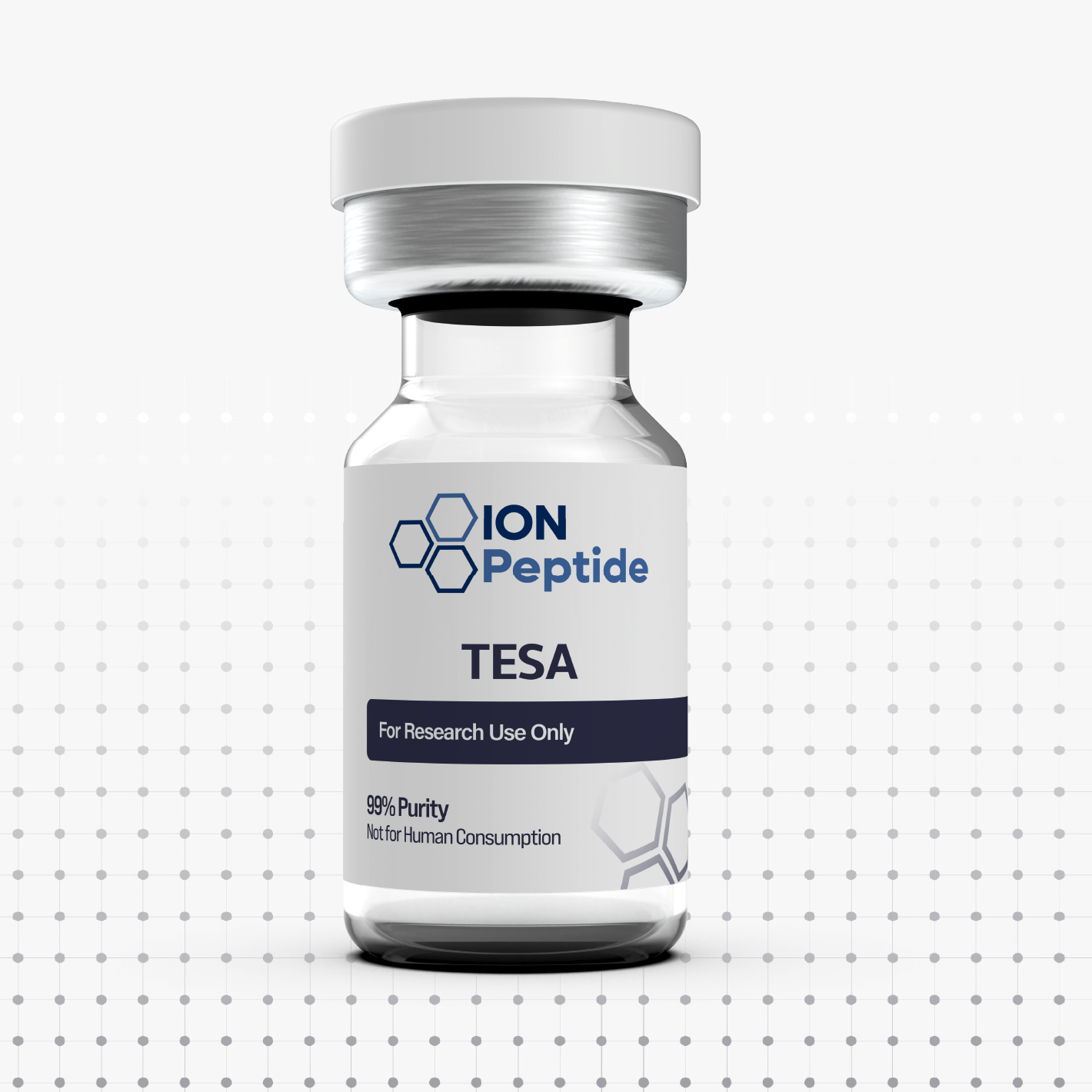
Tesa

Price range: $45.00 through $119.95

For research purposes only. Not for human or animal use & not FDA-approved. By purchasing, you confirm you are 21 or older and qualified researcher.

Quantity Price
4 - 5 $40.50
6 - 9 $37.80
10 + $33.75
Money Back Guarantee Guaranteed Quality Customer Support Fast Shipping
SKU: N/A Categories: , ,

Description

Tesamorelin (TH9507)

Research-Grade GHRH Analogue
Tagline: GH Axis & Lipid Metabolism Research


Product Description

Tesamorelin (scientific designation TH9507) is a synthetic growth hormone–releasing hormone (GHRH) analogue that selectively stimulates the pituitary to secrete growth hormone (GH). It is widely studied for its ability to increase IGF-1 levels, reduce visceral adiposity, and improve metabolic profiles in research models.

Researchers use Tesamorelin in studies exploring GH/IGF-1 axis regulation, fat redistribution, body composition, and metabolic syndrome. Its high specificity for GHRH receptors and well-defined pharmacokinetics make it an excellent tool for endocrine and metabolic research.

For Laboratory and Scientific Research Use Only. Not for Human Consumption.


Why Researchers Choose Tesamorelin
  • Highly Specific GHRH Analogue: Stimulates physiologic GH secretion without desensitizing pituitary receptors.

  • Metabolic Relevance: Well-documented ability to reduce visceral fat and improve lipid profiles in studies.

  • Extended Half-Life: Modified to resist degradation by DPP-IV, allowing once-daily dosing models.

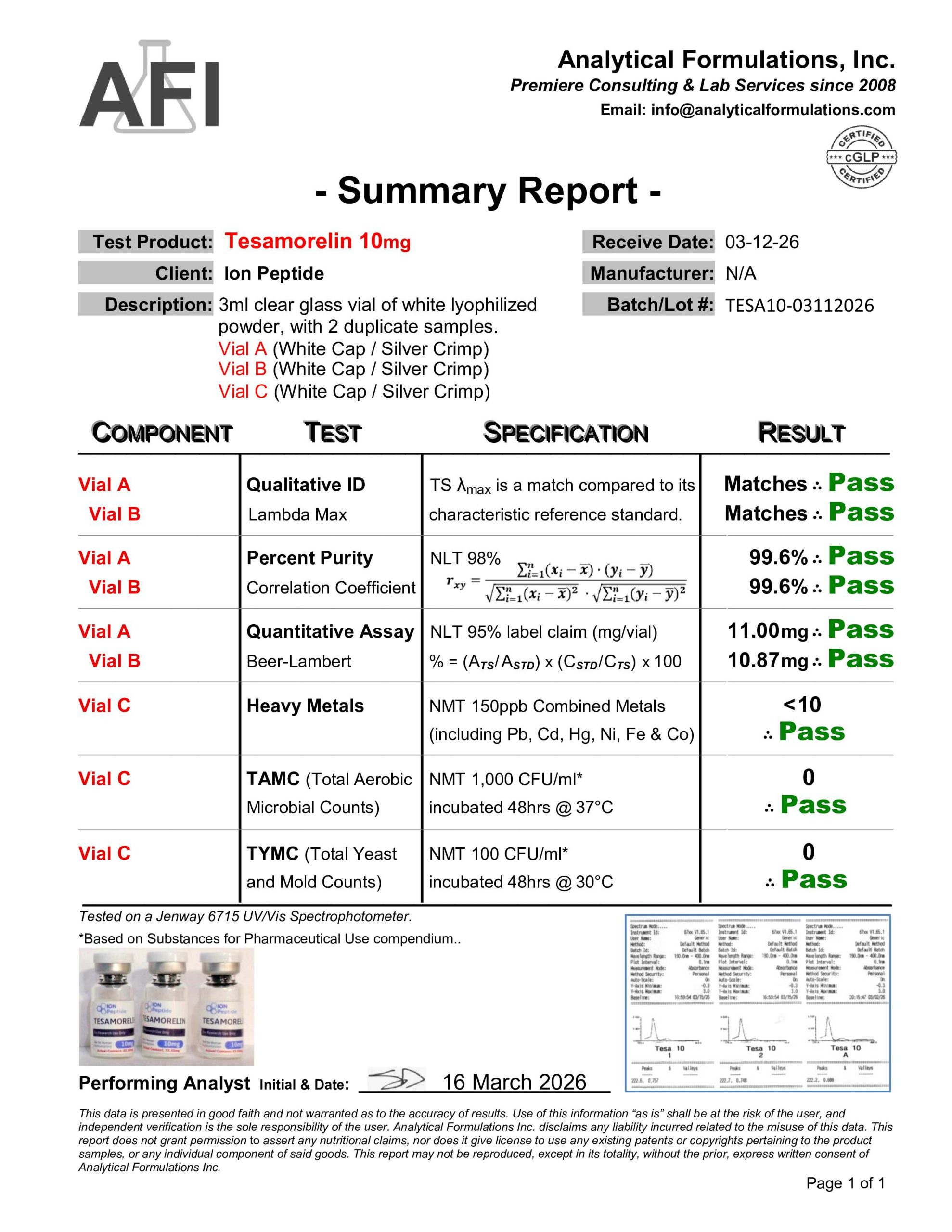
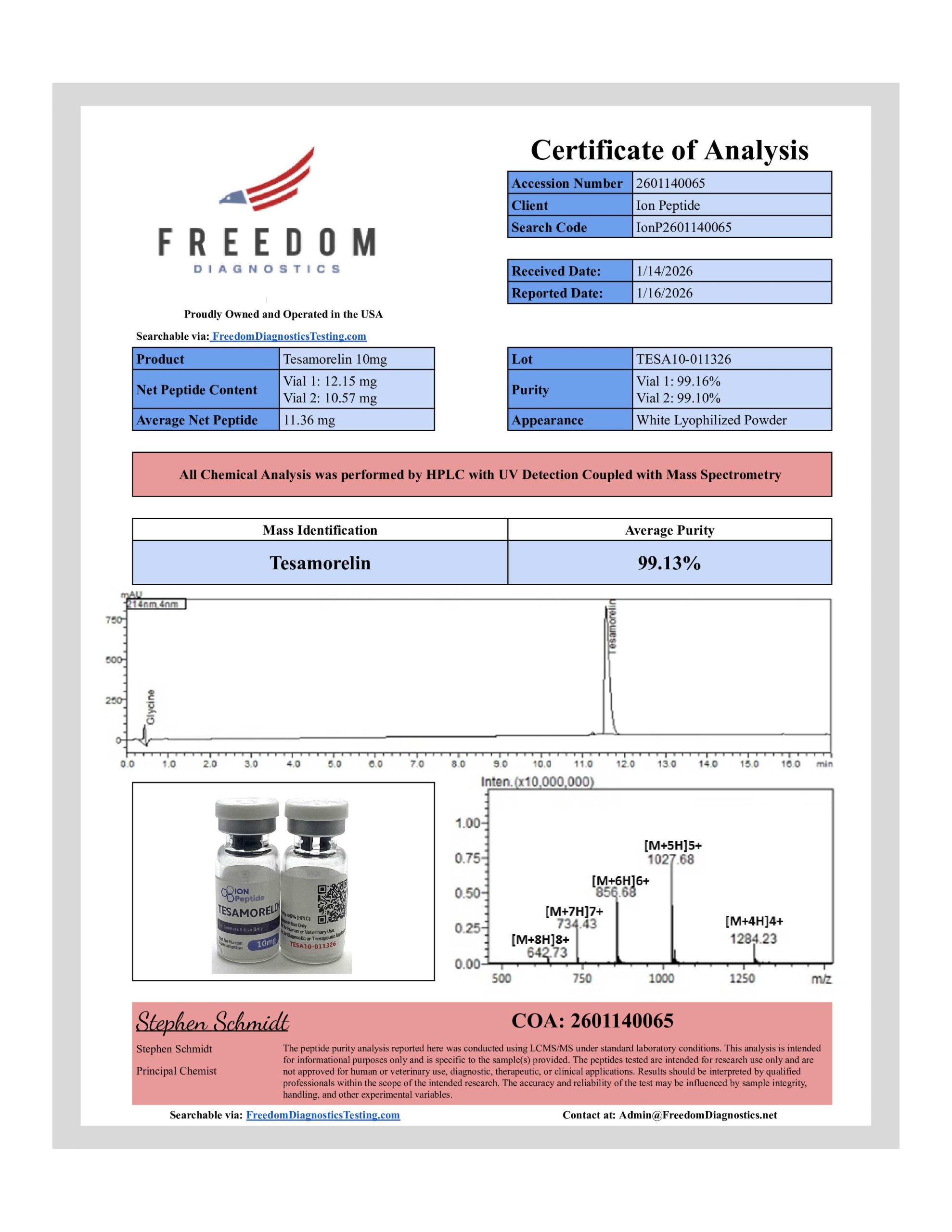
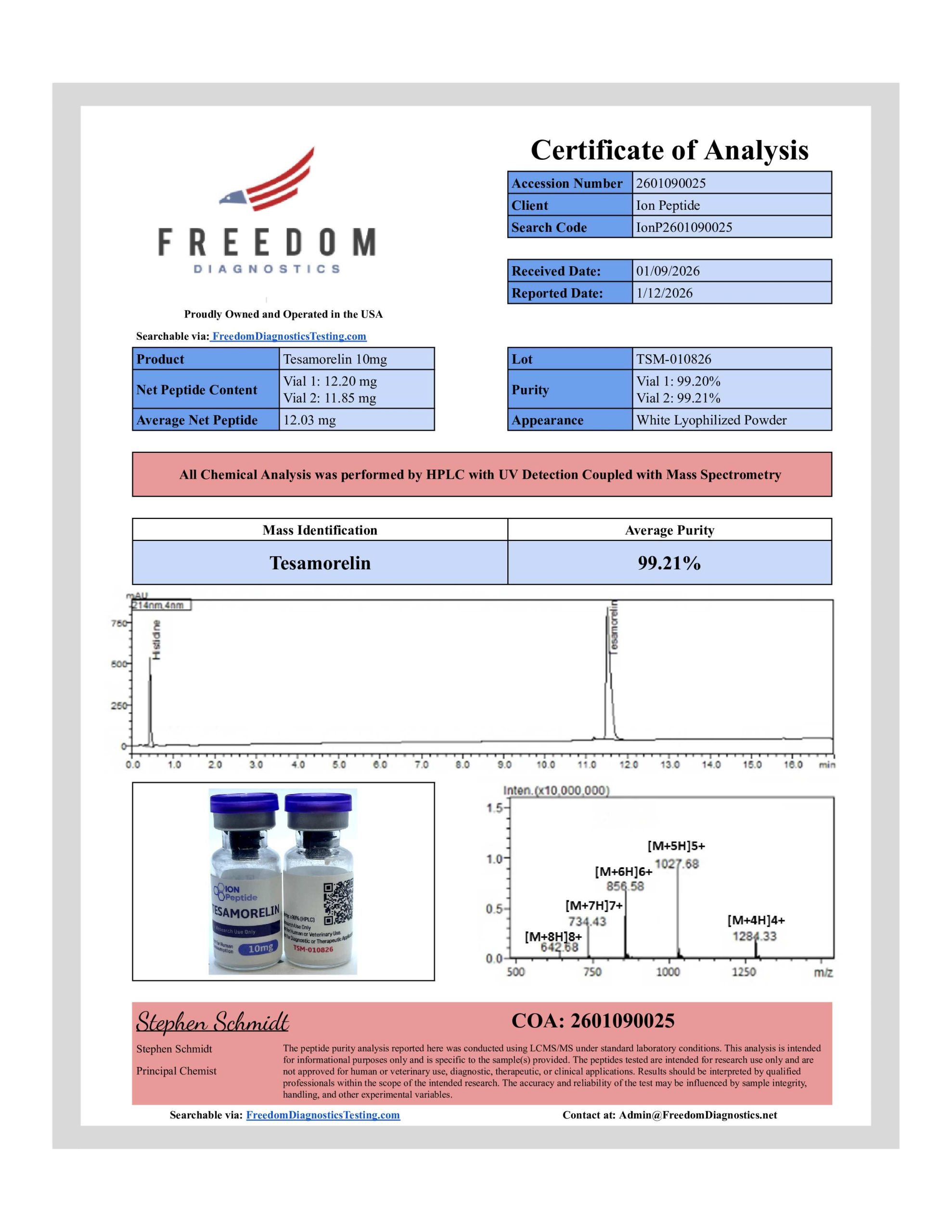
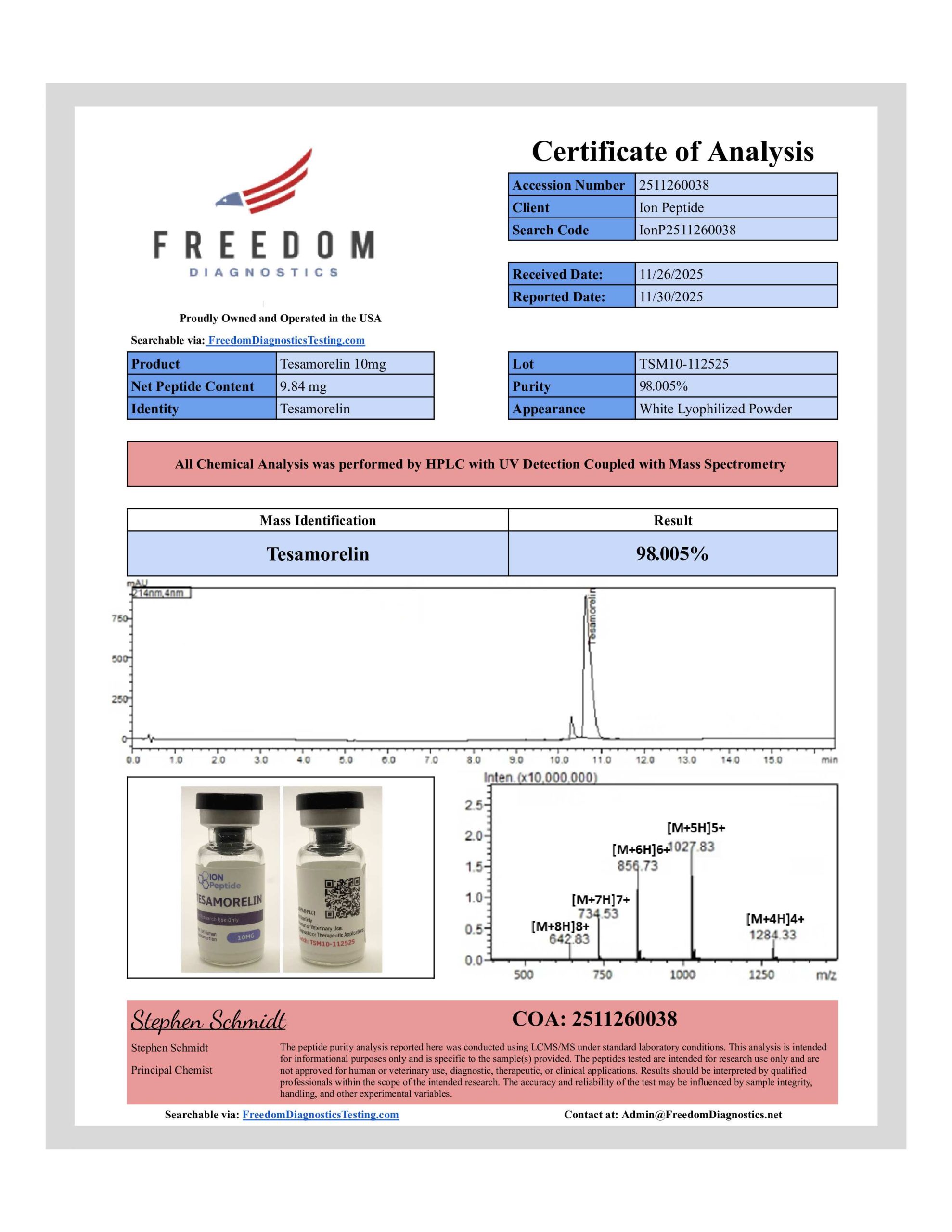
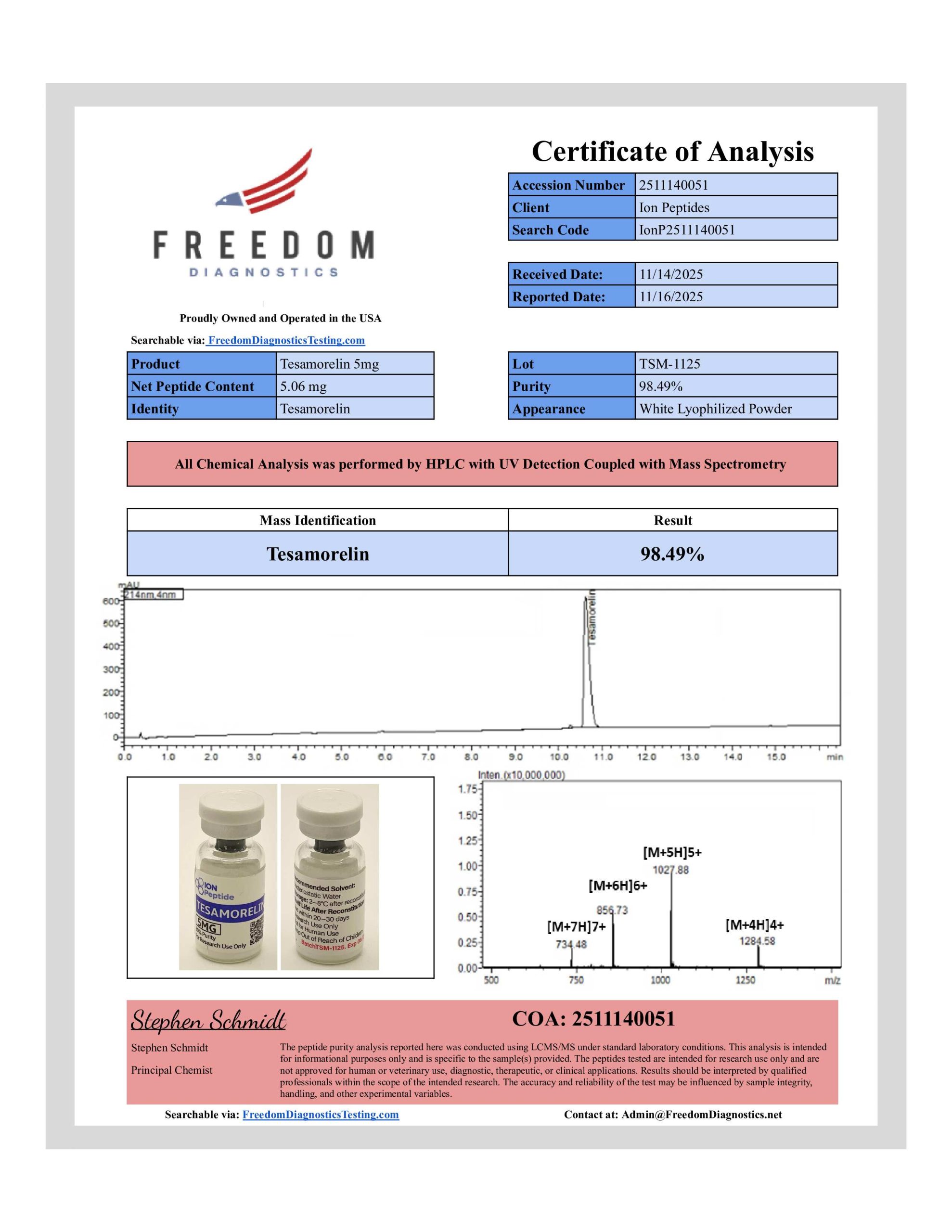
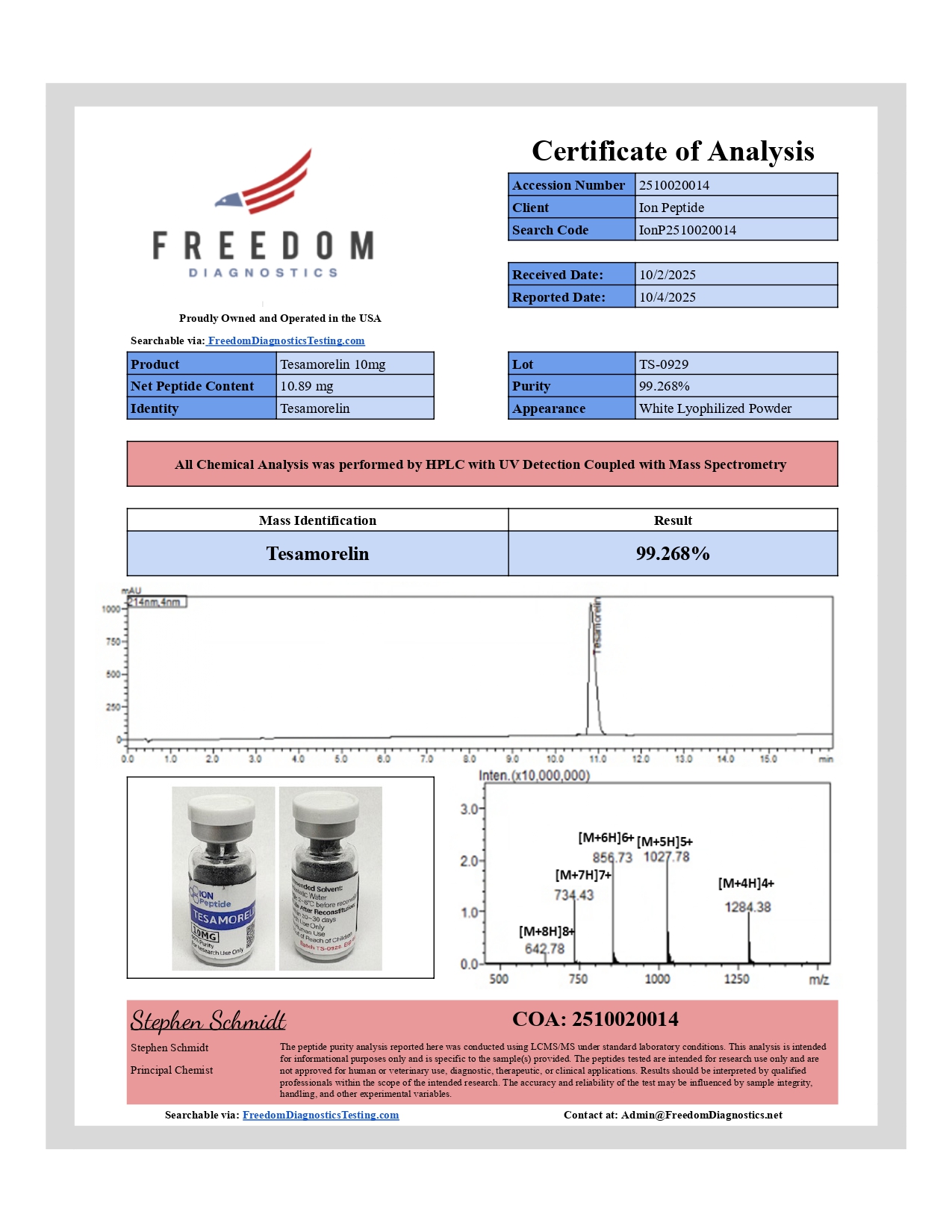
  • Purity & Reliability: ≥98% peptide purity ensures reproducible experimental results.

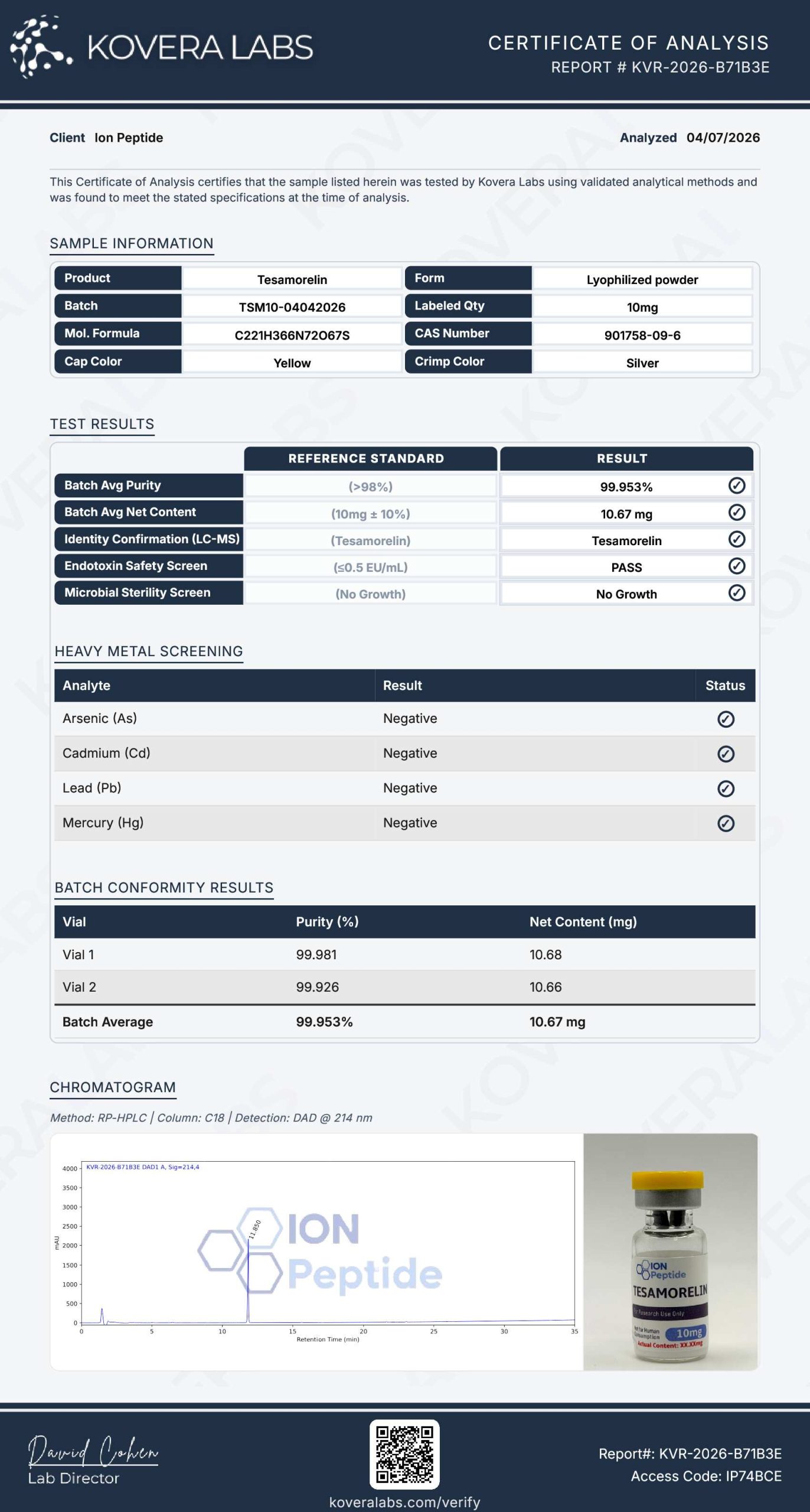
  • Batch Verified: Identity and potency confirmed for every lot.


Important Note

For laboratory and scientific research only. Not for human consumption, veterinary use, or diagnostic purposes.
Details

Chemical Formula C₂₂₁H₃₆₆N₇₂O₆₇S
Molecular Mass ~5135 Da
CAS Number 218949-48-5
Form Lyophilized peptide powder
Shelf Life 24 months (lyophilized)
Intended Use For preclinical and in vitro research only
Storage -20 °C (powder), -80 °C (after reconstitution)

Research

Research Applications

GH/IGF-1 Axis Studies

Tesamorelin stimulates endogenous GH pulses, increasing serum IGF-1 levels and enabling research into GH axis regulation [1].

Visceral Fat & Lipid Metabolism

In clinical and preclinical models, Tesamorelin significantly reduces visceral adipose tissue and improves triglyceride profiles [2].

Body Composition Research

Studies report increased lean body mass and reduced fat mass, making it valuable for metabolic and sarcopenia research [3].

Insulin Sensitivity & Metabolism

Some studies suggest improvements in HOMA-IR and insulin sensitivity when GH axis is optimized [4].


References
  1. Falutz J et al. (2010). Effects of Tesamorelin on Abdominal Fat and IGF-1. NEJM.
    https://academic.oup.com/jcem/article-abstract/95/9/4291/2835394

  2. Stanley TL et al. (2019). Tesamorelin Reduces Visceral Fat in Obese and HIV-Associated Lipodystrophy Models. Lancet Diabetes Endocrinol.
    https://www.natap.org/2019/HIV/PIIS2352301819303315.pdf

  3. Stanley TL et al. (2014). Changes in Body Composition with Tesamorelin. J Clin Endocrinol Metab.
    https://jamanetwork.com/journals/jama/fullarticle/1889139

  4. Falutz J et al. (2011). Metabolic Effects of Tesamorelin and GH Modulation. AIDS.
    https://peptideinfo.org/tesamorelin

Mechanism of Action

Mechanism of Action (How Tesamorelin Works)
  • GHRH Receptor Activation: Binds to pituitary GHRH receptors, stimulating GH synthesis and pulsatile release [Falutz 2010].

  • IGF-1 Elevation: GH stimulates hepatic IGF-1 production, mediating anabolic effects and supporting lean mass accrual [Stanley 2014].

  • Visceral Fat Reduction: GH/IGF-1 axis activation promotes lipolysis and preferential reduction of visceral adipose tissue [Stanley 2019].

  • Improved Lipid Metabolism: Decreases triglycerides and improves lipid profiles in research models [Falutz 2011].

  • Metabolic Remodeling: Enhances protein synthesis, reduces ectopic fat deposition, and supports glucose metabolism [Stanley 2014].


References
  1. Falutz J et al. (2010). Effects of Tesamorelin on Abdominal Fat and IGF-1. NEJM.
    https://academic.oup.com/jcem/article-abstract/95/9/4291/2835394

  2. Stanley TL et al. (2019). Tesamorelin Reduces Visceral Fat in Obese and HIV-Associated Lipodystrophy Models. Lancet Diabetes Endocrinol.
    https://www.natap.org/2019/HIV/PIIS2352301819303315.pdf

  3. Stanley TL et al. (2014). Changes in Body Composition with Tesamorelin. J Clin Endocrinol Metab.
    https://jamanetwork.com/journals/jama/fullarticle/1889139

  4. Falutz J et al. (2011). Metabolic Effects of Tesamorelin and GH Modulation. AIDS.
    https://peptideinfo.org/tesamorelin

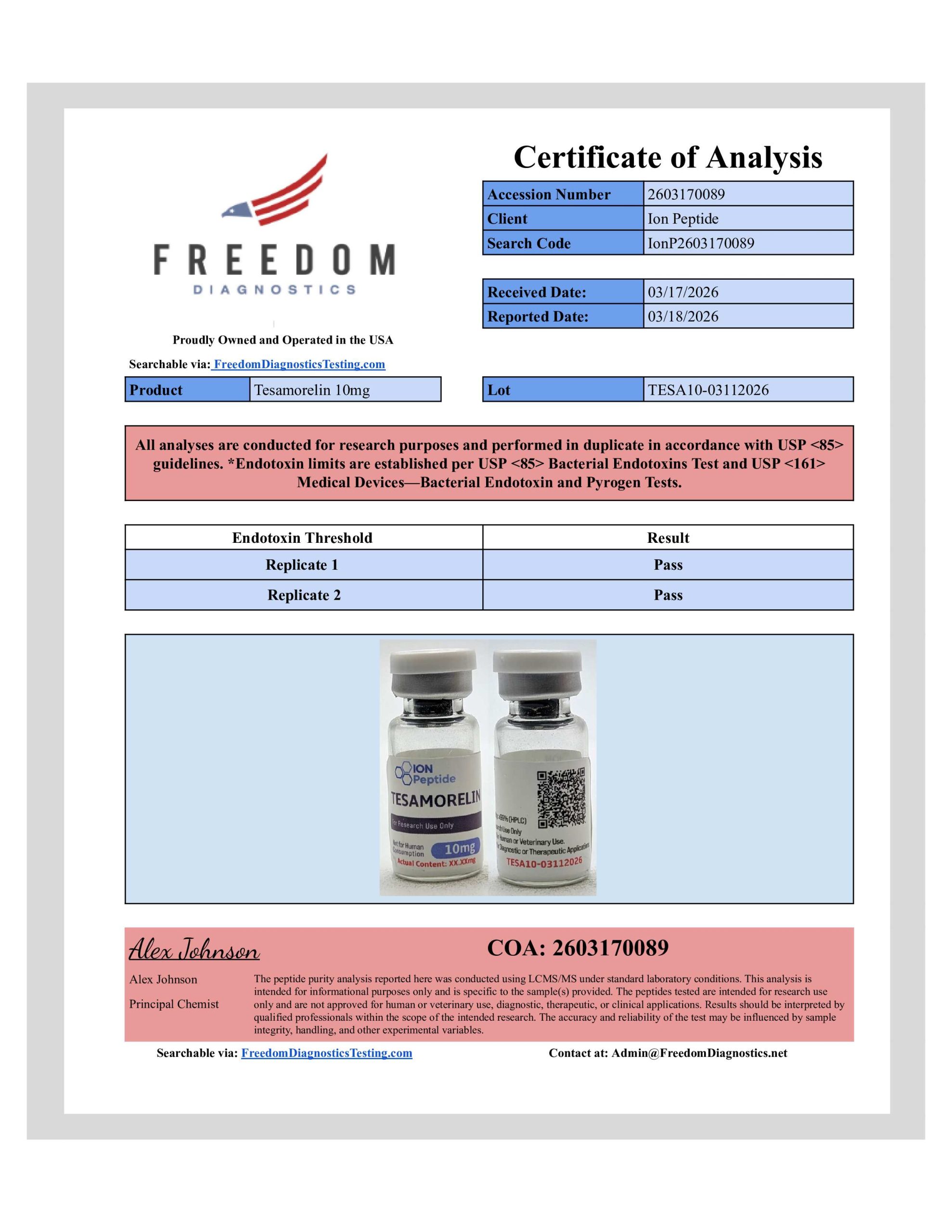
Certificate of Authenticity