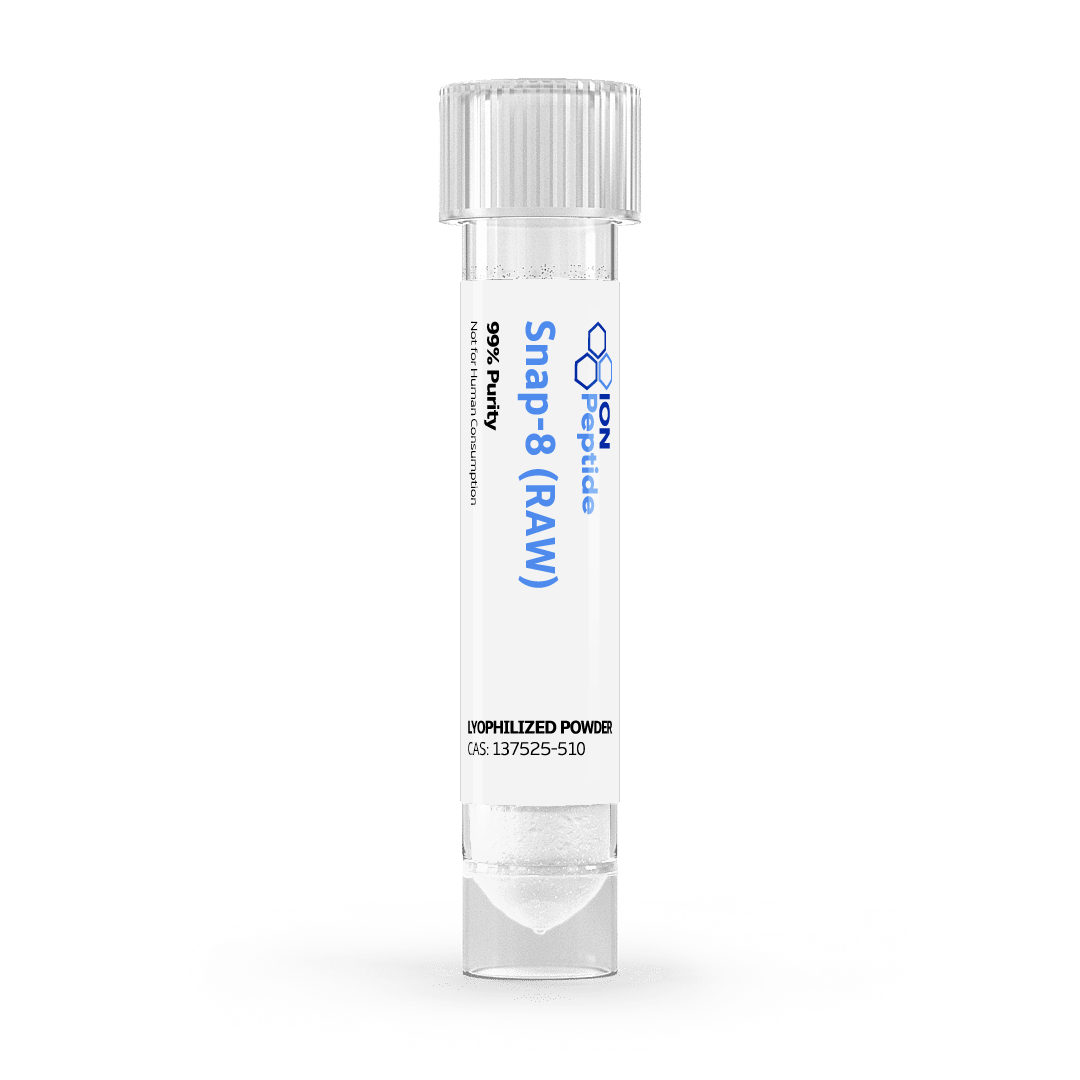
Snap 8 (Raw) – 1g

$149.00

For research purposes only. Not for human or animal use & not FDA-approved. By purchasing, you confirm you are 21 or older and qualified researcher.

In stock

Quantity Price
4 - 5 $134.10
6 - 9 $125.16
10 + $111.75
Money Back Guarantee Guaranteed Quality Customer Support Fast Shipping

Description

Snap-8 (Raw) – Acetyl Octapeptide-3

Tagline: Advanced Peptide Analog


Product Description

Snap-8 (Acetyl Octapeptide-3) is a synthetic peptide research compound widely explored for its role as an analog to the N-terminal end of SNAP-25. Researchers study Snap-8 for its potential influence on neurotransmitter release pathways and peptide–protein interactions relevant to cellular communication.

This compound is valued in laboratory settings for investigating mechanisms associated with peptide modulation and protein–peptide binding dynamics. Snap-8 (Raw) is intended strictly for controlled laboratory and scientific research, not for human or veterinary use.


Why Researchers Choose Snap-8 (Raw)
  • High purity suitable for sensitive peptide research assays

  • Stable synthetic analog modeled after SNAP-25 fragments

  • Consistent handling and reconstitution characteristics

  • Relevant to studies on cellular signaling and peptide-protein interactions

  • Manufactured for reliable repeatability across experiments

  • Provided in raw form for flexible formulation in research workflows


Important Note

For laboratory and scientific research only. Not for human consumption.
Details

Specification Details
Product Name Snap-8 (Raw)
Chemical Name Acetyl Octapeptide-3
Chemical Formula C₄₃H₆₆N₁₂O₁₂
Molecular Mass ~ 888.0 g/mol
CAS Number 868844-74-0
Form Lyophilized powder
Purity ≥ 98% (research grade)
Shelf Life 24 months (lyophilized, unopened)
Intended Use Laboratory research only
Storage –20°C (lyophilized); –20°C or below after reconstitution

Research

Research
1. Cellular Communication & Neurotransmitter Pathways

Snap-8 is explored for its potential to mimic portions of the SNAP-25 protein involved in vesicle docking and neurotransmitter release. Studies investigate how the peptide may influence synaptic signaling and exocytosis pathways in controlled models [1][2].

2. Peptide–Protein Interaction Studies

Researchers analyze Snap-8 to understand how short-chain peptides interact with target proteins in molecular binding assays. These studies support broader investigations into peptide stability, receptor affinity, and conformational behavior [3].

3. Anti-aging & Cosmetic Mechanism Research (in vitro only)

Snap-8 is frequently used in cell-based investigations exploring peptide modulation of expression pathways linked to wrinkle formation. Findings focus on biochemical cascades rather than consumer outcomes, maintaining a strictly scientific context [4][5].

4. Cellular Stress & Signaling Models

Some experimental setups evaluate how Snap-8 interacts with pathways related to cellular stress responses, membrane potential changes, and regulated secretion processes [6].


References
  1. Südhof, T. C. (2013). Neurotransmitter release: The last millisecond. Annual Review of Neuroscience.
    https://www.ncbi.nlm.nih.gov/pmc/articles/PMC3939645/
  2. Rizo, J., & Südhof, T. (2012). The membrane fusion enigma: SNAREs, Sec1/Munc18 proteins, and their regulators. Neuron.
    https://www.ncbi.nlm.nih.gov/pmc/articles/PMC3665970/
  3. Blanes-Mira, C. et al. (2002). A synthetic hexapeptide (Argireline®) with anti-wrinkle activity. International Journal of Cosmetic Science.
    https://onlinelibrary.wiley.com/doi/10.1046/j.1467-2494.2002.00145.x
  4. Jahn, R., & Fasshauer, D. (2012). Molecular machines governing exocytosis of synaptic vesicles. Nature.
    https://www.ncbi.nlm.nih.gov/pmc/articles/PMC3565066/
  5. Hay, J. C. (2001). SNARE complex structure and function in membrane fusion. Current Opinion in Cell Biology.
    https://www.sciencedirect.com/science/article/pii/S0955067400800712
  6. Xu, J. et al. (2013). Mechanisms of neurotransmitter release. Cold Spring Harbor Perspectives in Biology.
    https://www.ncbi.nlm.nih.gov/pmc/articles/PMC3683892/

Mechanism of Action

Mechanism of Action
  • Acts as an analog to the N-terminal region of SNAP-25, a protein involved in vesicle fusion [1][2].

  • May compete with SNAP-25 for placement in SNARE complexes in in-vitro models [3].

  • Influences vesicle docking and neurotransmitter release pathways during mechanistic studies.

  • Provides a controlled model peptide to study protein interaction modulation.

  • Used to analyze how synthetic peptides can affect exocytosis-related signaling cascades [4].


References
  1. Südhof, T. C. (2013). Neurotransmitter release: The last millisecond. Annual Review of Neuroscience.
    https://www.ncbi.nlm.nih.gov/pmc/articles/PMC3939645/
  2. Rizo, J., & Südhof, T. (2012). The membrane fusion enigma: SNAREs, Sec1/Munc18 proteins, and their regulators. Neuron.
    https://www.ncbi.nlm.nih.gov/pmc/articles/PMC3665970/
  3. Blanes-Mira, C. et al. (2002). A synthetic hexapeptide (Argireline®) with anti-wrinkle activity. International Journal of Cosmetic Science.
    https://onlinelibrary.wiley.com/doi/10.1046/j.1467-2494.2002.00145.x
  4. Jahn, R., & Fasshauer, D. (2012). Molecular machines governing exocytosis of synaptic vesicles. Nature.
    https://www.ncbi.nlm.nih.gov/pmc/articles/PMC3565066/
  5. Hay, J. C. (2001). SNARE complex structure and function in membrane fusion. Current Opinion in Cell Biology.
    https://www.sciencedirect.com/science/article/pii/S0955067400800712
  6. Xu, J. et al. (2013). Mechanisms of neurotransmitter release. Cold Spring Harbor Perspectives in Biology.
    https://www.ncbi.nlm.nih.gov/pmc/articles/PMC3683892/

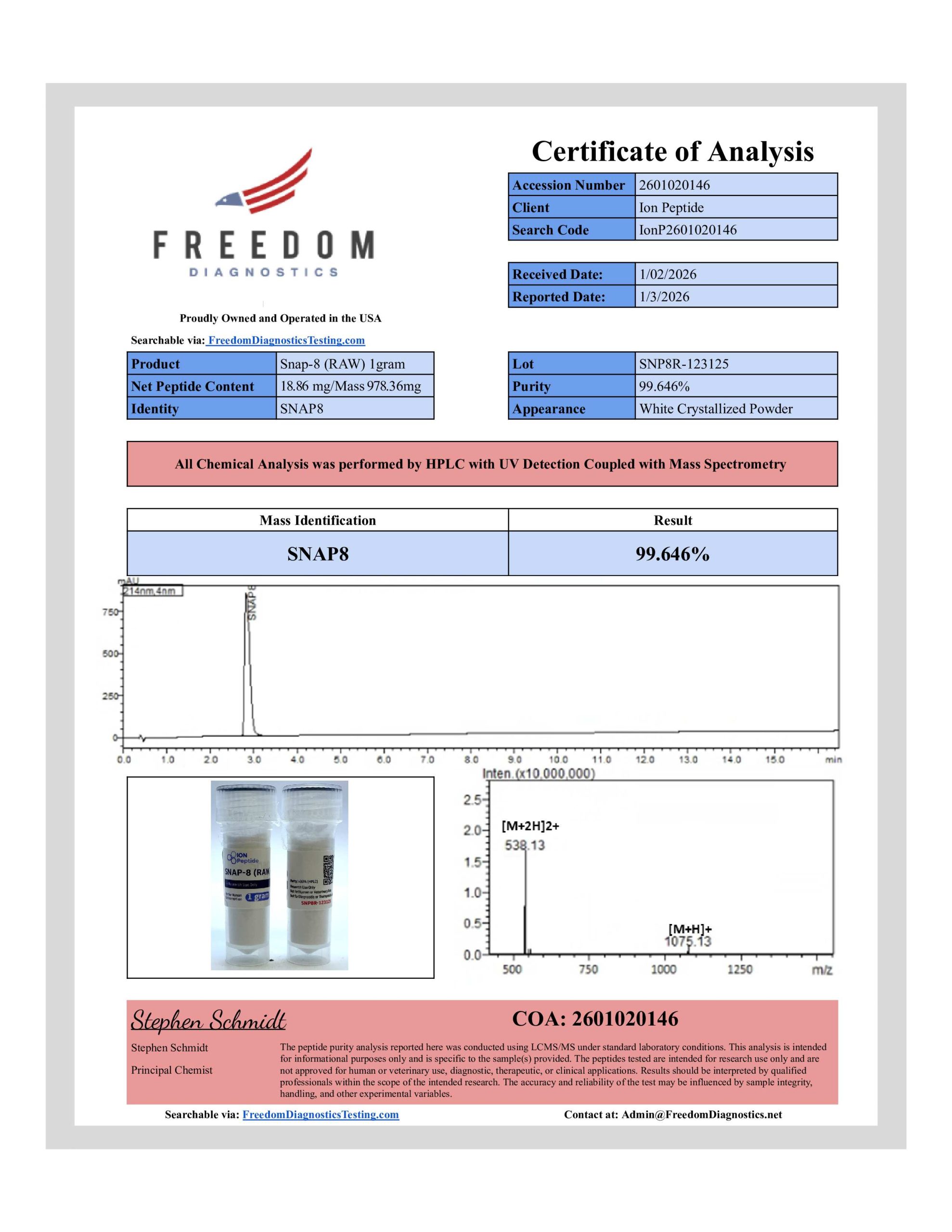
Certificate of Authenticity