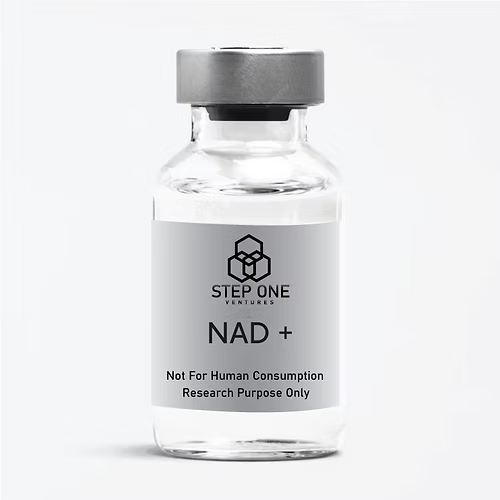
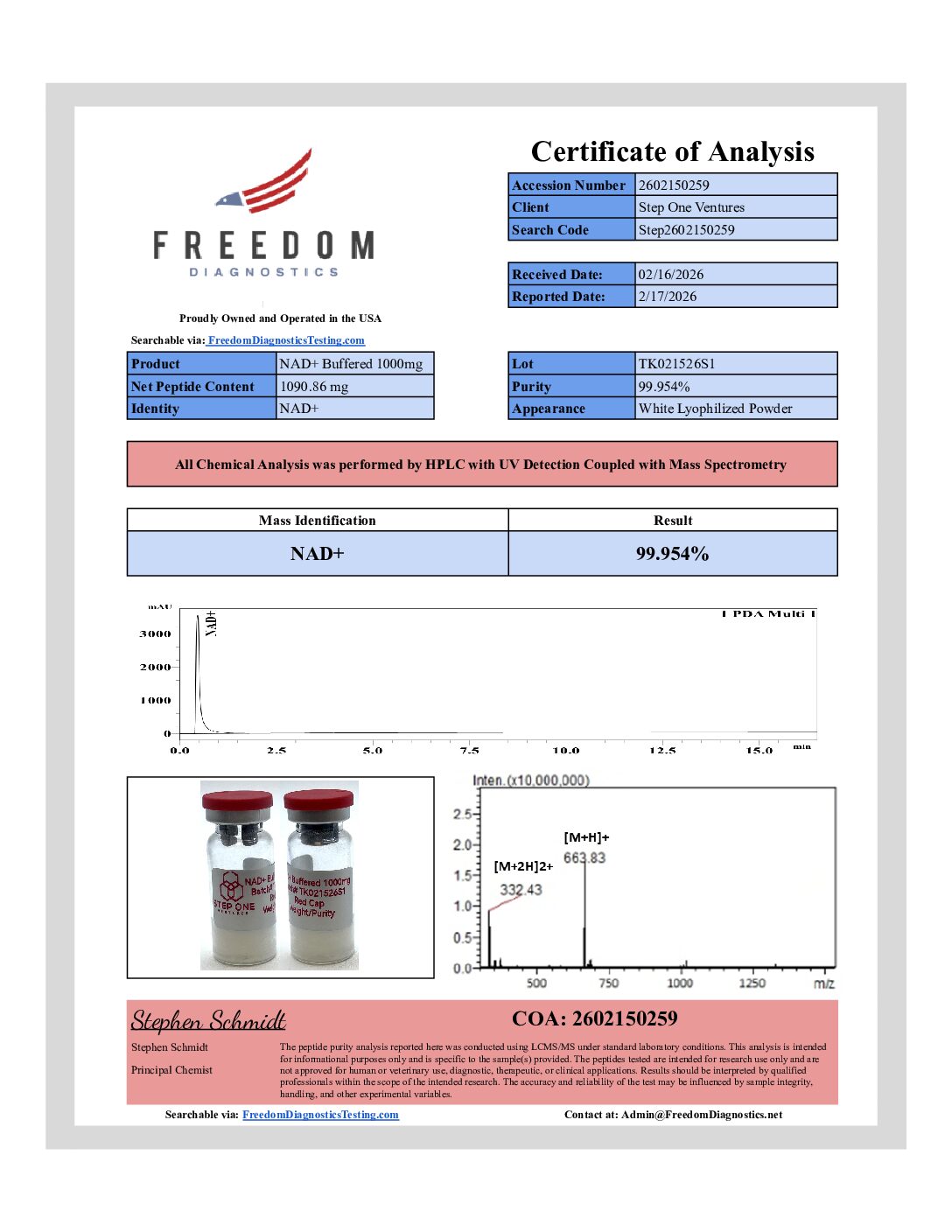
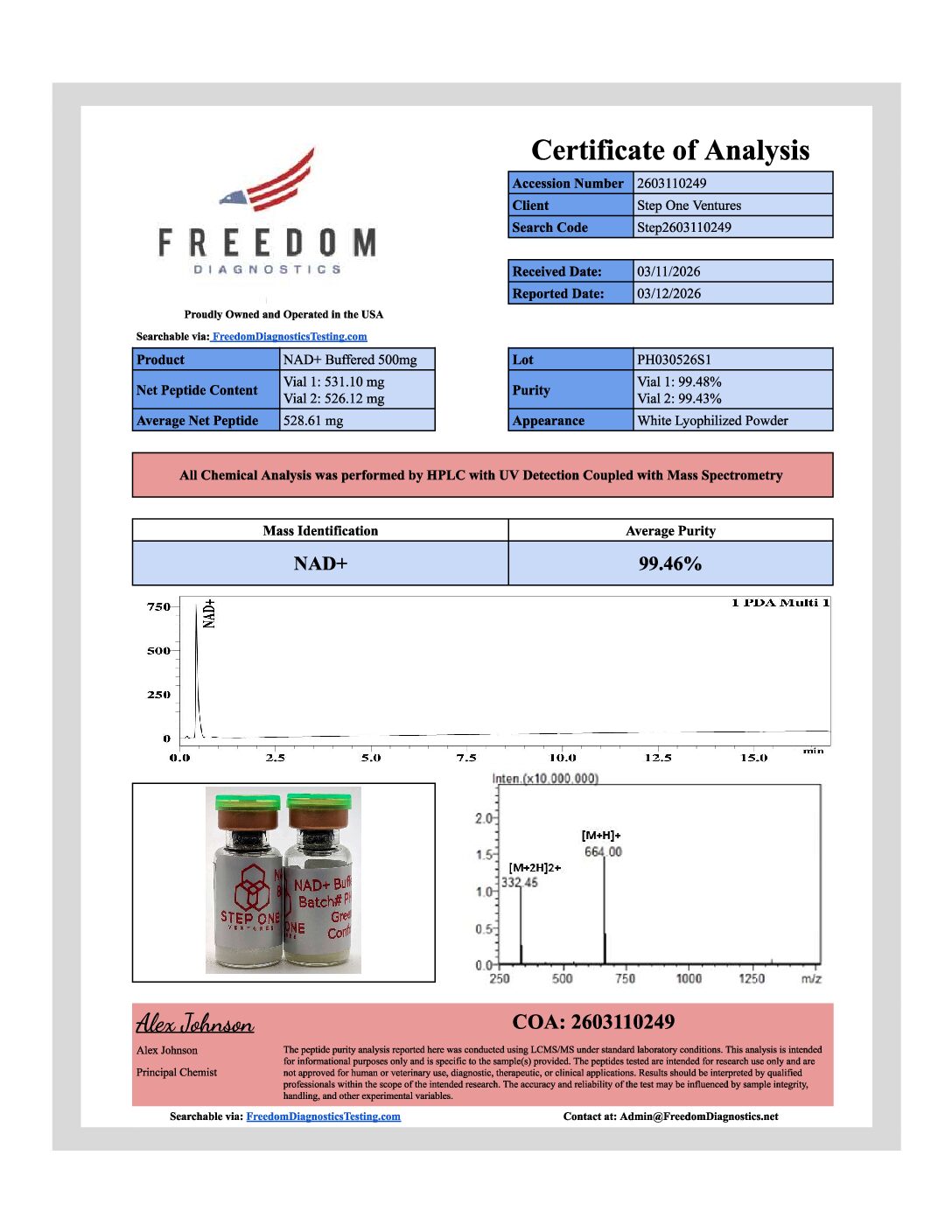
NAD+ (Nicotinamide Adenine Dinucleotide) is a fundamental coenzyme found in all living cells, essential for the basic function of cellular life. It exists in two forms: NAD+ (the oxidized form) and NADH (the reduced form).
In a scientific context, NAD+ plays a critical role in cellular metabolism, acting as a key electron acceptor in various metabolic pathways, including glycolysis and the Krebs cycle. It is vital for the transfer of energy from the breakdown of nutrients to other cellular processes.
Beyond its role in energy metabolism, NAD+ also serves as a crucial co-factor for a class of enzymes known as sirtuins. These proteins are studied for their involvement in a wide range of cellular processes, including gene expression, DNA repair, and maintaining genomic stability.