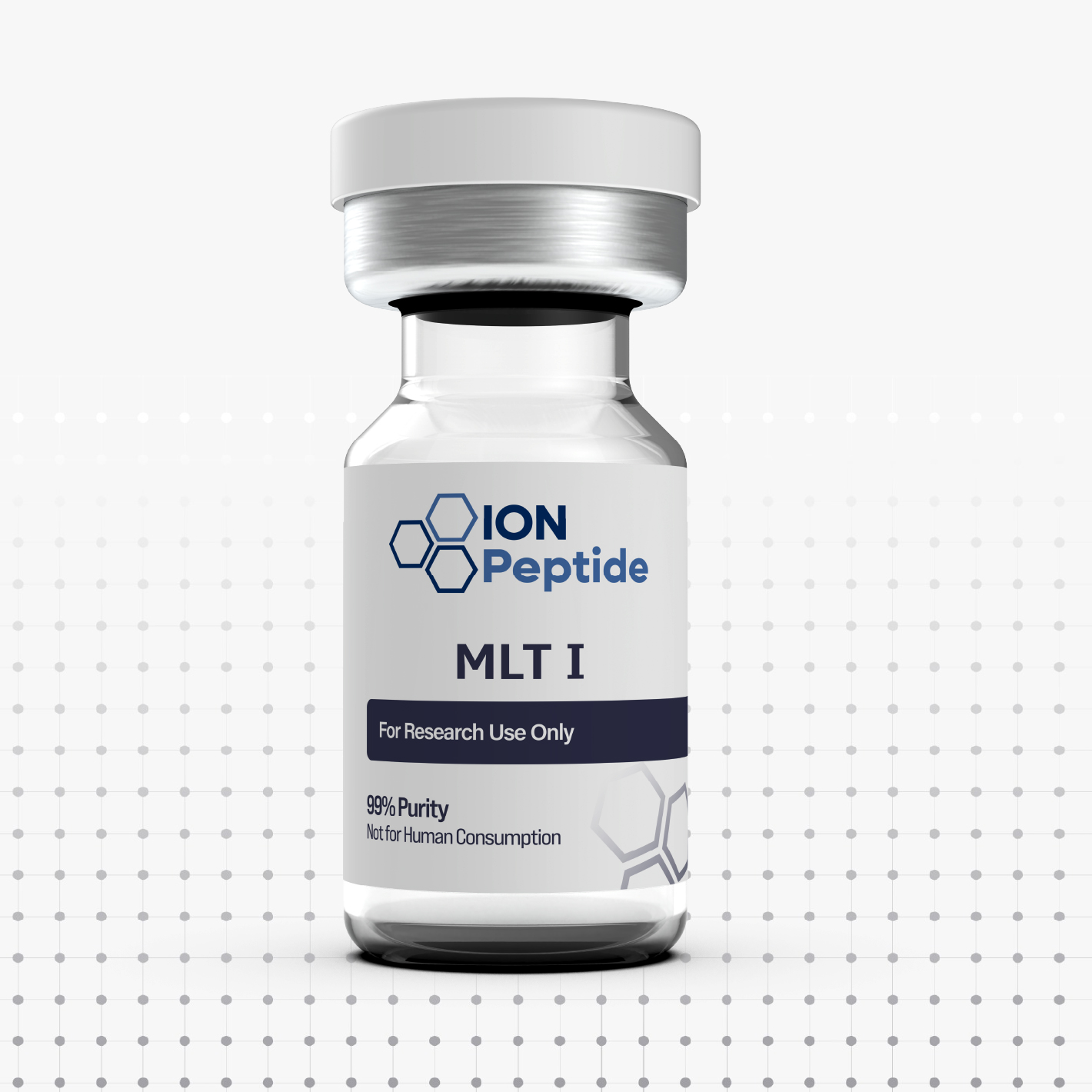
MLT I

Price range: $19.00 through $35.00

For research purposes only. Not for human or animal use & not FDA-approved. By purchasing, you confirm you are 21 or older and qualified researcher.
Quantity Price
4 - 5 $17.10
6 - 9 $15.96
10 + $14.25
Money Back Guarantee Guaranteed Quality Customer Support Fast Shipping
SKU: N/A Categories: , ,

Description

Product Description

Melanotan I (also known as Afamelanotide or NDP-MSH) is a synthetic analogue of alpha-melanocyte stimulating hormone (α-MSH) designed to be more stable and potent than the endogenous peptide. It is widely studied for its ability to stimulate melanogenesis, increase skin pigmentation, and provide photoprotection in preclinical models.

Researchers use Melanotan I to explore melanocortin receptor biology, UV protection mechanisms, DNA damage repair pathways, and inflammatory modulation. Its high receptor selectivity and prolonged half-life make it an excellent tool for dermatology and photobiology research.

For Laboratory and Scientific Research Use Only. Not for Human Consumption.


Why Researchers Choose Melanotan I
  • Potent α-MSH Analogue: Selective agonist of MC1R with improved metabolic stability.

  • Longer Half-Life: Extended duration of action compared to native α-MSH.

  • Photobiology Applications: Used to study pigmentation and UV-protective pathways.

  • Anti-Inflammatory Research: Investigated for its ability to modulate immune response.

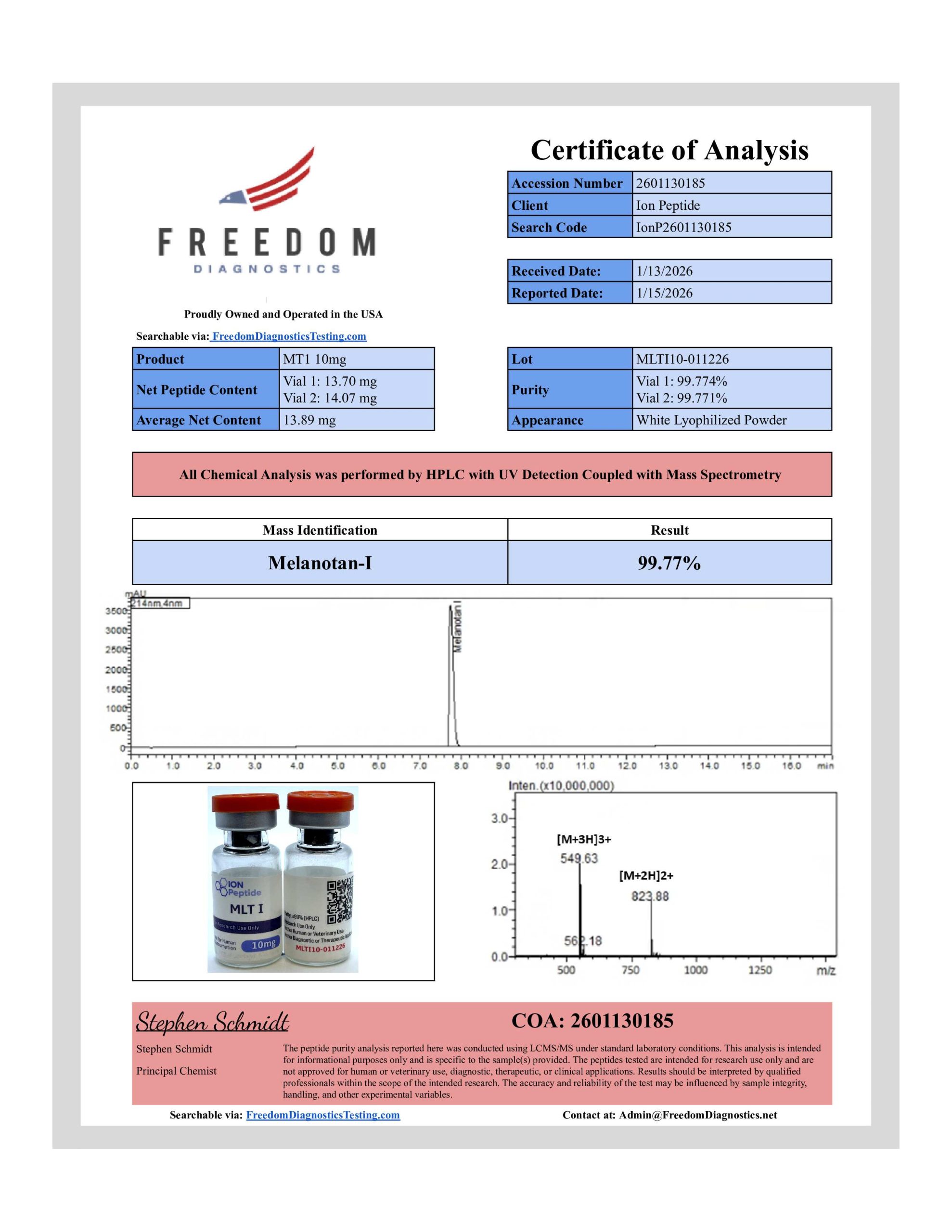
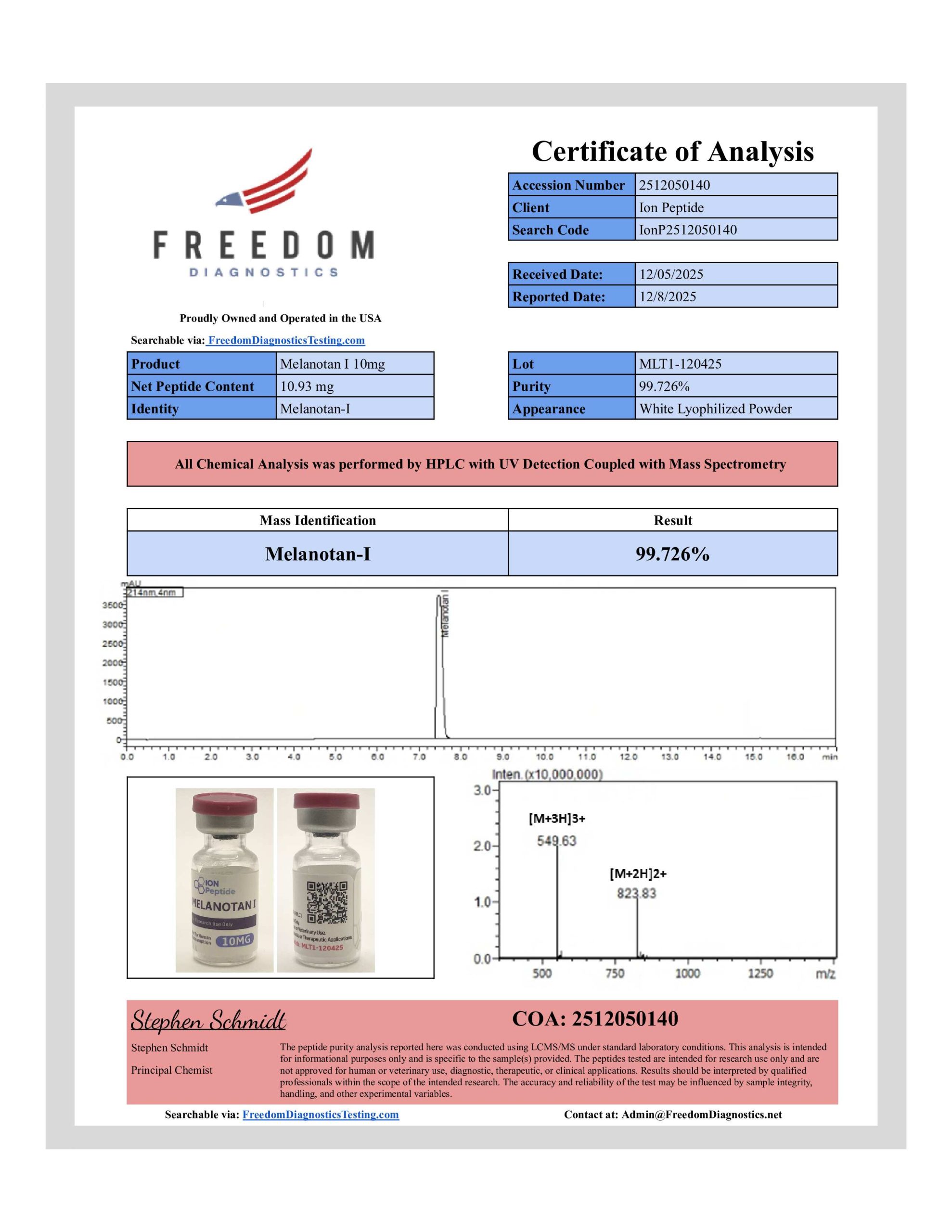
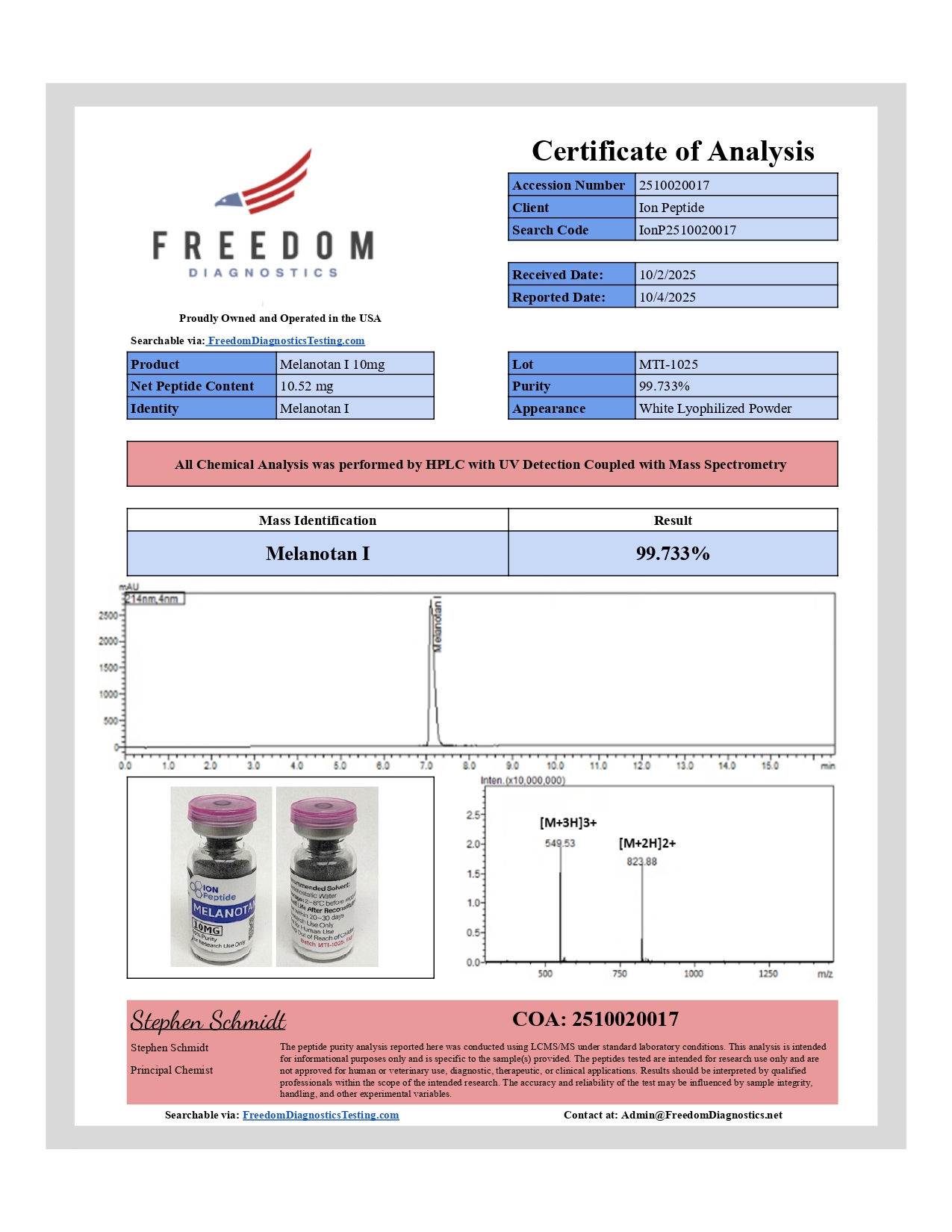
  • Batch Verified: Identity, purity (≥98%), and potency confirmed for every lot.


Important Note

For laboratory and scientific research only. Not for human consumption, veterinary use, or diagnostic purposes.
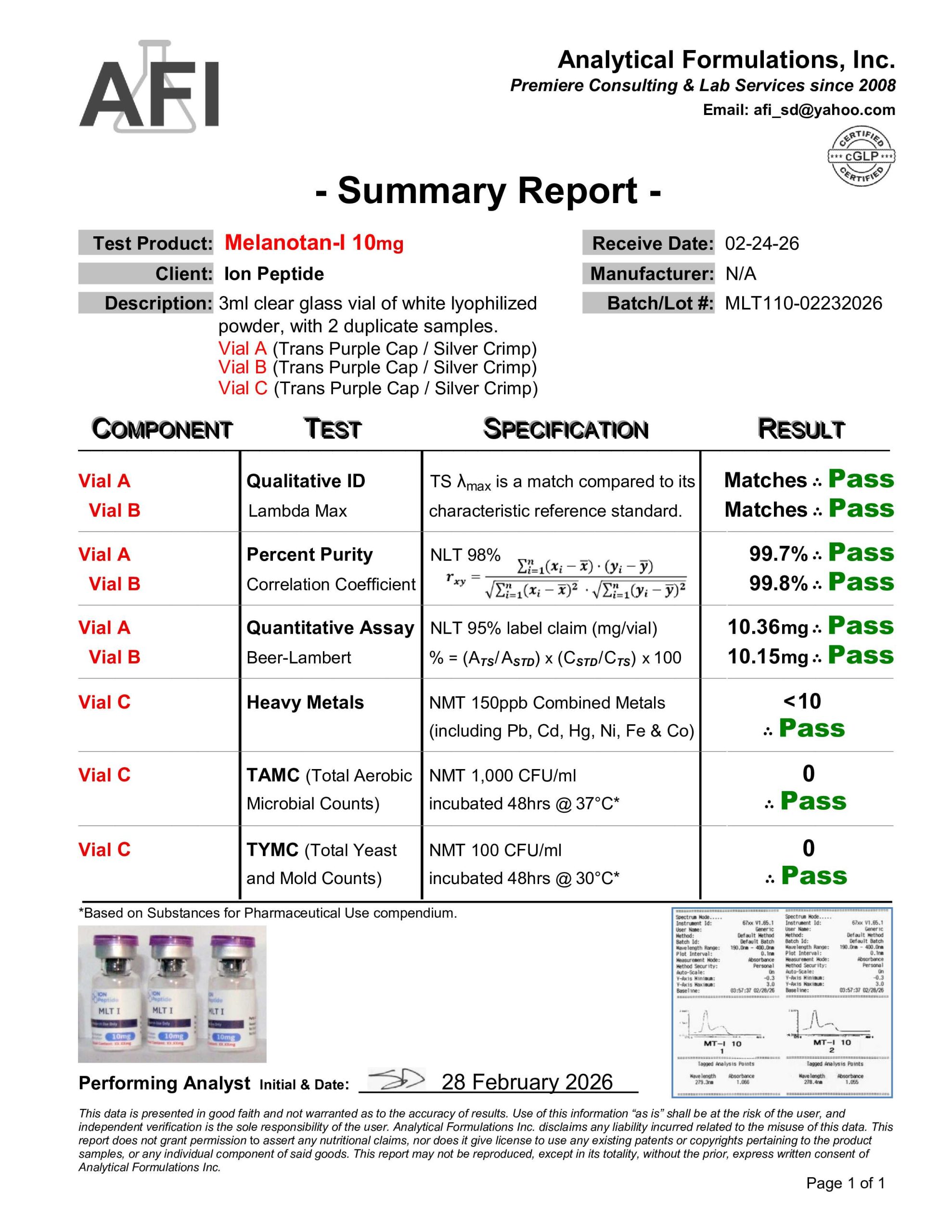
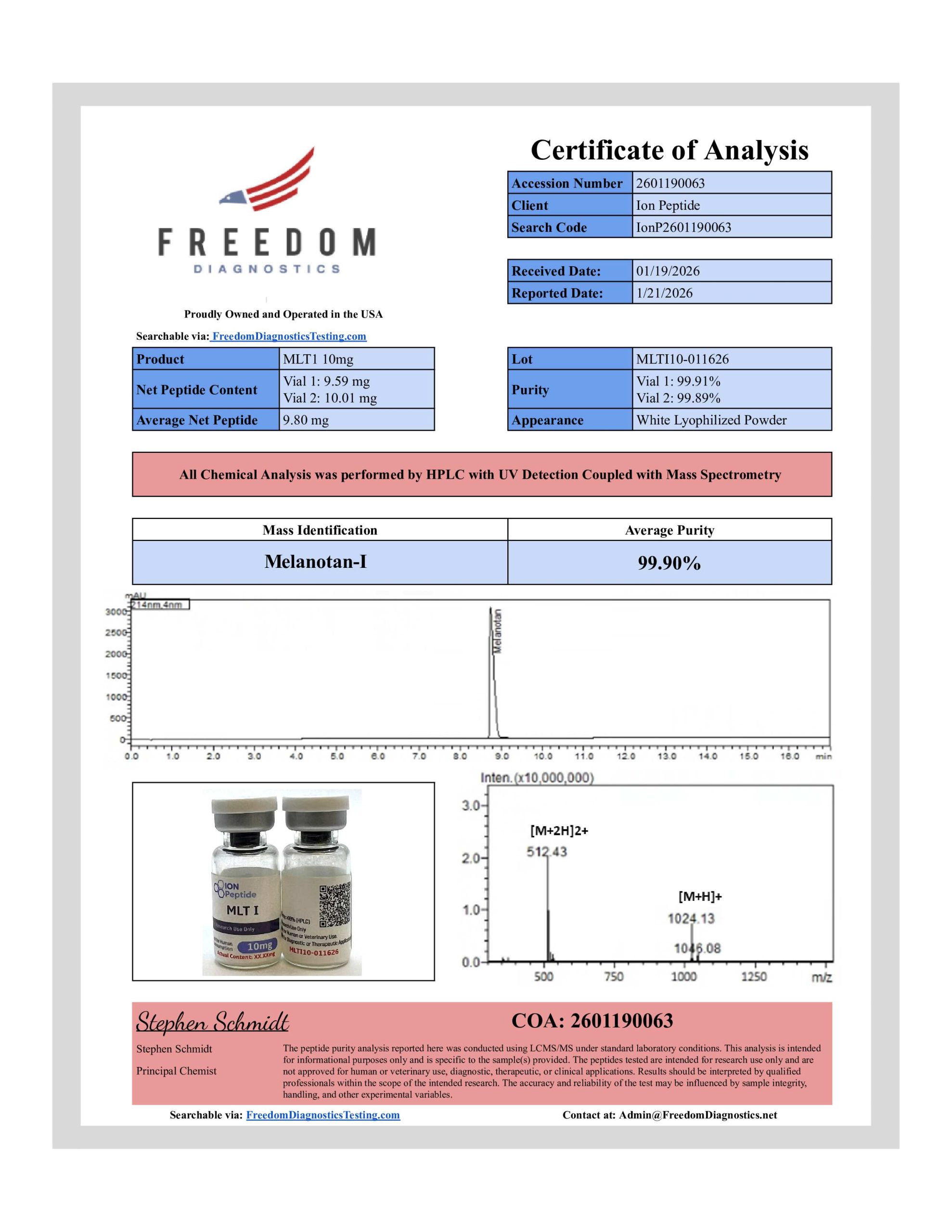
Details

Chemical Formula C₇₈H₁₁₁N₂₁O₁₉
Molecular Mass ~1646.9 Da
CAS Number 75921-69-6
Form Lyophilized peptide powder
Shelf Life 24 months (lyophilized)
Intended Use For preclinical and in vitro research only
Storage -20 °C (dry powder), -80 °C (after reconstitution)

Research

Research Applications

Melanogenesis & Pigmentation

Melanotan I has been shown to stimulate melanin production in melanocytes, resulting in increased pigmentation in preclinical and human studies [1].

Photoprotection Studies

Research indicates that Melanotan I reduces UV-induced DNA damage and may enhance natural photoprotective responses [2].

Anti-Inflammatory Effects

Acts on melanocortin receptors to suppress pro-inflammatory cytokines, making it useful for autoimmune and inflammatory condition research [3].

DNA Repair Mechanisms

Associated with increased nucleotide excision repair activity in response to UV damage [4].


References
  1. Dorr RT et al. (2004). Pharmacology of Melanotan I (Afamelanotide) and Skin Pigmentation. Annals of the New York Academy of Sciences.
    https://link.springer.com/content/pdf/10.1007/s40262-016-0501-5.pdf

  2. Kadekaro AL et al. (2010). Melanocortin and Photoprotection: Mechanisms of DNA Repair Enhancement. Pigment Cell & Melanoma Research.
    https://onlinelibrary.wiley.com/doi/pdf/10.1111/j.1755-148X.2010.00679.x

  3. Getting SJ (2006). Melanocortin Peptides and Their Role in Inflammation. Pharmacology & Therapeutics.
    https://www.sciencedirect.com/science/article/pii/S0163725805002809

  4. Abdel-Malek ZA et al. (2009). MC1R Activation and Nucleotide Excision Repair After UV Exposure. PNAS.
    https://onlinelibrary.wiley.com/doi/pdf/10.1111/j.1755-148X.2010.00679.x

Mechanism of Action

Mechanism of Action (How Melanotan I Works)
  • MC1R Activation: Selectively activates melanocortin-1 receptors on melanocytes, triggering melanin synthesis [Dorr 2004].

  • Upregulation of Tyrosinase: Increases expression and activity of tyrosinase, the rate-limiting enzyme in melanogenesis [Dorr 2004].

  • Enhanced DNA Repair: Stimulates p53 pathway and nucleotide excision repair following UV exposure [Abdel-Malek 2009].

  • Anti-Inflammatory Signaling: Inhibits NF-κB activation and cytokine release via melanocortin receptor signaling [Getting 2006].

  • Photoprotection & Antioxidant Effects: Reduces reactive oxygen species and protects against UV-induced oxidative damage [Kadekaro 2010].


References
  1. Dorr RT et al. (2004). Pharmacology of Melanotan I (Afamelanotide) and Skin Pigmentation. Annals of the New York Academy of Sciences.
    https://link.springer.com/content/pdf/10.1007/s40262-016-0501-5.pdf

  2. Kadekaro AL et al. (2010). Melanocortin and Photoprotection: Mechanisms of DNA Repair Enhancement. Pigment Cell & Melanoma Research.
    https://onlinelibrary.wiley.com/doi/pdf/10.1111/j.1755-148X.2010.00679.x

  3. Getting SJ (2006). Melanocortin Peptides and Their Role in Inflammation. Pharmacology & Therapeutics.
    https://www.sciencedirect.com/science/article/pii/S0163725805002809

  4. Abdel-Malek ZA et al. (2009). MC1R Activation and Nucleotide Excision Repair After UV Exposure. PNAS.
    https://onlinelibrary.wiley.com/doi/pdf/10.1111/j.1755-148X.2010.00679.x

Certificate of Authenticity