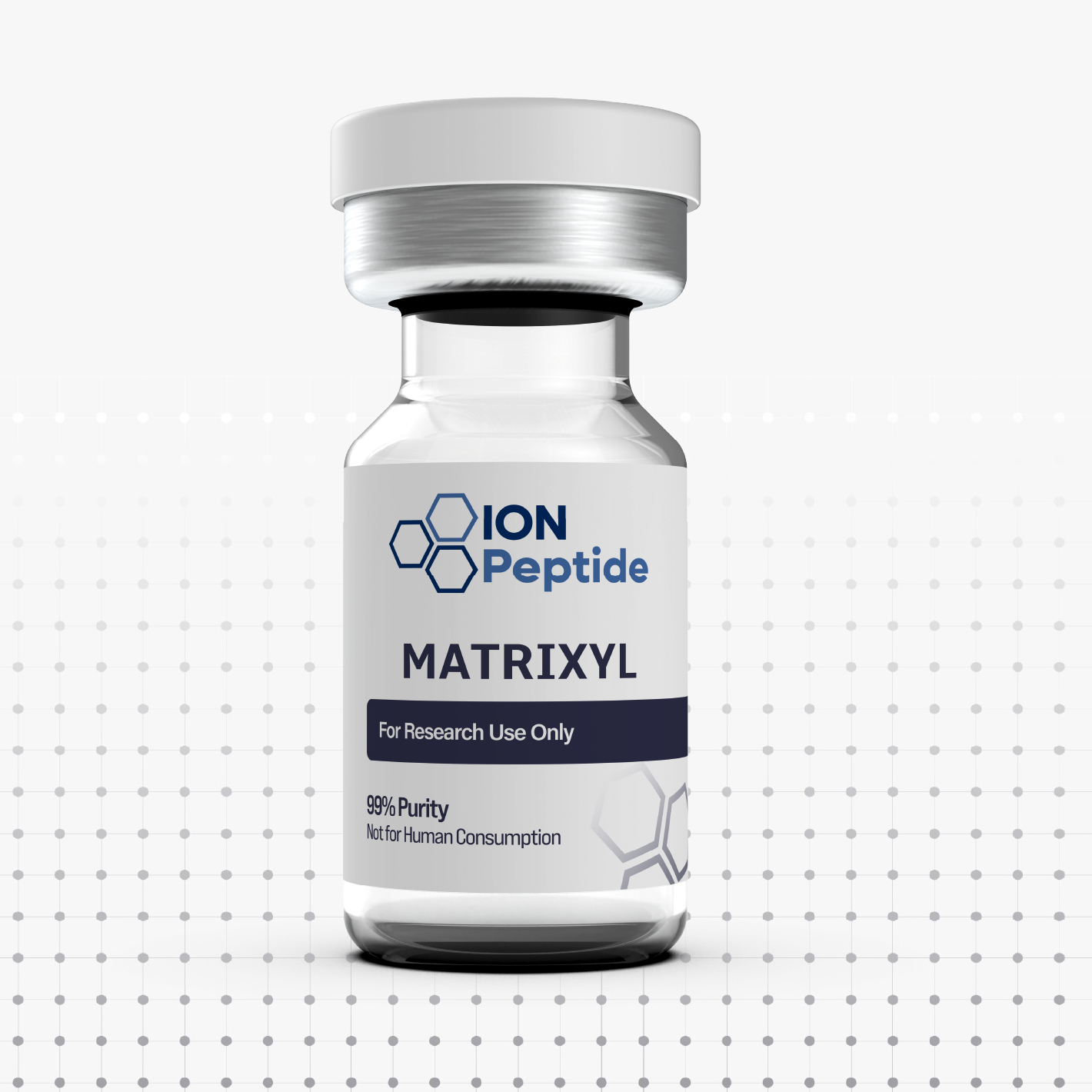
Matrixyl – 10mg

$129.00

For research purposes only. Not for human or animal use & not FDA-approved. By purchasing, you confirm you are 21 or older and qualified researcher.

Out of stock

Join the waitlist to be emailed when this product becomes available

Description

Matrixyl

Cosmetic-Grade Peptide Complex
Tagline: Signal Peptide & Collagen Matrix Research


Product Description

Matrixyl is a cosmetic peptide complex commonly composed of signal peptides such as palmitoyl pentapeptide or related derivatives, used in formulation and laboratory research for studying peptide–protein interactions and extracellular matrix-related systems.

Signal peptides in Matrixyl are designed to model short amino acid sequences involved in cellular communication, particularly in relation to protein synthesis signaling and structural protein interactions in cosmetic research environments.

In topical formulations, Matrixyl is used to evaluate peptide incorporation, surface interaction behavior, and formulation stability within aqueous or emulsion-based systems.

For Cosmetic and Laboratory Research Use Only. Not for Injectable or Therapeutic Use.


Why Researchers Choose Matrixyl
  • Well-known cosmetic signal peptide complex
  • Commonly used in topical formulation research
  • Suitable for peptide–protein interaction studies
  • Compatible with serums, creams, and emulsions
  • Widely documented in cosmetic science literature
  • Designed for surface-level application systems

Important Note

For cosmetic and laboratory research use only. Not for human consumption, injection, or therapeutic application.
Details

Product Name Matrixyl
Compound Class Cosmetic signal peptide complex
Primary Components Palmitoyl peptide derivatives (e.g., pentapeptides)
Formulation Type Cosmetic ingredient / peptide solution
Application Area Topical (cosmetic research)

Research

Research Applications

Signal Peptide Research Models

Matrixyl is used in laboratory settings to study short peptide sequences involved in cellular signaling and communication pathways.

Extracellular Matrix Interaction Studies

Signal peptides are investigated for their interaction with structural proteins and extracellular matrix components in cosmetic and biochemical research models.

Topical Formulation & Delivery Systems

Matrixyl is commonly incorporated into creams, serums, and emulsions to evaluate peptide stability, distribution, and compatibility.

Protein Interaction & Peptide Function Analysis

Researchers use Matrixyl to examine peptide–protein interactions and structure–function relationships in controlled environments.


References
  1. Matrixyl (Palmitoyl Pentapeptide) — cosmetic peptide overview.
    https://en.wikipedia.org/wiki/Matrixyl
  2. Signal peptides in cosmetic science and formulation systems.
    https://www.ncbi.nlm.nih.gov/pmc/articles/PMC2921764/
  3. Peptide–protein interaction mechanisms (review).
    https://www.ncbi.nlm.nih.gov/pmc/articles/PMC3183920/
  4. Palmitoylated peptides and lipid interaction behavior.
    https://pubmed.ncbi.nlm.nih.gov/15671673/

Mechanism of Action

Mechanism of Action
Signal Peptide Function

Matrixyl peptides mimic short signaling sequences, allowing study of how peptides interact with protein synthesis pathways in experimental systems.

Peptide–Protein Interaction

These peptides are investigated for their ability to associate with proteins and influence structural interactions in extracellular environments.

Lipid Modification (Palmitoylation)

The palmitoyl group enhances lipophilicity and surface interaction, allowing improved compatibility with topical formulations.

Surface-Level Activity

Matrixyl functions at the formulation and surface interaction level, without systemic or pharmacological activity in cosmetic research contexts.


References
  1. Matrixyl (Palmitoyl Pentapeptide) — cosmetic peptide overview.
    https://en.wikipedia.org/wiki/Matrixyl
  2. Signal peptides in cosmetic science and formulation systems.
    https://www.ncbi.nlm.nih.gov/pmc/articles/PMC2921764/
  3. Peptide–protein interaction mechanisms (review).
    https://www.ncbi.nlm.nih.gov/pmc/articles/PMC3183920/
  4. Palmitoylated peptides and lipid interaction behavior.
    https://pubmed.ncbi.nlm.nih.gov/15671673/