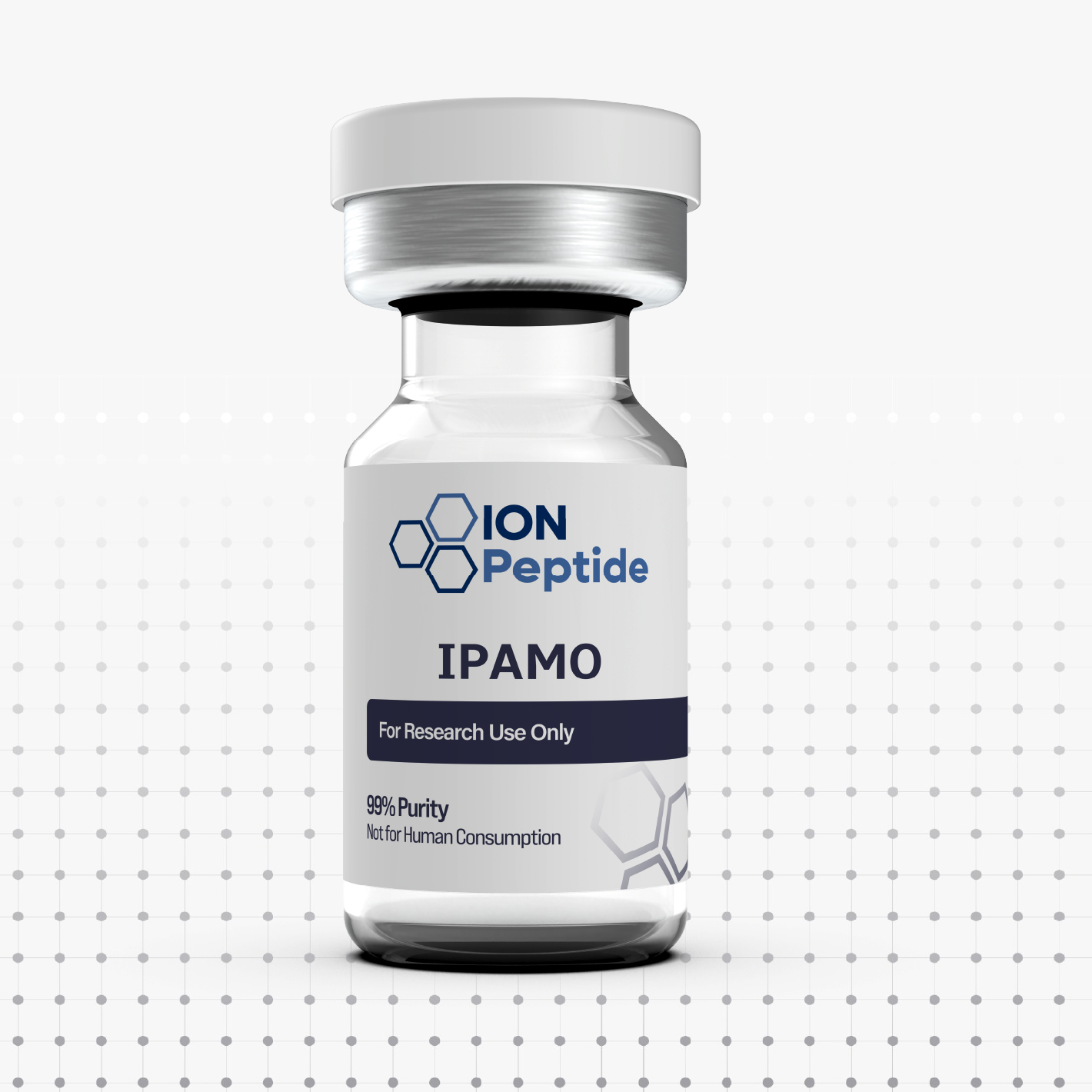
Ipamo

Price range: $35.00 through $42.00

For research purposes only. Not for human or animal use & not FDA-approved. By purchasing, you confirm you are 21 or older and qualified researcher.

Quantity Price
4 - 5 $31.50
6 - 9 $29.40
10 + $26.25
Money Back Guarantee Guaranteed Quality Customer Support Fast Shipping
SKU: N/A Categories: , ,

Description

Ipamorelin Peptide

Research-Grade GHRP Analogue
Tagline: Selective GH Secretagogue


Product Description

Ipamorelin is a highly selective growth hormone secretagogue (GHRP) that stimulates GH release via activation of ghrelin (GHS-R1a) receptors. Unlike earlier GHRPs (e.g., GHRP-6), Ipamorelin has minimal impact on cortisol or prolactin levels, making it a more targeted research tool.

Researchers use Ipamorelin Peptide in preclinical models to study pituitary GH release, IGF-1 production, muscle growth pathways, fat metabolism, and tissue repair mechanisms. Its clean receptor profile and short half-life make it ideal for pulsatile GH secretion research.

For Laboratory and Scientific Research Use Only. Not for Human Consumption.


Why Researchers Choose Ipamorelin Peptide
  • Highly Selective: Minimal effect on ACTH, cortisol, and prolactin.

  • Potent GH Release: Strong activation of GH pulses in animal models.

  • Favorable Safety Profile: Reduced off-target endocrine effects compared to GHRP-6 or Hexarelin.

  • Short-Acting: Allows study of physiological pulsatile GH release.

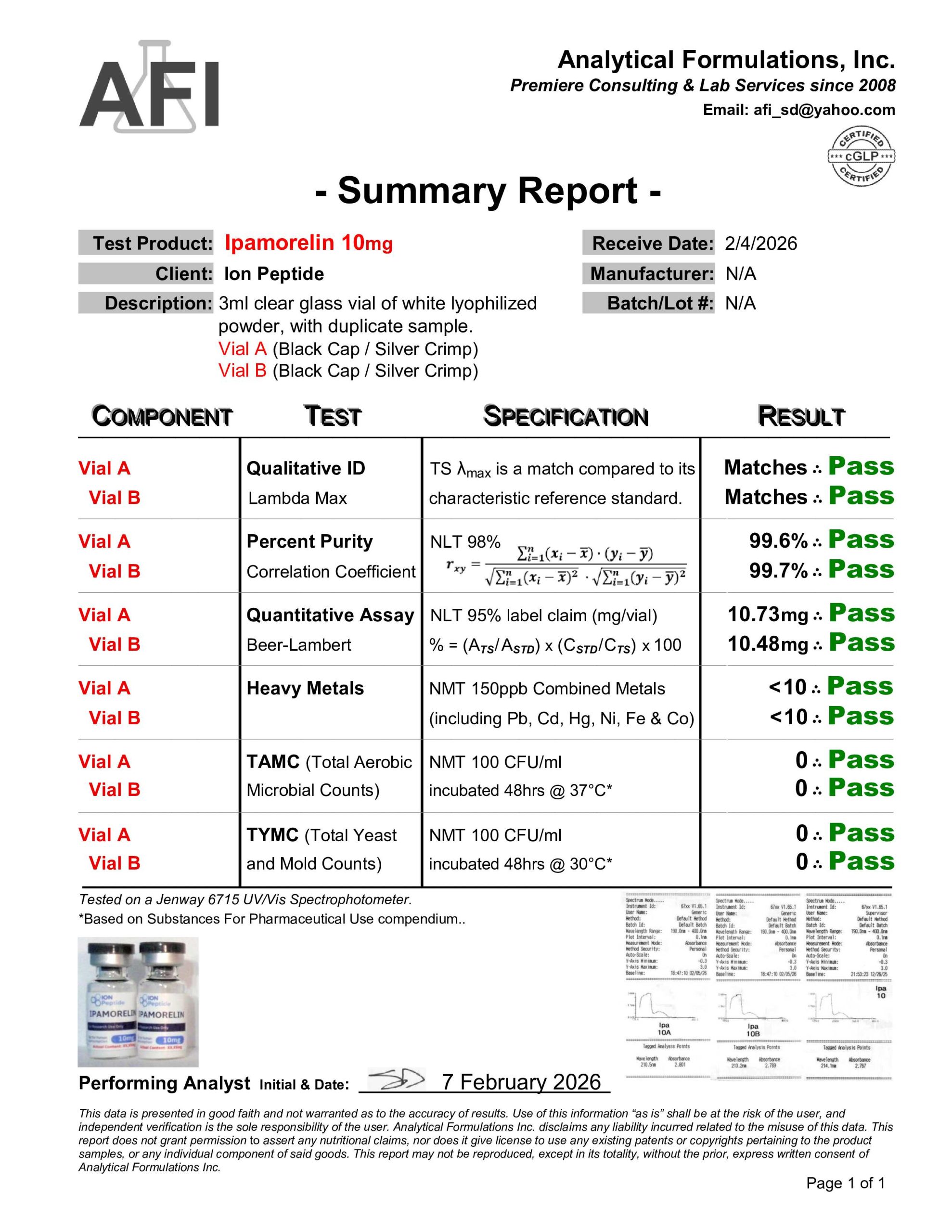
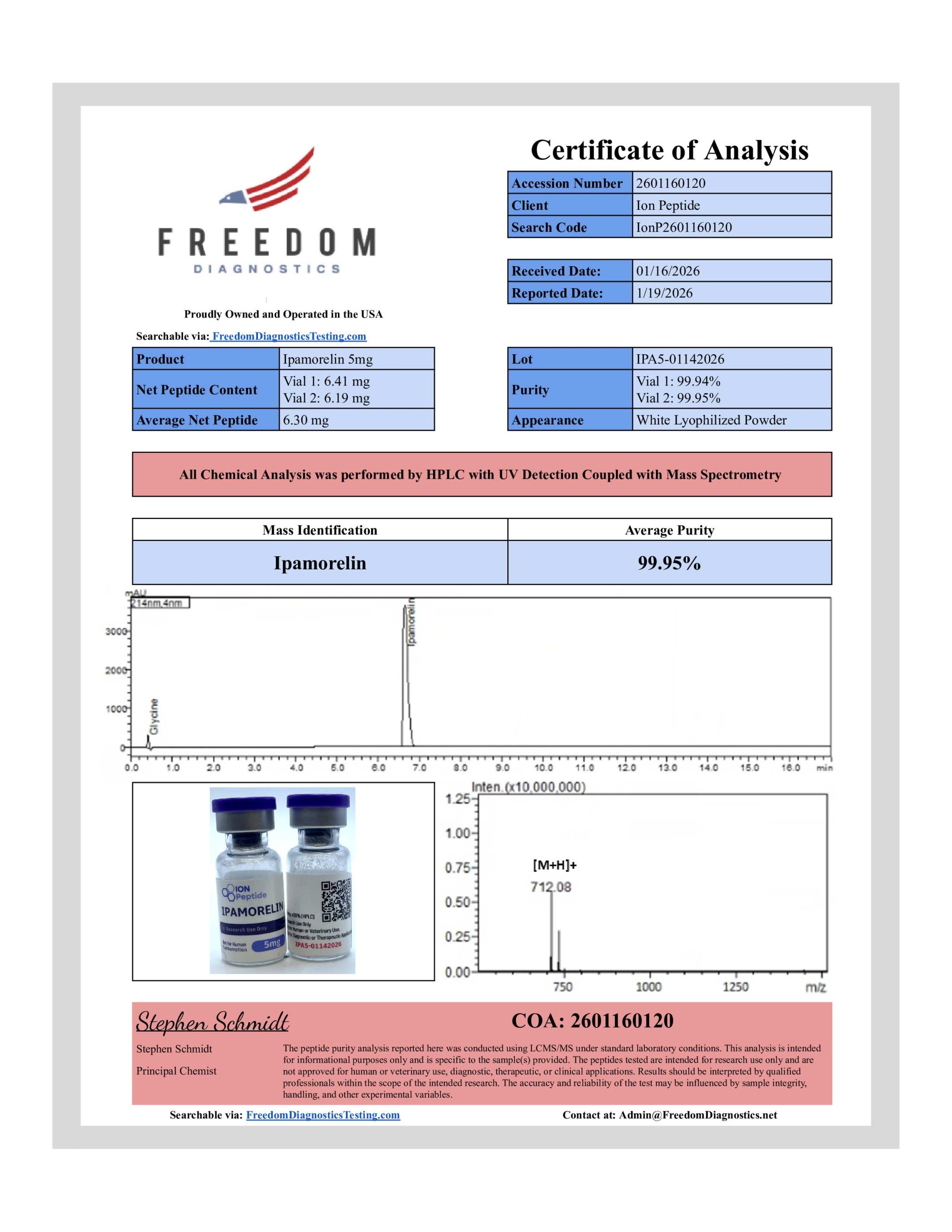
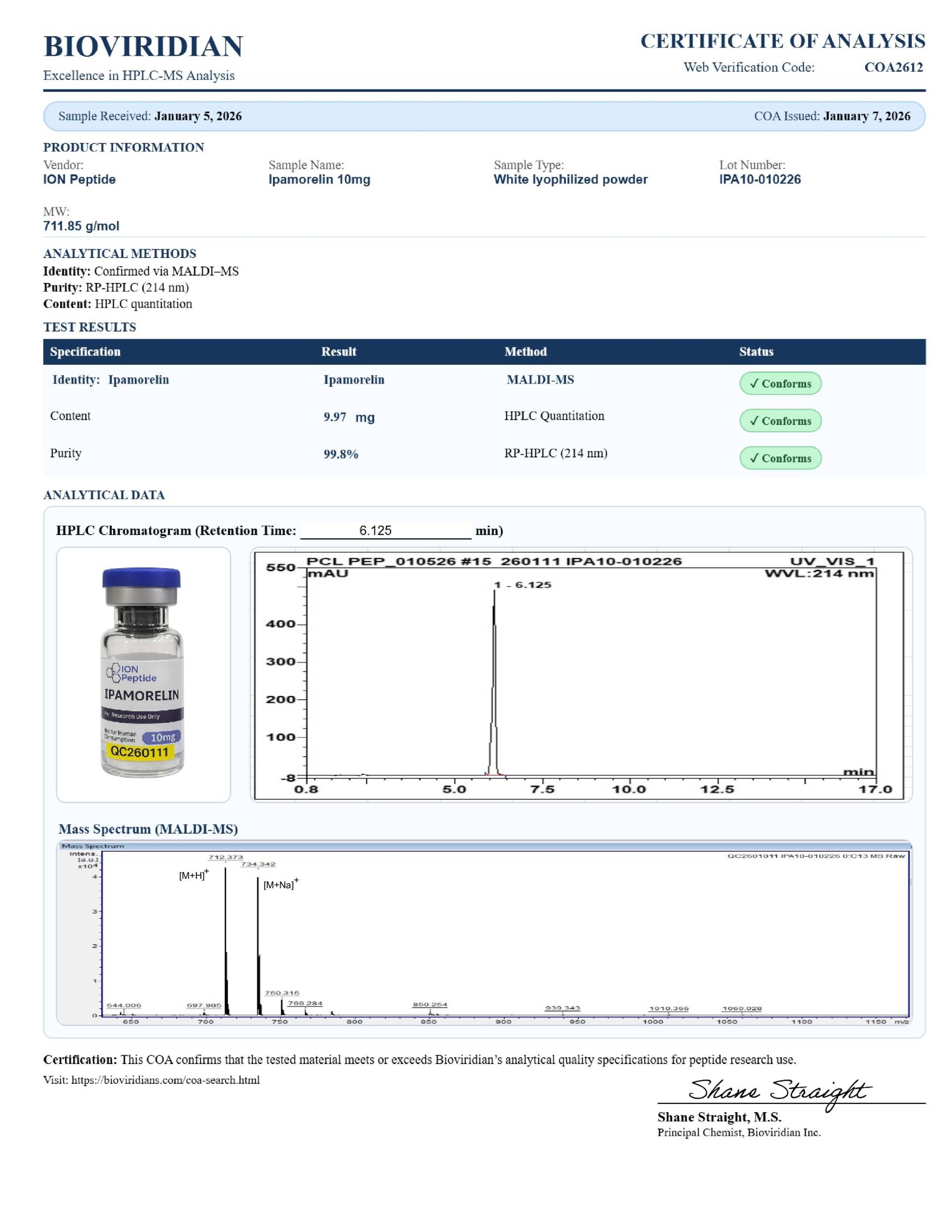
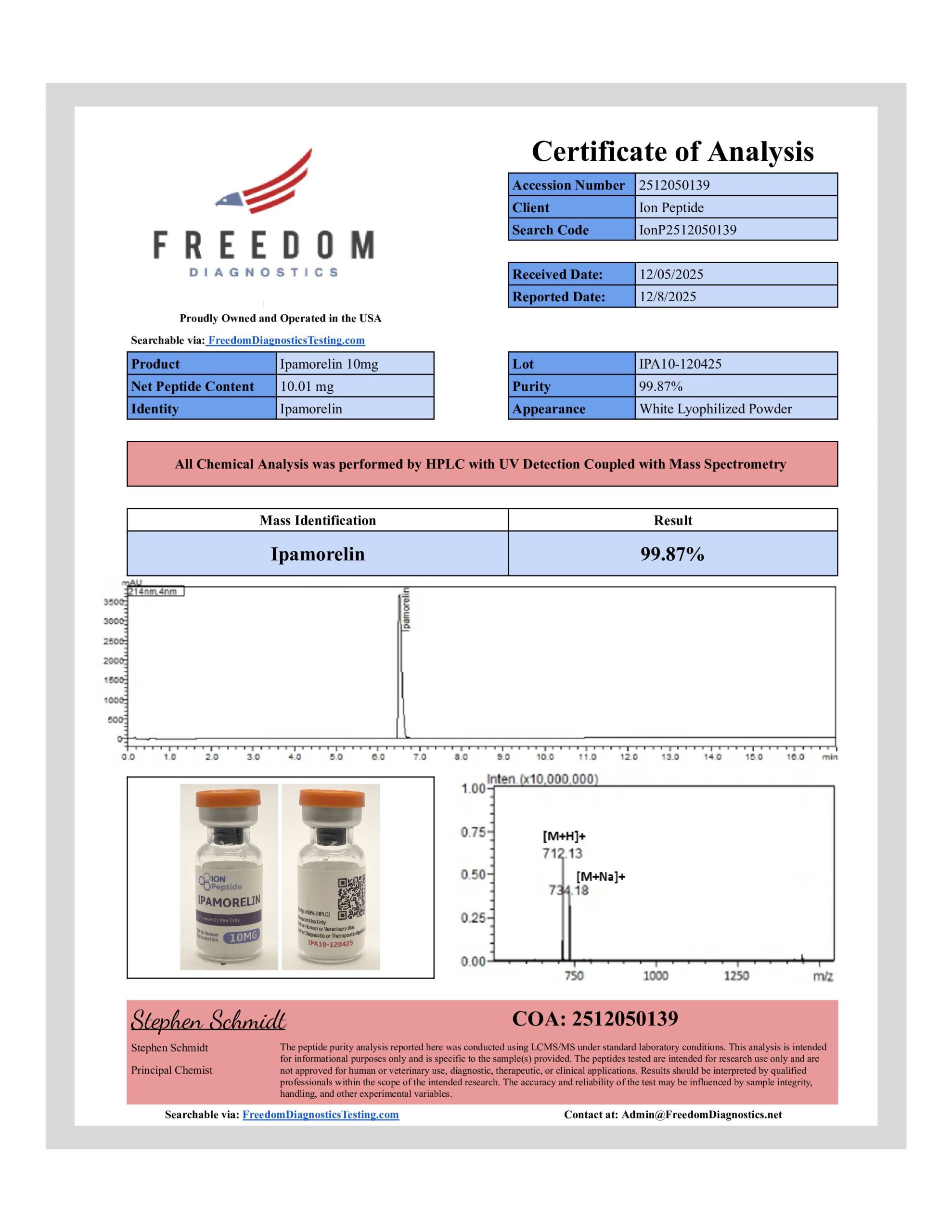
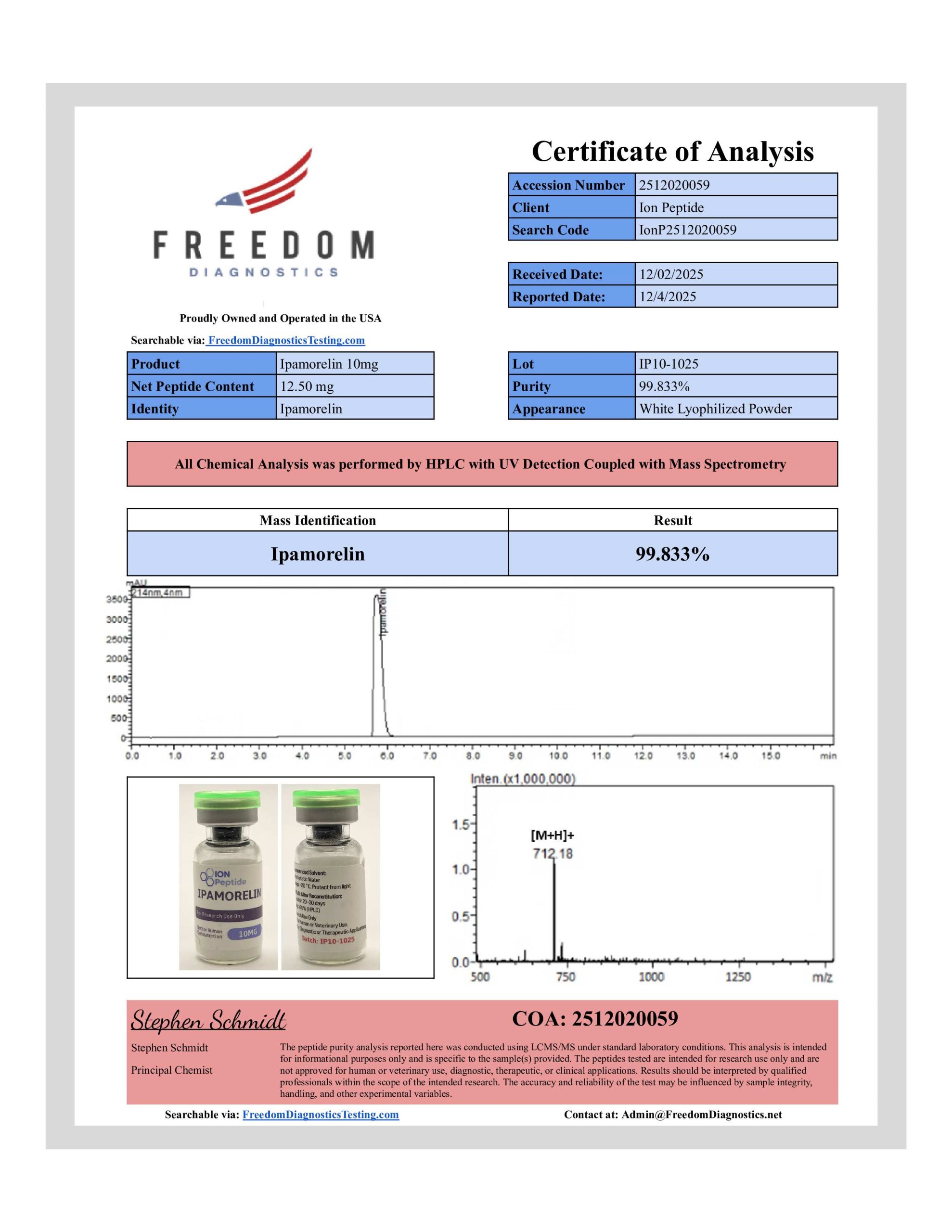
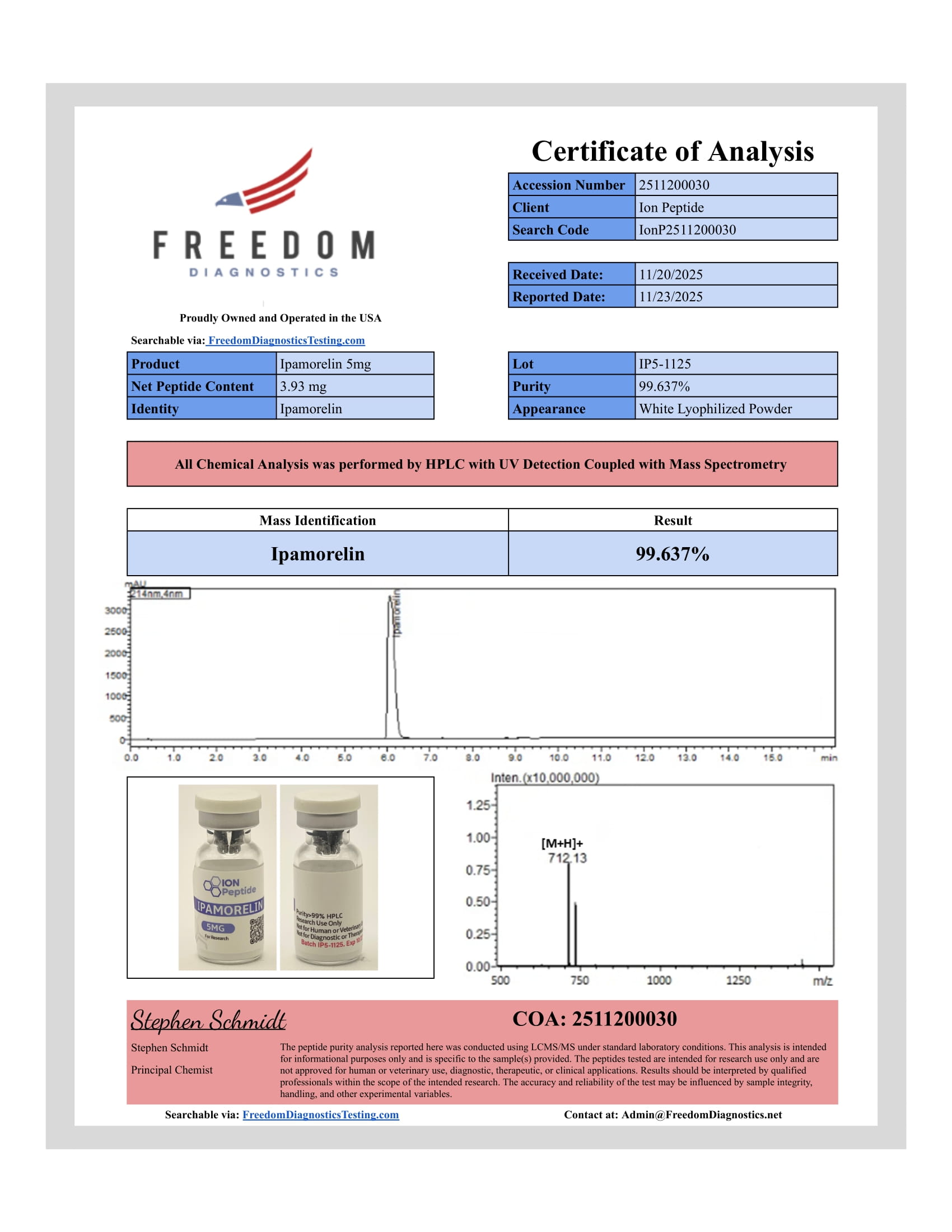
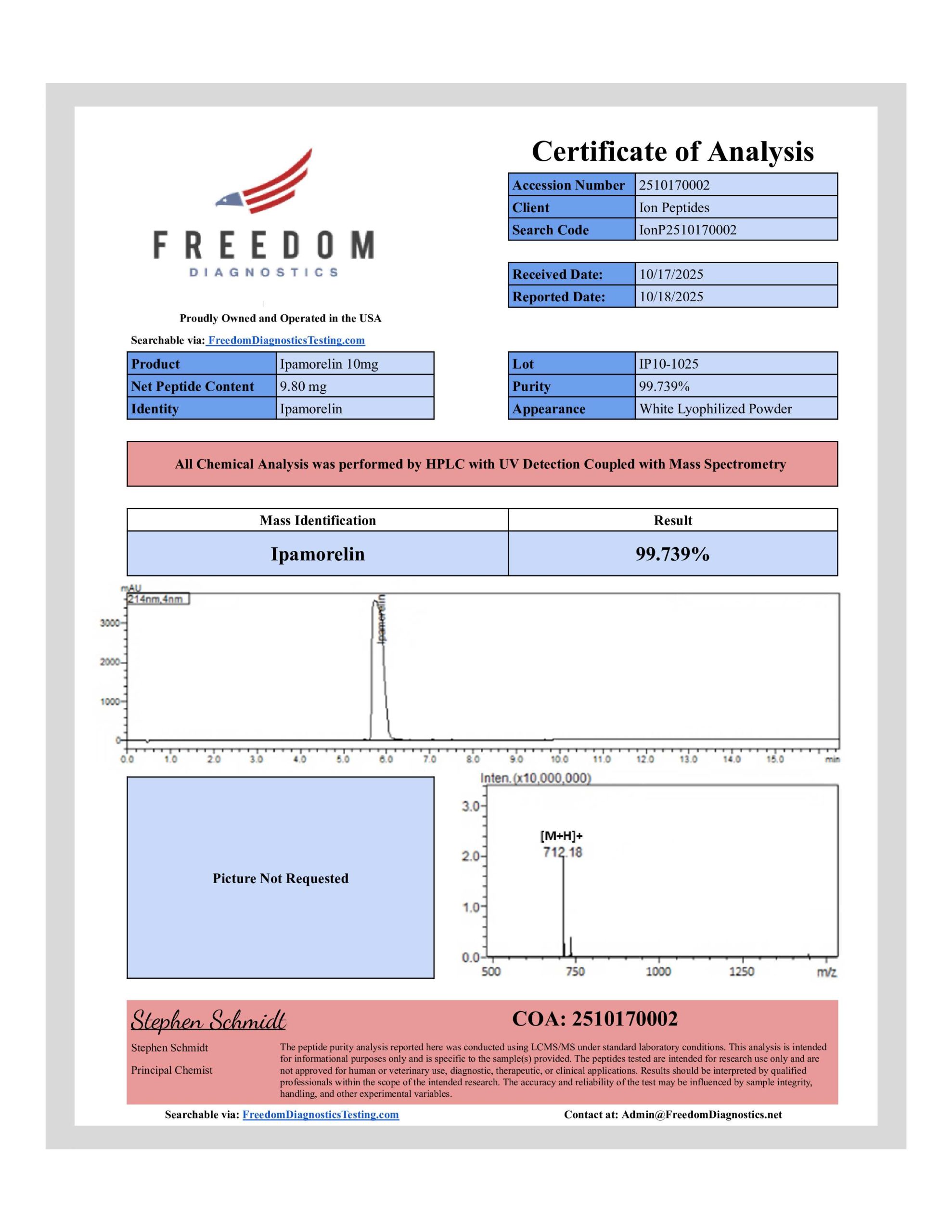
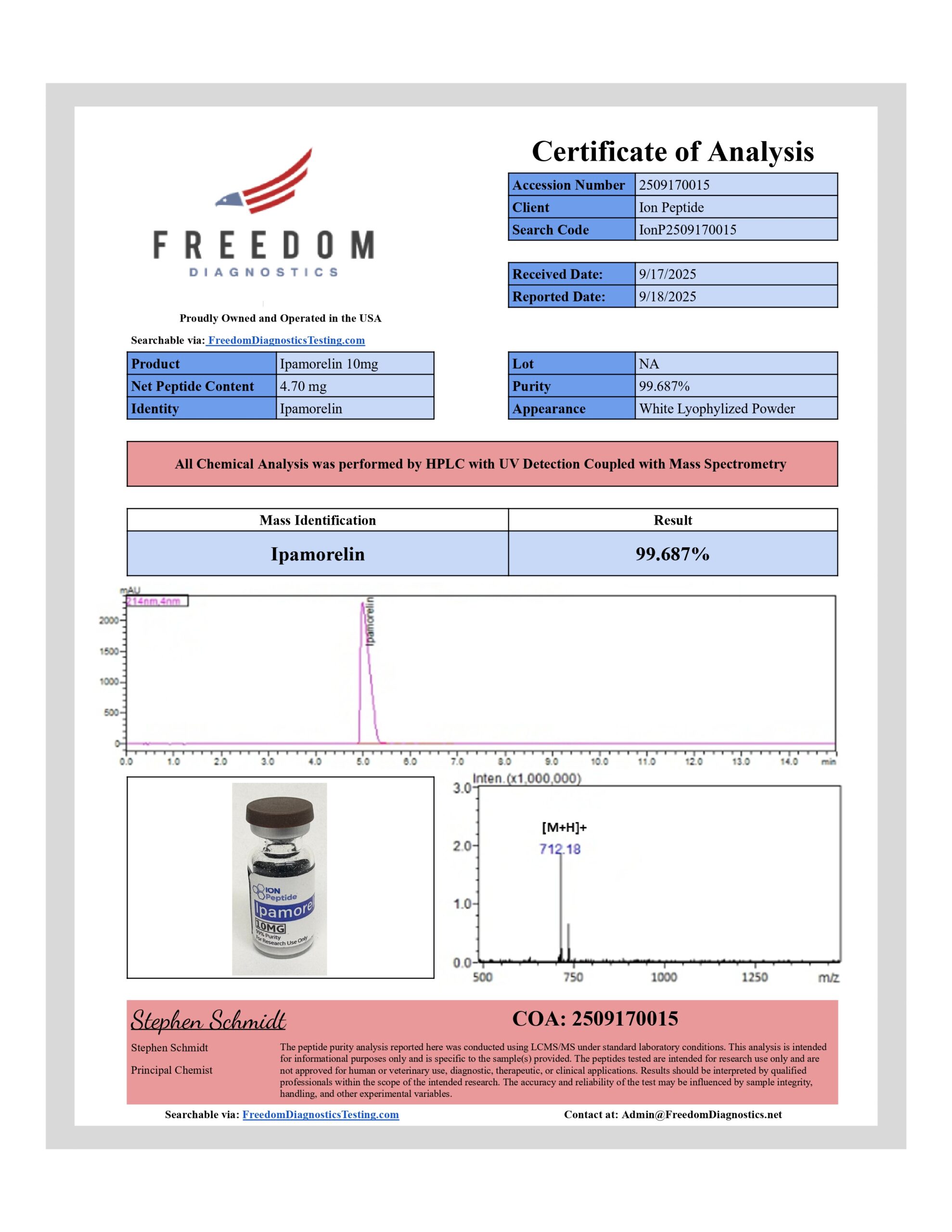
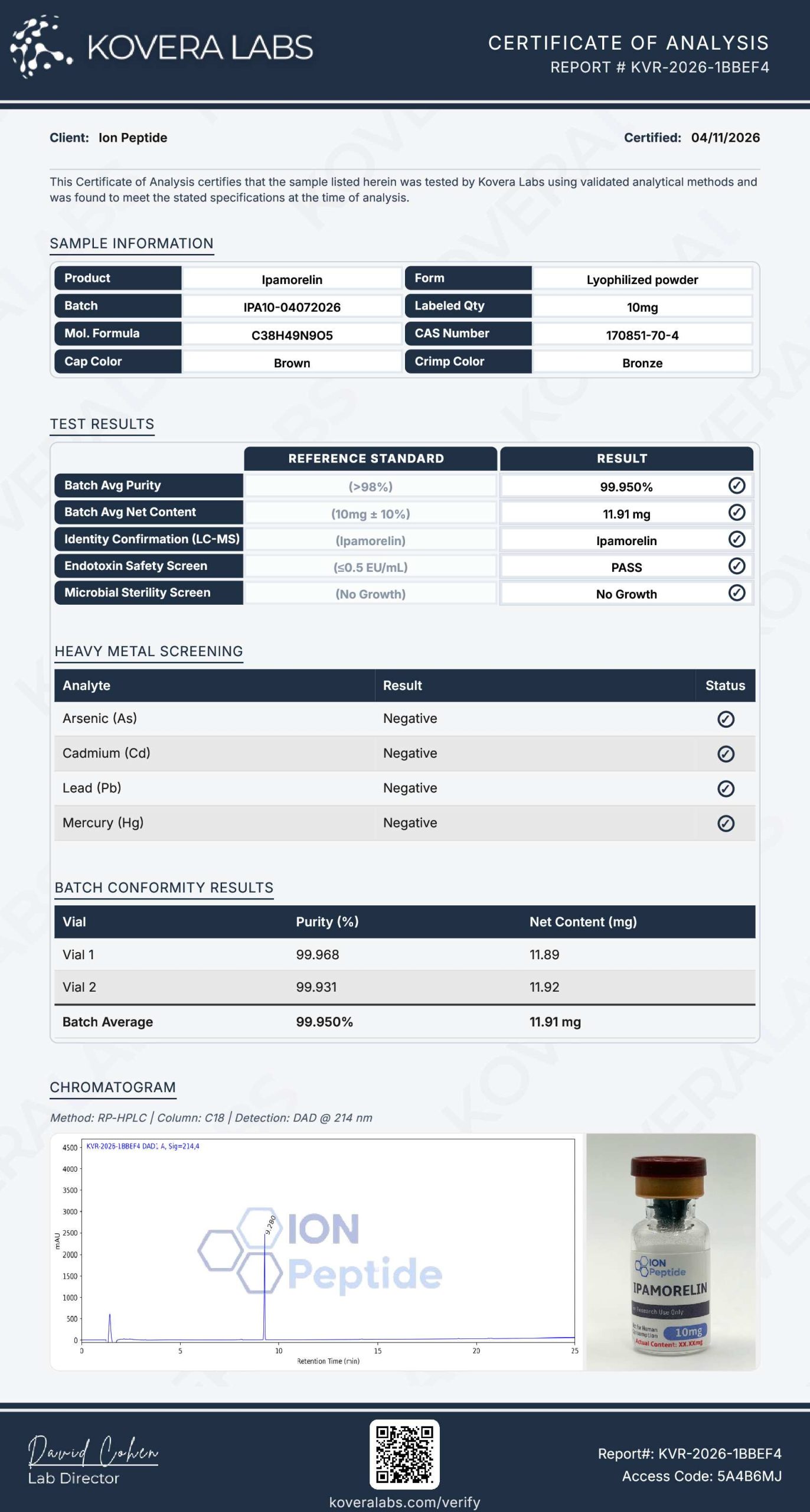
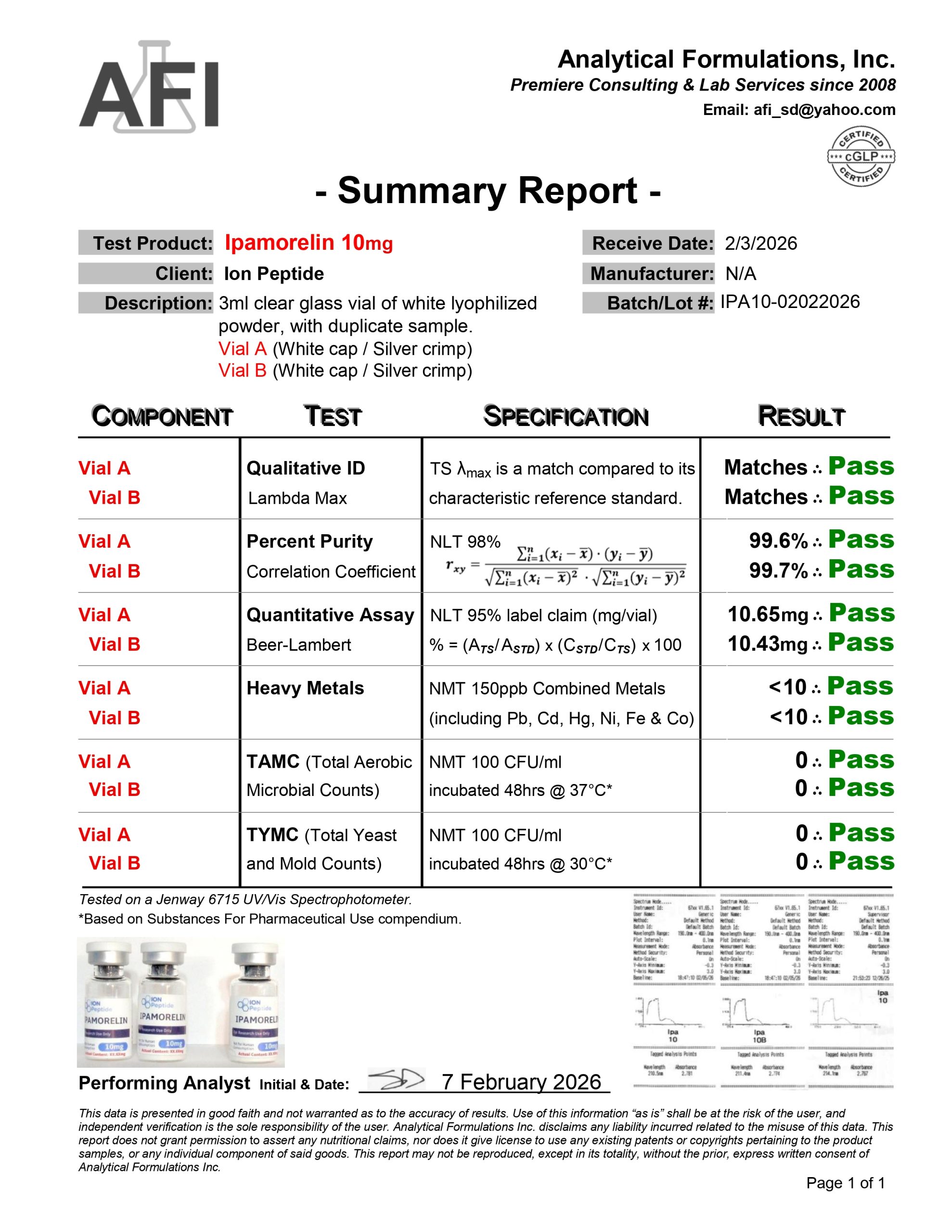
  • Batch Verified: Each lot tested for purity, identity, and potency.


Important Note

For laboratory and scientific research only. Not for human consumption, veterinary use, or diagnostic purposes.
Details

Chemical Formula C₃₈H₄₉N₉O₅
Molecular Mass 711.9 Da
CAS Number 170851-70-4
Form Lyophilized peptide powder
Shelf Life 24 months (lyophilized)
Intended Use For preclinical and in vitro research only
Storage -20 °C (dry powder), -80 °C (after reconstitution)

Research

Research Applications

GH Secretion Studies

Ipamorelin selectively stimulates GH release from the pituitary, making it valuable for research into pulsatile GH secretion and IGF-1 elevation [1].

Muscle Growth & Recovery

Animal studies indicate increased protein synthesis and support for muscle hypertrophy and recovery [2].

Metabolic Regulation

Ipamorelin has been shown to promote lipolysis and improve body composition in preclinical models [3].

Combination Therapy Research

Frequently studied in combination with CJC-1295 to evaluate synergistic effects on GH and IGF-1 [4].


References
  1. Raun K, Hansen BS, Johansen NL, et al. European Journal of Endocrinology. 1998;139(5):552-561.
    https://academic.oup.com/ejendo/article/139/5/552/6748390

  2. Svensson J, Lall S, Dickson SL, et al. Journal of Endocrinology. 2000;165(3):569-577.
    https://joe.bioscientifica.com/downloadpdf/view/journals/joe/165/3/569.pdf

  3. Andersen NB, Malmlöf K, Johansen PB, et al. Growth Hormone & IGF Research. 2001;11(5):266-272.
    https://www.sciencedirect.com/journal/growth-hormone-and-igf-research/vol/11/issue/5

  4. Penarrubia J, Gálvez M, Pavía J, et al. Journal of Clinical Endocrinology & Metabolism. 1994;79(2):456-461.
    Teichman SL, Neale A, Lawrence B, et al. Journal of Clinical Endocrinology & Metabolism. 2006;91(3):799-805.https://academic.oup.com/jcem/article/79/2/456/2650652?utm_source=chatgpt.com
    https://academic.oup.com/jcem/article-abstract/91/3/799/2843281

Mechanism of Action

Mechanism of Action (How Ipamorelin Works)
  • Ghrelin Receptor (GHS-R1a) Activation: Binds selectively to ghrelin receptors in the pituitary and hypothalamus, triggering GH release [Raun 1998].

  • Increases GH Pulsatility: Produces rapid, dose-dependent GH spikes without significantly altering cortisol or prolactin [Raun 1998].

  • Stimulates IGF-1 Production: GH pulses result in hepatic IGF-1 synthesis, driving anabolic effects [Svensson 2000].

  • Promotes Lipolysis: Enhances fat breakdown by increasing GH-dependent hormone-sensitive lipase activity [Malmlof 2001].

  • Minimal Endocrine Disruption: Selective for GH secretion with low risk of elevating ACTH or prolactin [Raun 1998].


References
  1. Raun K, Hansen BS, Johansen NL, et al. European Journal of Endocrinology. 1998;139(5):552-561.
    https://academic.oup.com/ejendo/article/139/5/552/6748390

  2. Svensson J, Lall S, Dickson SL, et al. Journal of Endocrinology. 2000;165(3):569-577.
    https://joe.bioscientifica.com/downloadpdf/view/journals/joe/165/3/569.pdf

  3. Andersen NB, Malmlöf K, Johansen PB, et al. Growth Hormone & IGF Research. 2001;11(5):266-272.
    https://www.sciencedirect.com/journal/growth-hormone-and-igf-research/vol/11/issue/5

  4. Penarrubia J, Gálvez M, Pavía J, et al. Journal of Clinical Endocrinology & Metabolism. 1994;79(2):456-461.
    Teichman SL, Neale A, Lawrence B, et al. Journal of Clinical Endocrinology & Metabolism. 2006;91(3):799-805.https://academic.oup.com/jcem/article/79/2/456/2650652?utm_source=chatgpt.com
    https://academic.oup.com/jcem/article-abstract/91/3/799/2843281

Certificate of Authenticity