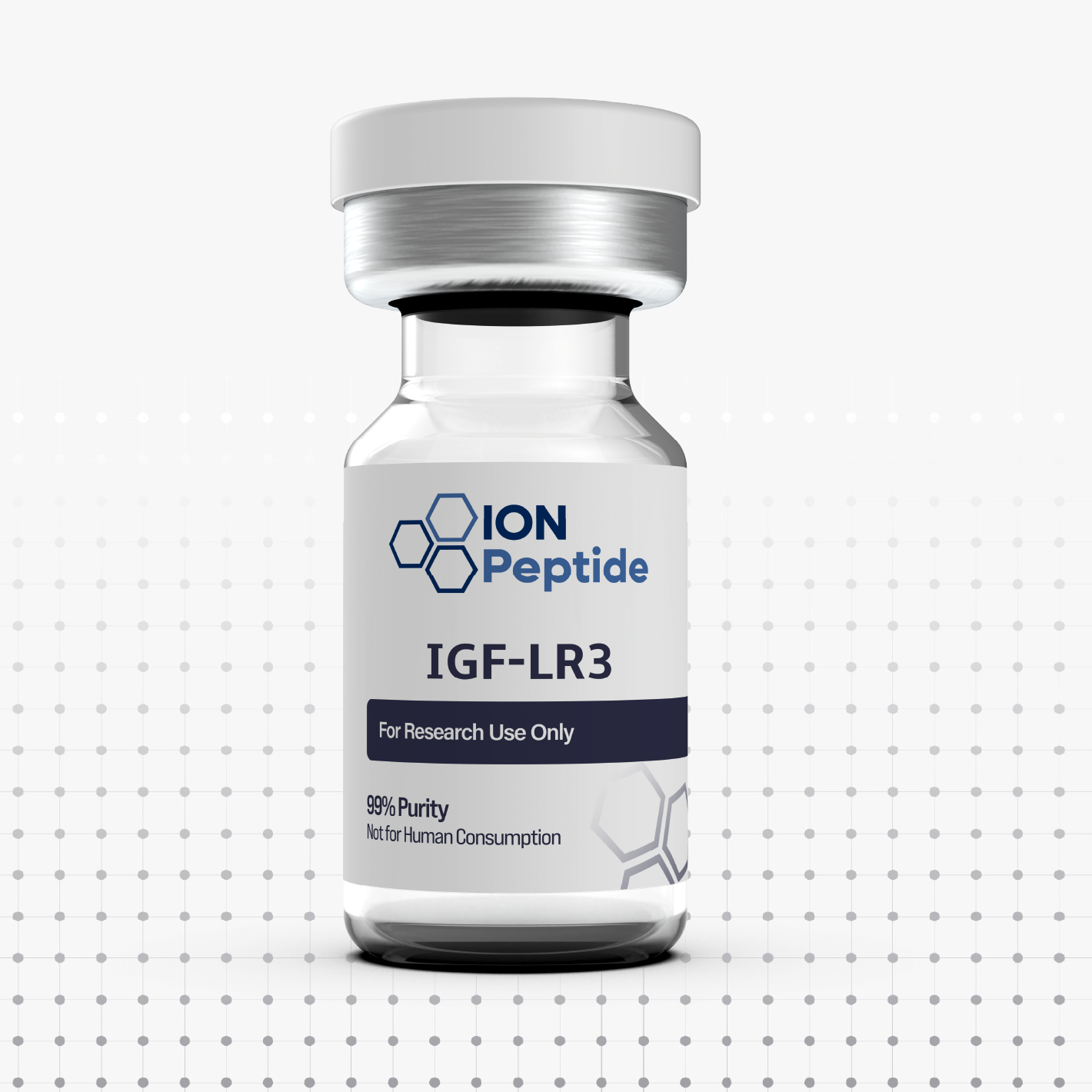
IGF-LR3 – 1mg

$90.00

For research purposes only. Not for human or animal use & not FDA-approved. By purchasing, you confirm you are 21 or older and qualified researcher.

In stock

Quantity Price
4 - 5 $81.00
6 - 9 $75.60
10 + $67.50
Money Back Guarantee Guaranteed Quality Customer Support Fast Shipping
Categories: , ,

Description

IGF-1 LR3 (1 mg)

Research-Grade Long R3 Insulin-Like Growth Factor-1
Tagline: Cell Growth & Regeneration Research


Product Description

IGF-1 LR3 (Long Arg3 Insulin-Like Growth Factor-1) is a synthetic, recombinant analog of human IGF-1 engineered for enhanced stability and bioactivity. The substitution of arginine for glutamic acid at position 3 and an extended 13-amino-acid N-terminal sequence prevent binding to IGF-binding proteins, significantly increasing its biological half-life.

Researchers use IGF-1 LR3 Peptide in cellular growth, muscle regeneration, metabolic, and neuroprotective studies, where it mimics the anabolic actions of insulin-like growth factor-1 while offering longer receptor interaction time and increased potency.

For Laboratory and Scientific Research Use Only. Not for Human Consumption.


Why Researchers Choose IGF-1 LR3 Peptide
  • Extended Half-Life: Modified structure prevents binding to IGFBPs, extending activity duration.

  • Cellular Growth & Regeneration: Stimulates myoblast proliferation, differentiation, and repair.

  • Insulin-Mimetic & Metabolic Effects: Activates PI3K/Akt pathway for nutrient uptake and cell survival.

  • Neuroprotective Research Applications: Studied in models of neurodegeneration and ischemia.

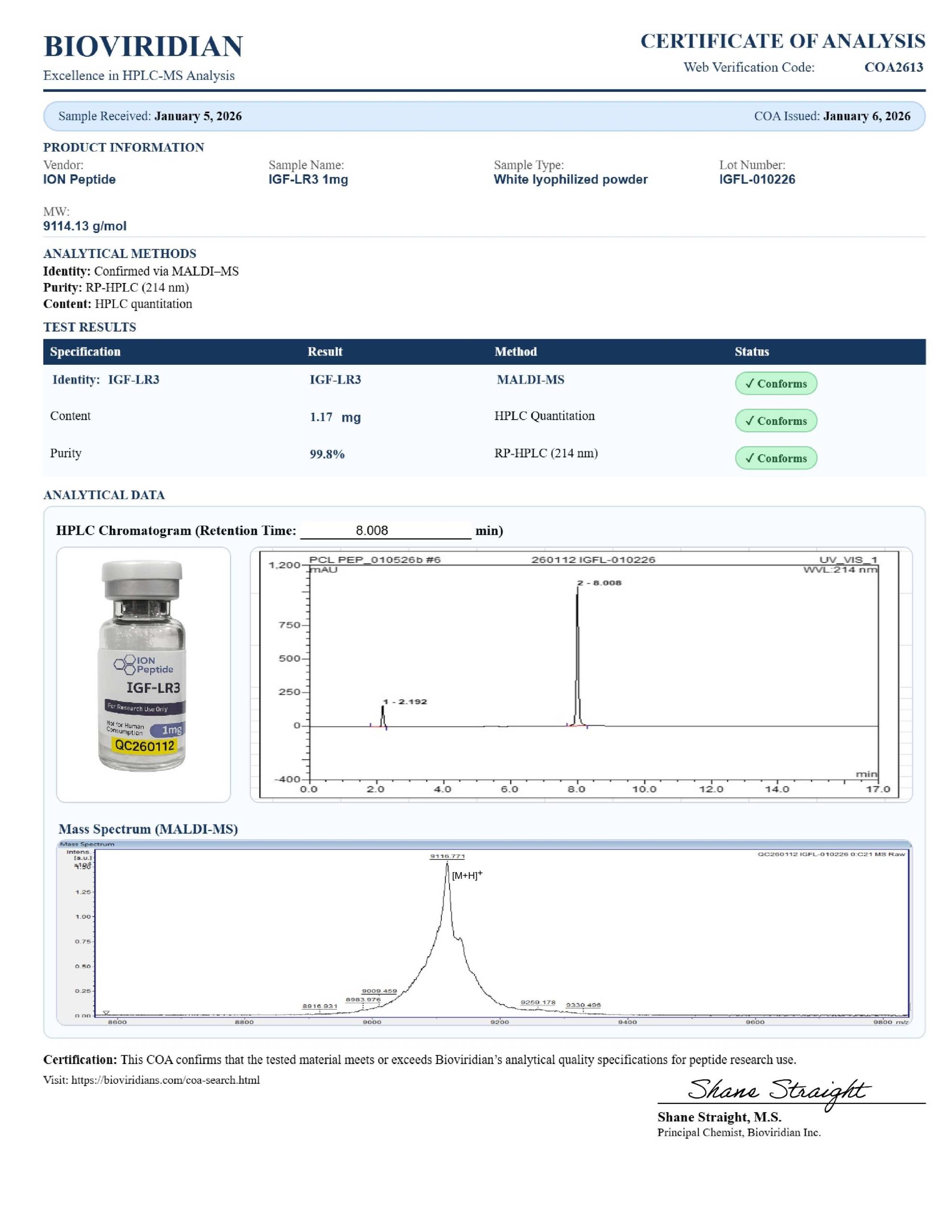
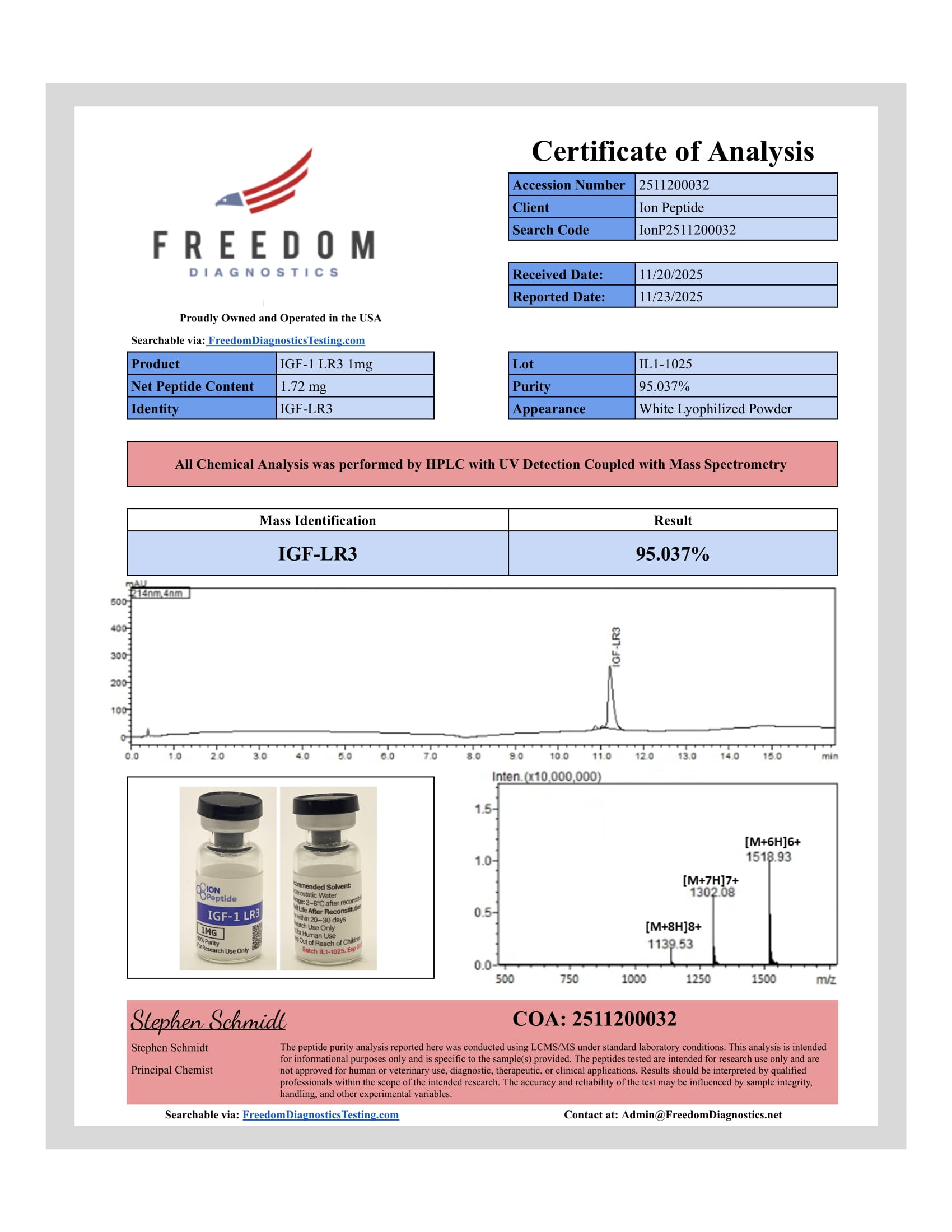
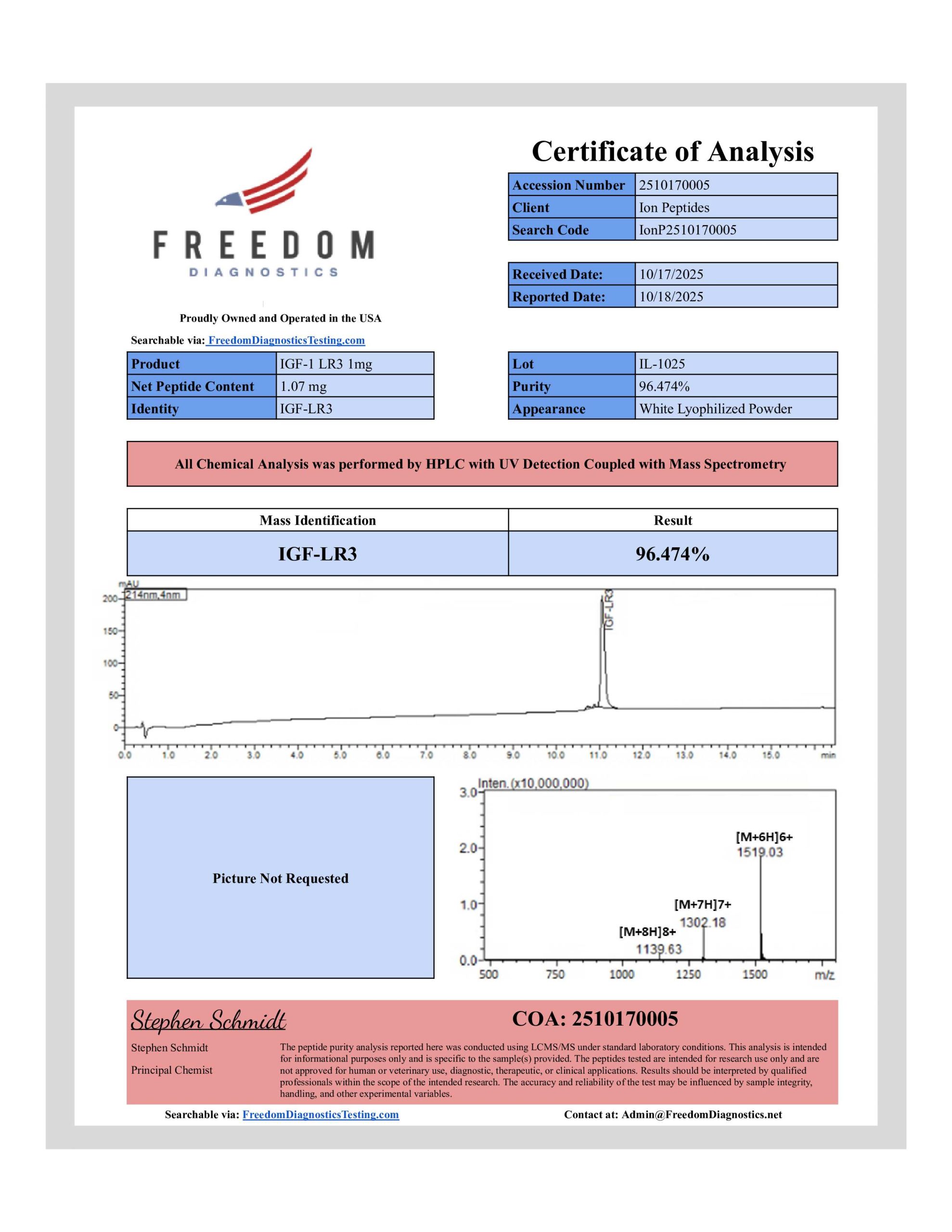
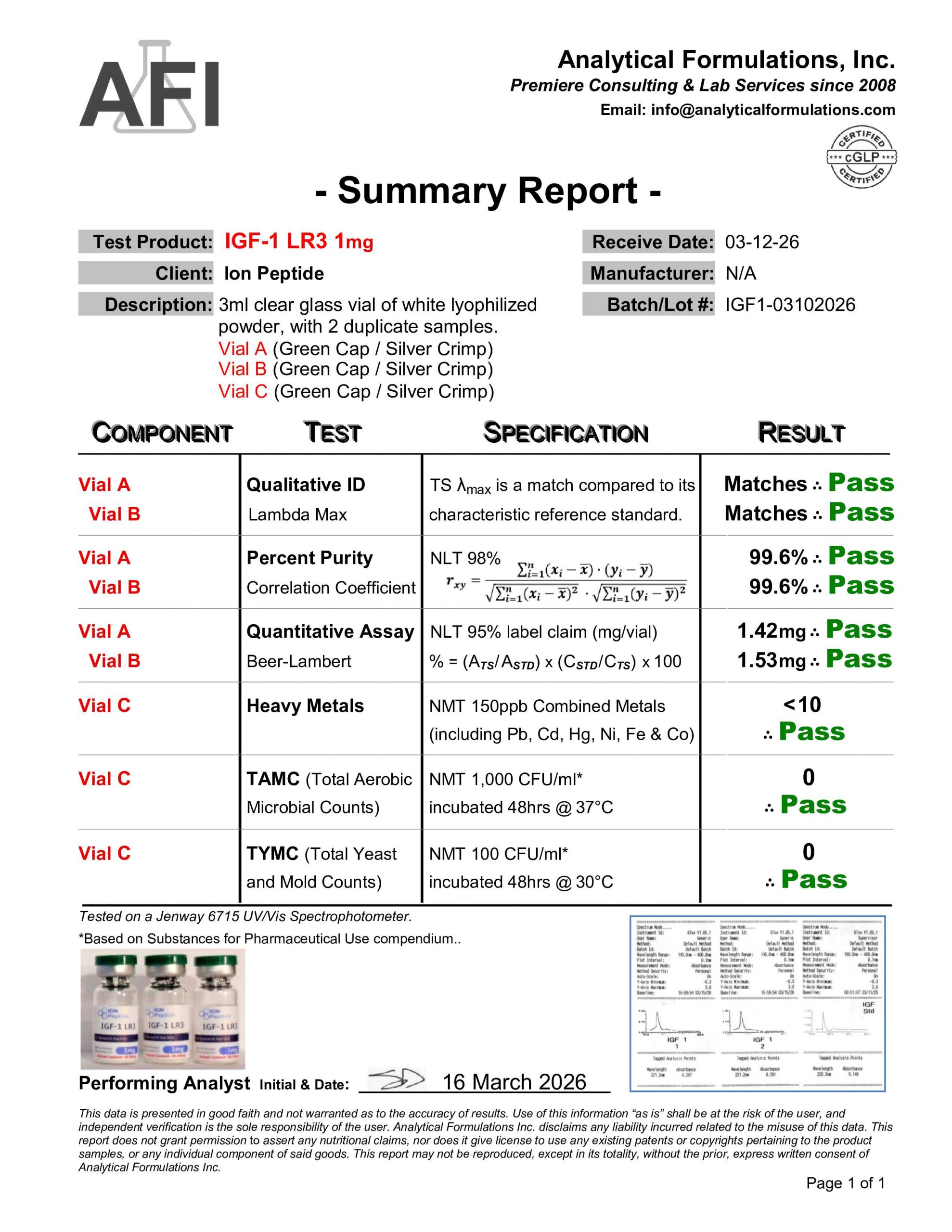
  • High Purity: ≥98% verified via HPLC and mass spectrometry.


Important Note

For laboratory and scientific research only. Not for human consumption, diagnostic, or therapeutic use.
Details

Compound Name Insulin-Like Growth Factor 1 Long Arg3 (IGF-1 LR3)
Chemical Formula C400H625N111O115S9
Molecular Mass ~9117 Da
Sequence Tyr-Pro-Ala-Leu-Arg-…-Cys-Thr-Val
CAS Number 946870-92-4
Form Lyophilized peptide powder
Storage Conditions –20 °C (dry), 2–8 °C (after reconstitution)
Intended Research Use Muscle growth, regeneration, and metabolic pathway studies

Research

Research Applications

Muscle Growth & Repair

IGF-1 LR3 Peptide stimulates myoblast proliferation and differentiation, enhancing muscle regeneration and recovery in cellular and animal models. It promotes muscle hypertrophy by activating PI3K/Akt/mTOR signaling, a key regulator of protein synthesis [Adams 2000].

Neuroprotection & CNS Regeneration

Studies show IGF-1 and its analogs reduce neuronal apoptosis and enhance survival in ischemic and neurodegenerative models through activation of Akt and ERK pathways, improving cognitive recovery and neuroplasticity [Fernandez 2007].

Cellular Metabolism & Insulin Signaling

IGF-1 LR3 mimics insulin activity by increasing glucose uptake and glycogen synthesis via activation of the IGF-1R–IRS–Akt cascade. It is used to explore metabolic regulation, glucose transport, and mitochondrial biogenesis [Clemmons 2009].

Tissue Regeneration & Wound Healing

In vitro and in vivo data demonstrate IGF-1 enhances fibroblast migration, collagen production, and angiogenesis, supporting wound closure and vascularization research [Liu 2010].


References
  1. Adams GR, et al. (2000). Role of IGF-1 in skeletal muscle hypertrophy and repair. Am J Physiol Endocrinol Metab.
    https://journals.physiology.org/doi/full/10.1152/ajpendo.2000.279.6.E1179

  2. Fernandez AM, Torres-Aleman I. (2007). The many faces of insulin-like peptides: neurotrophic and metabolic functions. Trends Endocrinol Metab.
    https://www.sciencedirect.com/science/article/pii/S1043276007000983

  3. Clemmons DR. (2009). Role of IGF-1 in glucose and lipid metabolism. Endocr Rev.
    https://academic.oup.com/edrv/article/30/1/90/2355180

  4. Liu JP, et al. (2010). IGF-1 signaling in wound healing and tissue regeneration. Growth Horm IGF Res.
    https://www.sciencedirect.com/science/article/pii/S1096637410000241

  5. Humbel RE. (1990). Insulin-like growth factors I and II. Eur J Biochem.
    https://febs.onlinelibrary.wiley.com/doi/abs/10.1111/j.1432-1033.1990.tb15648.x

Mechanism of Action

Mechanism of Action (How IGF-1 LR3 Works)
  • IGF-1R Activation: Binds to the IGF-1 receptor, triggering autophosphorylation and downstream signaling [Adams 2000].

  • PI3K/Akt/mTOR Pathway: Promotes protein synthesis and inhibits proteolysis, leading to muscle hypertrophy [Clemmons 2009].

  • MAPK/ERK Signaling: Enhances cell proliferation and differentiation [Fernandez 2007].

  • IGFBP Resistance: Modified N-terminal structure prevents IGFBP binding, extending biological half-life [Humbel 1990].

  • Neuroprotective Signaling: Reduces apoptosis and oxidative stress in CNS cells via Akt-dependent survival pathways [Fernandez 2007].


References
  1. Adams GR, et al. (2000). Role of IGF-1 in skeletal muscle hypertrophy and repair. Am J Physiol Endocrinol Metab.
    https://journals.physiology.org/doi/full/10.1152/ajpendo.2000.279.6.E1179

  2. Fernandez AM, Torres-Aleman I. (2007). The many faces of insulin-like peptides: neurotrophic and metabolic functions. Trends Endocrinol Metab.
    https://www.sciencedirect.com/science/article/pii/S1043276007000983

  3. Clemmons DR. (2009). Role of IGF-1 in glucose and lipid metabolism. Endocr Rev.
    https://academic.oup.com/edrv/article/30/1/90/2355180

  4. Liu JP, et al. (2010). IGF-1 signaling in wound healing and tissue regeneration. Growth Horm IGF Res.
    https://www.sciencedirect.com/science/article/pii/S1096637410000241

  5. Humbel RE. (1990). Insulin-like growth factors I and II. Eur J Biochem.
    https://febs.onlinelibrary.wiley.com/doi/abs/10.1111/j.1432-1033.1990.tb15648.x

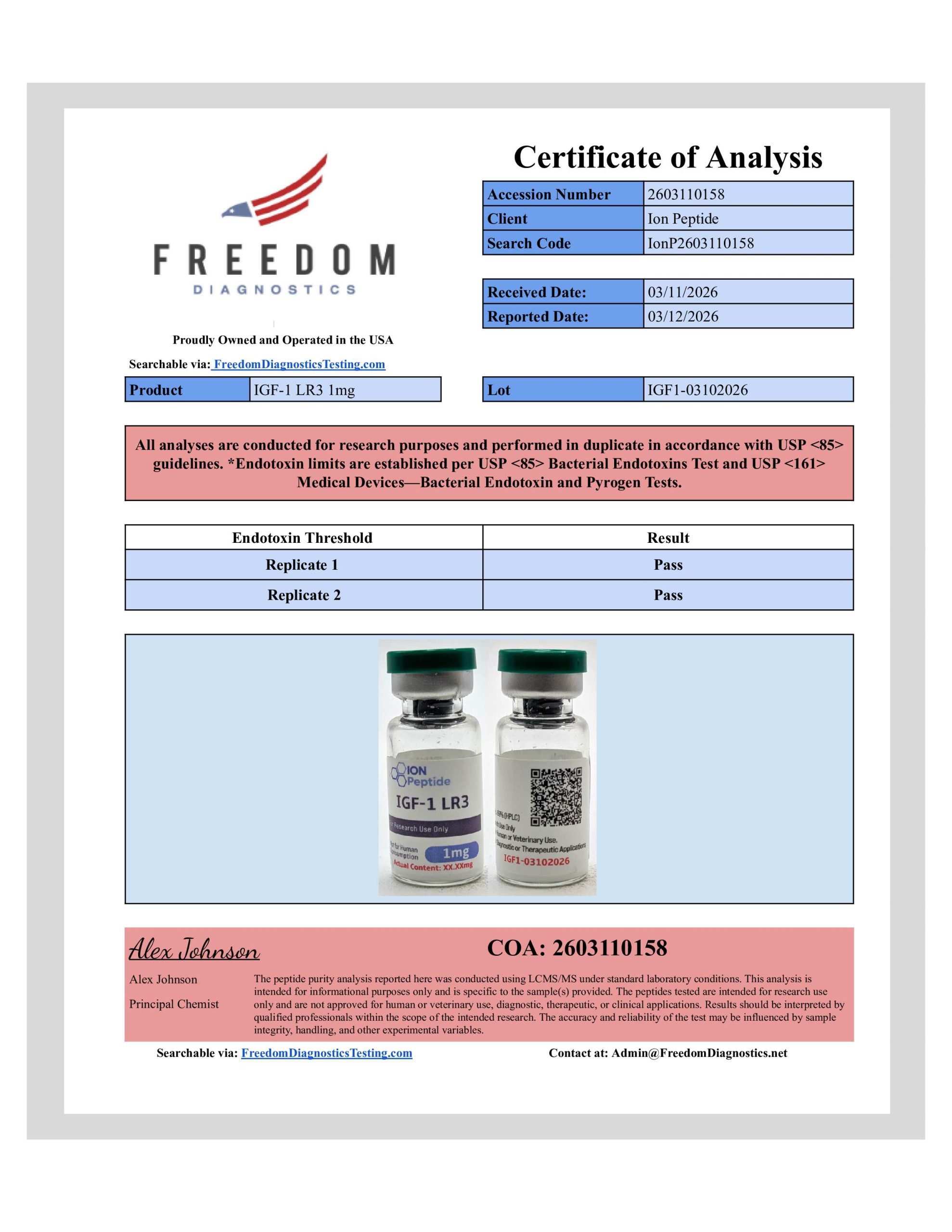
Certificate of Authenticity

Endotoxin Result