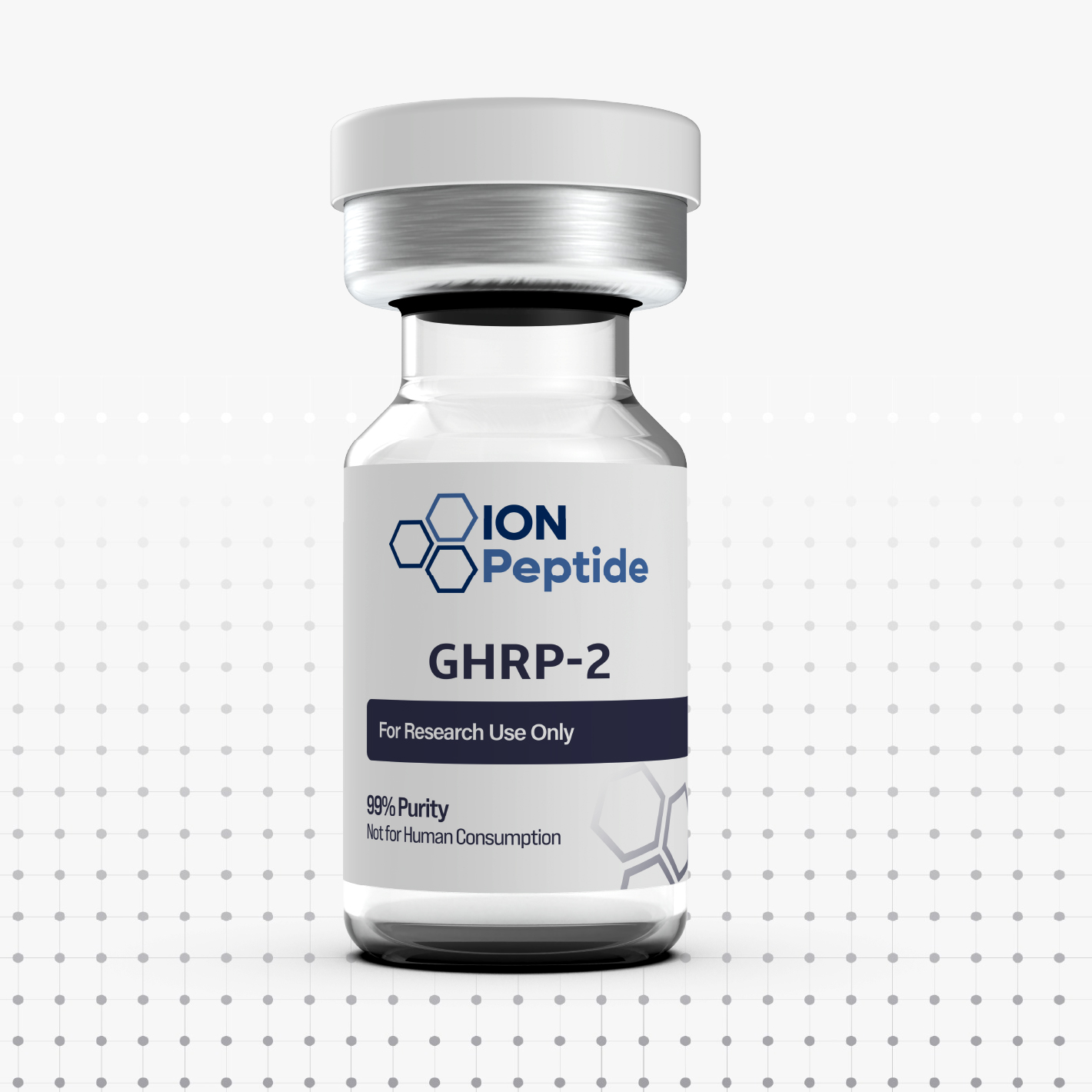
GHRP-2 – 5mg

$29.00

For research purposes only. Not for human or animal use & not FDA-approved. By purchasing, you confirm you are 21 or older and qualified researcher.

Only 24 left in stock

Quantity Price
4 - 5 $26.10
6 - 9 $24.36
10 + $21.75
Money Back Guarantee Guaranteed Quality Customer Support Fast Shipping
Categories: , ,

Description

GHRP-2 (Growth Hormone Releasing Peptide-2)

Research-Grade Hexapeptide
Tagline: GH Secretion & Metabolic Research


Product Description

GHRP-2 (Growth Hormone Releasing Peptide-2) is a synthetic hexapeptide and ghrelin receptor (GHS-R1a) agonist that potently stimulates growth hormone (GH) release from the anterior pituitary.

Researchers use GHRP-2 Peptide in preclinical and in vitro studies to investigate GH axis physiology, IGF-1 production, metabolism, and hypothalamic regulation of appetite and energy balance.

For Laboratory and Scientific Research Use Only. Not for Human Consumption.


Why Researchers Choose GHRP-2 Peptide
  • Potent GH Secretagogue: Stronger GH-releasing activity compared to GHRP-6.

  • Ghrelin Mimetic: Activates GHS-R1a, allowing study of hunger and metabolic signaling.

  • Synergistic Effects: Studied in combination with GHRH analogues like CJC-1295 to amplify GH pulses.

  • Endocrine Research Tool: Ideal for modeling GH/IGF-1 axis function.

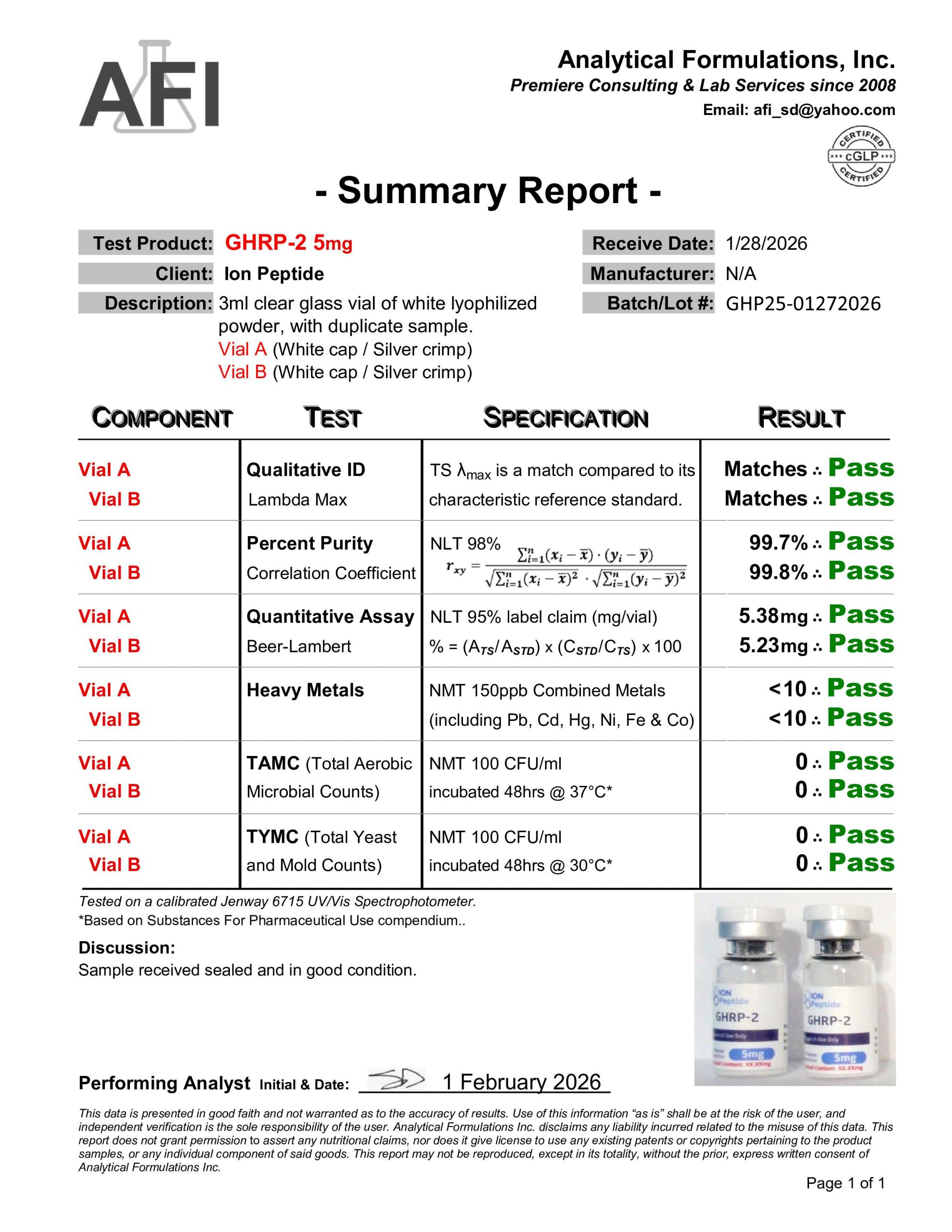
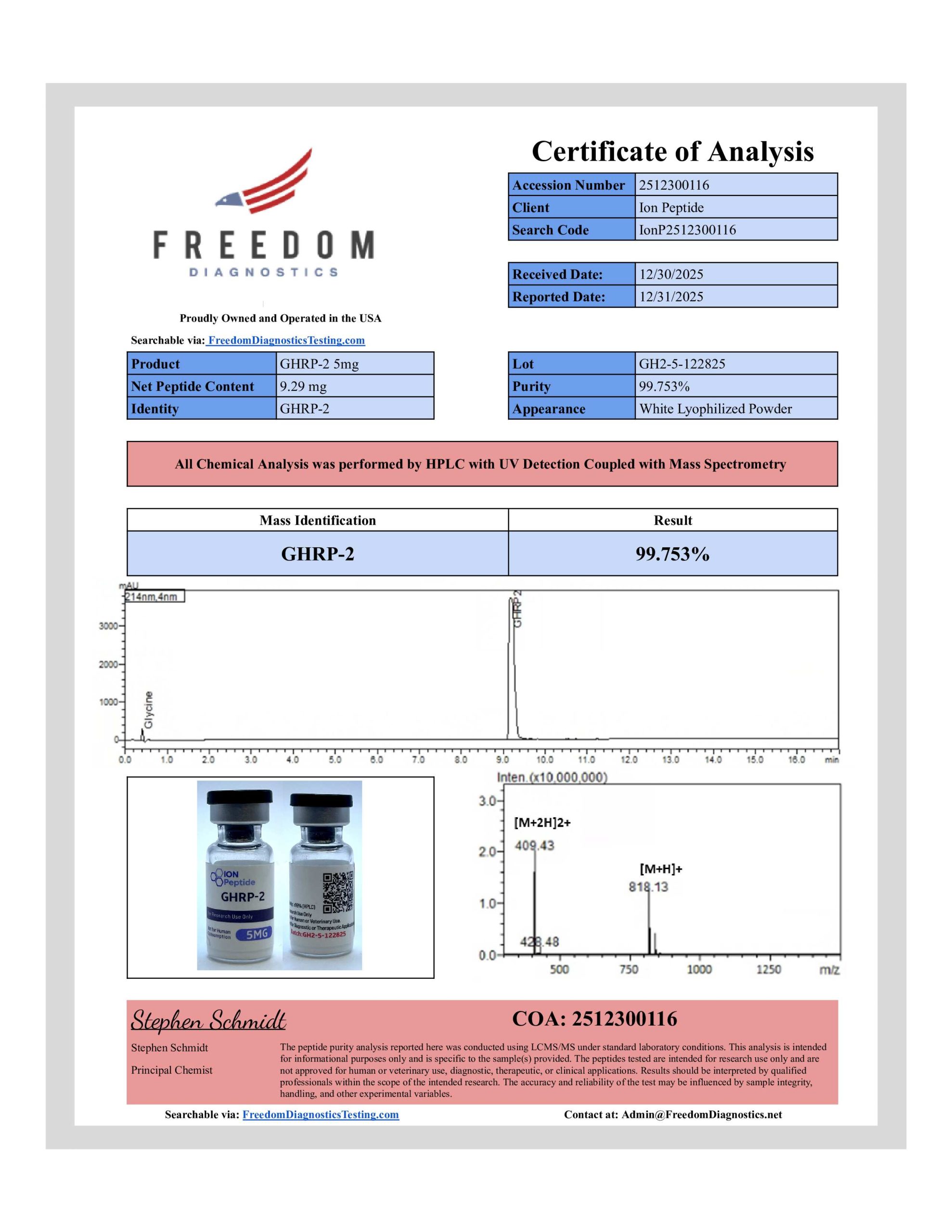
  • Batch Verified: ≥98% purity, HPLC and MS confirmed.


Important Note

For laboratory and scientific research only. Not for human consumption, veterinary use, or diagnostic purposes.
Details

Chemical Formula C₄₅H₅₅N₉O₆
Molecular Mass 817.0 Da
CAS Number 158861-67-7
Form Lyophilized peptide powder
Shelf Life 24 months (lyophilized)
Intended Use For preclinical and in vitro research only
Storage -20 °C (dry powder), -80 °C (after reconstitution)

Research

Research Applications

Growth Hormone Axis Studies

GHRP-2 potently stimulates GH release independent of GHRH, making it valuable for pituitary responsiveness research [1].

IGF-1 Production & Protein Synthesis

Used to investigate hepatic IGF-1 production and its role in muscle protein metabolism [2].

Appetite & Energy Regulation

Activates hypothalamic ghrelin receptors, increasing food intake in animal models [3].

Combination Studies

Synergizes with GHRH analogues for enhanced pulsatile GH secretion, useful in endocrinology models [4].


References
  1. Bowers CY et al. (1990). GH-Releasing Peptide-2: A New Hypothalamic Secretagogue. Endocrinology.
    https://www.sciencedirect.com/science/article/pii/0026049595900160

  2. Svensson J et al. (1998). Effects of GHRP-2 on IGF-1 Production and Protein Metabolism. J Clin Endocrinol Metab.
    https://www.sciencedirect.com/science/article/pii/S0091302297901588

  3. Kojima M et al. (1999). Discovery of Ghrelin and Its Receptor. Nature.
    https://reference.medscape.com/medline/abstract/10604470

  4. Bowers CY et al. (1992). Synergistic Effects of GHRP-2 and GHRH. JCEM.
    https://link.springer.com/chapter/10.1007/978-1-59259-015-5_2

Mechanism of Action

Mechanism of Action (How GHRP-2 Works)
  • Ghrelin Receptor Agonism: Binds to GHS-R1a on pituitary somatotrophs and hypothalamic neurons, stimulating GH release [Bowers 1990].

  • Somatostatin Suppression: Reduces hypothalamic somatostatin output, allowing greater GH pulse amplitude [Bowers 1992].

  • Hunger Stimulation: Activates NPY/AgRP neurons in the arcuate nucleus, increasing appetite [Kojima 1999].

  • IGF-1 Pathway Activation: Increases circulating IGF-1, supporting anabolic signaling and tissue repair [Svensson 1998].

  • Synergistic with GHRH: Amplifies GH secretion when combined with GHRH analogues [Bowers 1992].


References
  1. Bowers CY et al. (1990). GH-Releasing Peptide-2: A New Hypothalamic Secretagogue. Endocrinology.
    https://www.sciencedirect.com/science/article/pii/0026049595900160

  2. Svensson J et al. (1998). Effects of GHRP-2 on IGF-1 Production and Protein Metabolism. J Clin Endocrinol Metab.
    https://www.sciencedirect.com/science/article/pii/S0091302297901588

  3. Kojima M et al. (1999). Discovery of Ghrelin and Its Receptor. Nature.
    https://reference.medscape.com/medline/abstract/10604470

  4. Bowers CY et al. (1992). Synergistic Effects of GHRP-2 and GHRH. JCEM.
    https://link.springer.com/chapter/10.1007/978-1-59259-015-5_2

Certificate of Authenticity