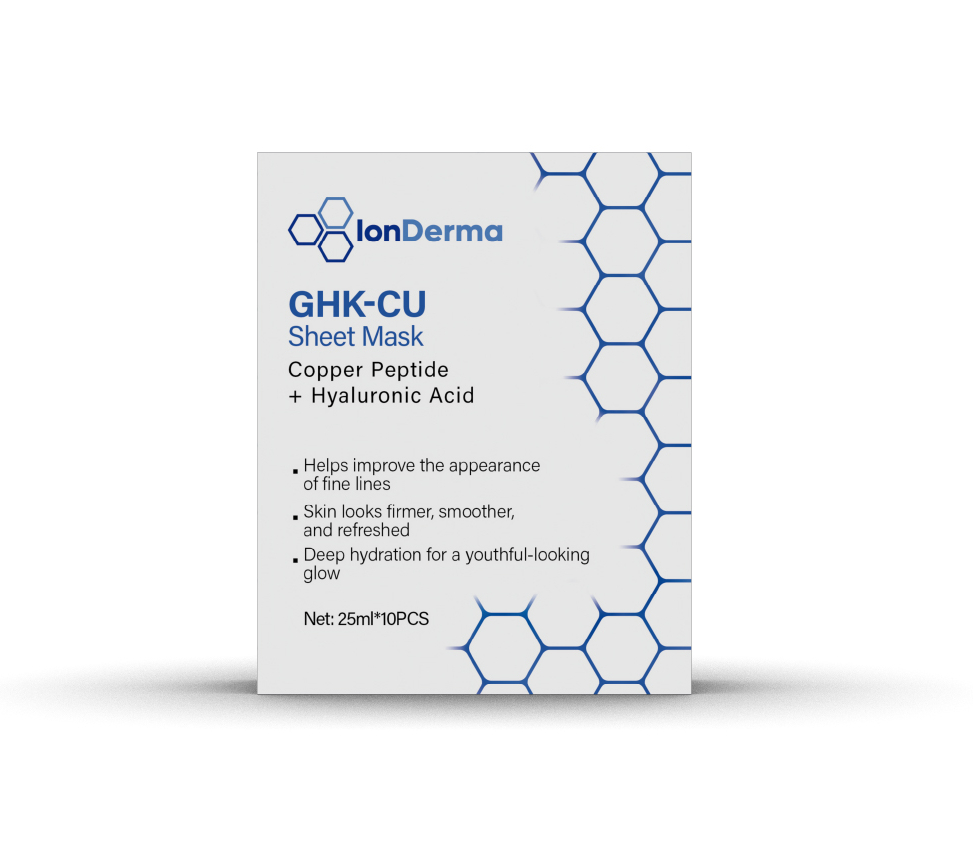
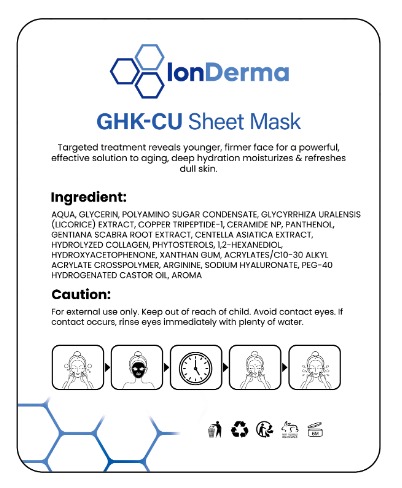
GHK-Cu + HLA Sheet Mask (25 mL) – 10 Pack

$49.95

For research purposes only. Not for human or animal use & not FDA-approved. By purchasing, you confirm you are 21 or older and qualified researcher.

In stock

Quantity Price
4 - 5 $44.96
6 - 9 $41.96
10 + $37.46
Money Back Guarantee Guaranteed Quality Customer Support Fast Shipping

Description

GHK-Cu + HLA Sheet Mask (25 mL)

Research-Grade Cosmetic Formulation (Peptide + Hyaluronic Matrix)
Tagline: Topical Peptide & Hydration System Research


Product Description

GHK-Cu + HLA Sheet Mask (25 mL) is a topical peptide-based cosmetic formulation combining GHK-Cu (copper tripeptide-1) with a hyaluronic acid (HLA) delivery matrix in a pre-soaked sheet mask format.

GHK-Cu is a well-characterized tripeptide–copper complex studied in laboratory and formulation research for its role in peptide–metal interactions, protein binding, and extracellular matrix-related signaling models. Hyaluronic acid is a glycosaminoglycan biopolymer widely used for its water-binding capacity and viscoelastic properties.

This sheet mask format is used in research and formulation testing to evaluate topical peptide delivery systems, hydration dynamics, and surface interaction behavior in controlled environments.

For Laboratory and Cosmetic Research Use Only. Not for Injectable or Therapeutic Use.


Why Researchers Choose This Formulation
  • Combines peptide complex (GHK-Cu) with hydration matrix (HLA)

  • Sheet mask format for controlled topical application studies

  • Suitable for peptide delivery system evaluation

  • Supports hydration and surface interaction research

  • Uses well-documented peptide and biopolymer components

  • Ready-to-use formulation for standardized testing


Important Note

For laboratory and cosmetic research use only. Not for human consumption, injection, or therapeutic application.
Details

Product Name GHK-Cu + HLA Sheet Mask
Volume 25 mL
Primary Components GHK-Cu (Copper Tripeptide-1), Hyaluronic Acid
Formulation Type Topical sheet mask (aqueous serum)

Research

Research Applications

Topical Peptide Delivery Studies

This formulation is used in research evaluating topical delivery systems, including how peptides interact with aqueous carriers and surface substrates in controlled environments.

Hydration & Moisture Retention Research

The hyaluronic acid component is widely studied for its ability to bind water and influence hydration dynamics, making this formulation suitable for moisture retention and polymer interaction studies.

Peptide–Metal Complex Interaction Research

GHK-Cu is investigated in laboratory models for its copper-binding properties and peptide–metal complex behavior, relevant in biochemical and formulation research.

Surface & Biomaterial Interaction Models

The sheet mask format allows controlled evaluation of surface contact behavior, diffusion properties, and formulation stability.


References
  1. GHK-Cu (Copper Tripeptide-1) — structure and biochemical properties.
    https://en.wikipedia.org/wiki/Copper_peptide

  2. Pickart L. Copper peptides and biological interactions (overview).
    https://pubmed.ncbi.nlm.nih.gov/10599669/

  3. Hyaluronic acid — structure, properties, and applications.
    https://en.wikipedia.org/wiki/Hyaluronic_acid

  4. Hyaluronic Acid: Structure and physicochemical properties (MDPI).
    https://www.mdpi.com/1420-3049/25/6/1340

Mechanism of Action

Mechanism of Action
Copper–Peptide Complex Behavior (GHK-Cu)

GHK-Cu forms a stable coordination complex with copper ions, allowing it to participate in metal–peptide interaction studies and protein-binding models under experimental conditions.

Water Binding & Retention (Hyaluronic Acid)

Hyaluronic acid contains hydrophilic functional groups that enable high water-binding capacity, contributing to hydration and viscoelastic properties in the formulation.

Surface Delivery via Sheet Matrix

The sheet mask acts as a physical delivery substrate, allowing uniform distribution of the formulation across a surface for controlled exposure in research models.

Chemical Stability & Compatibility

The aqueous system provides a stable environment for peptide and polymer interaction without active biochemical modification under standard laboratory conditions.


References
  1. GHK-Cu (Copper Tripeptide-1) — structure and biochemical properties.
    https://en.wikipedia.org/wiki/Copper_peptide

  2. Pickart L. Copper peptides and biological interactions (overview).
    https://pubmed.ncbi.nlm.nih.gov/10599669/

  3. Hyaluronic acid — structure, properties, and applications.
    https://en.wikipedia.org/wiki/Hyaluronic_acid

  4. Hyaluronic Acid: Structure and physicochemical properties (MDPI).
    https://www.mdpi.com/1420-3049/25/6/1340

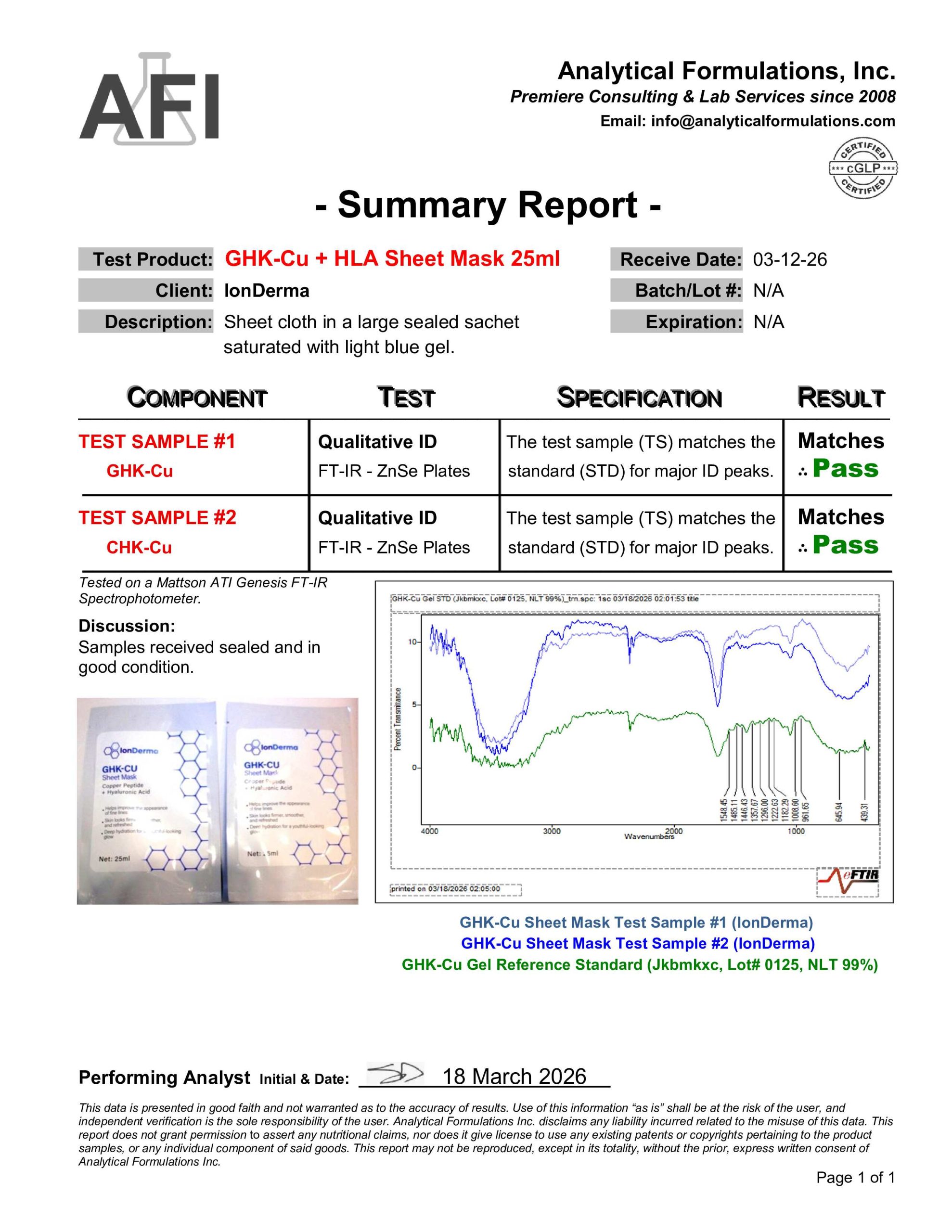
Certificate of Authenticity