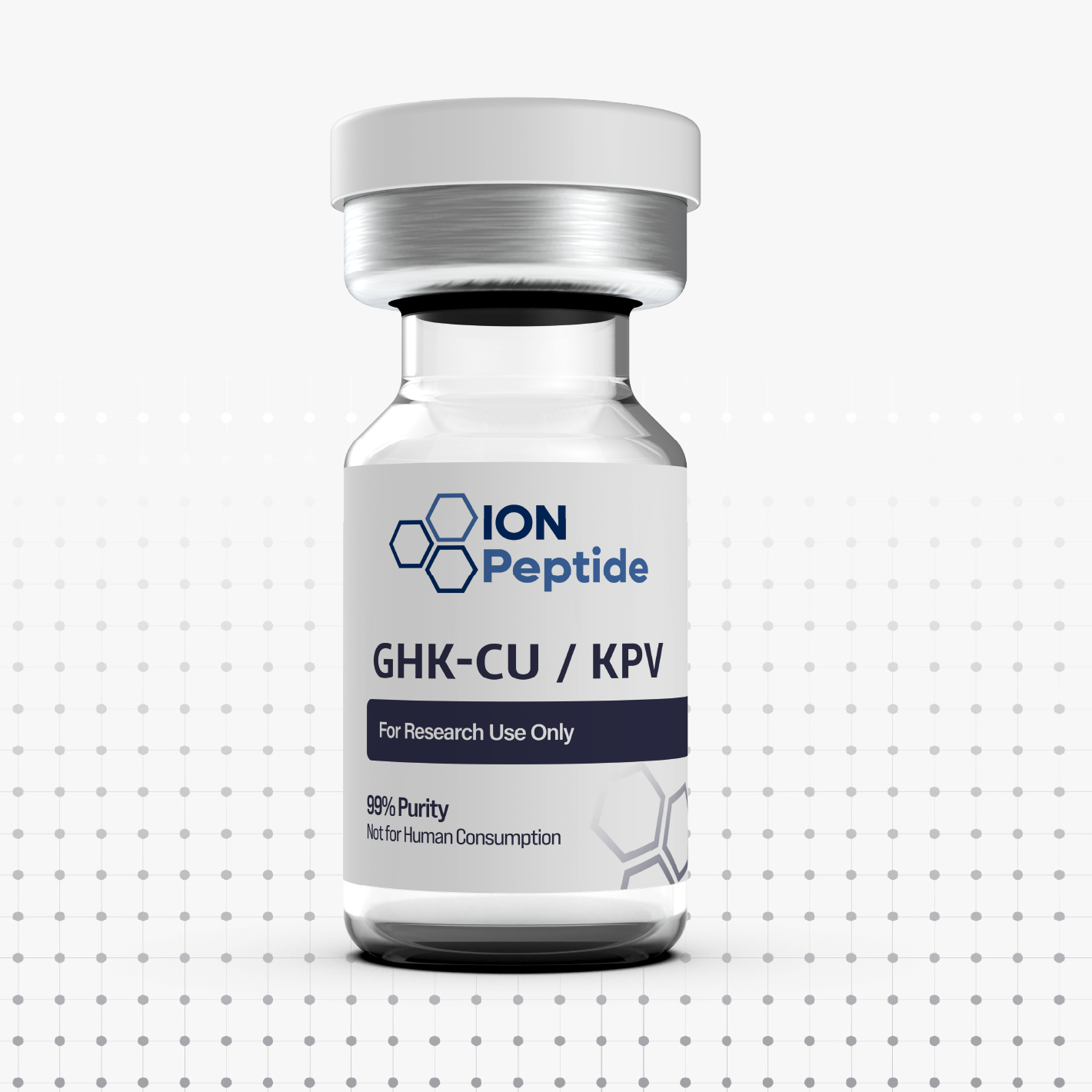
GHK-Cu 50mg / KPV – 10mg

$59.00

For research purposes only. Not for human or animal use & not FDA-approved. By purchasing, you confirm you are 21 or older and qualified researcher.

In stock

Quantity Price
4 - 5 $53.10
6 - 9 $49.56
10 + $44.25
Money Back Guarantee Guaranteed Quality Customer Support Fast Shipping

Description

GHK-Cu 50 mg / KPV 10 mg

Research-Grade Dual Peptide Complex
Tagline: Regeneration & Inflammation Research


Product Description

GHK-Cu / KPV Complex combines two research-relevant peptides:

  • GHK-Cu (Copper Tripeptide-1) — a copper-binding tripeptide studied for its extracellular matrix (ECM) remodeling, protein synthesis signaling, antioxidant support, and tissue proteostasis effects.

  • KPV (Lys–Pro–Val) — a tripeptide derived from α-melanocyte-stimulating hormone (α-MSH) with documented anti-inflammatory, epithelial repair, and immune-modulating effects in preclinical models.

Together, this formulation supports laboratory research into tissue repair, fibroblast signaling, collagen/elastin modulation, inflammation regulation, angiogenesis, and oxidative stress. The dual-peptide approach allows exploration of complementary pathways in regenerative and inflammatory biology.

For Laboratory and Scientific Research Use Only. Not for Human Consumption.


Why Researchers Choose GHK-Cu / KPV Complex
  • Dual pathway model combining ECM/regenerative signaling (GHK-Cu) with inflammation modulation (KPV)

  • Tissue repair & wound healing research utility

  • Angiogenesis & vascular remodeling models

  • Oxidative stress and cytokine regulation investigations

  • High purity peptides for reproducible outcomes

  • Easy co-formulation for in vitro / preclinical studies


Important Note

For laboratory and scientific research only. Not for human consumption, diagnostic, or therapeutic use.
Details

Compound Name GHK-Cu 50 mg / KPV 10 mg (Dual Peptide Complex)
GHK-Cu (50 mg) Copper Tripeptide-1 (Gly-His-Lys • Cu²⁺)
KPV (10 mg) Lys-Pro-Val
Form Lyophilized peptide powder
Intended Research Use ECM remodeling, inflammation modulation, wound healing, angiogenesis research

Research

Research Applications

Extracellular Matrix & Tissue Repair

GHK-Cu stimulates fibroblast proliferation and regulates collagen/elastin synthesis, promoting extracellular matrix remodeling across wound healing and connective-tissue regeneration models.

Inflammation & Immune Modulation

KPV reduces pro-inflammatory cytokines (e.g., TNF-α, IL-1β) and inhibits NF-κB signaling in epithelial and immune cell models, making it valuable for inflammatory and mucosal response studies.

Angiogenesis & Microvascular Research

Copper peptides like GHK-Cu enhance VEGF-associated signaling and endothelial cell activation, supporting angiogenesis research in ischemic or tissue-repair contexts.

Oxidative Stress Regulation

Both peptides influence cellular oxidative balance: GHK-Cu upregulates antioxidant enzymes (SOD, catalase), and KPV supports epithelial resilience under stress.


References
  1. Pickart L, et al. (2018). The Effect of the Human Plasma Molecule GHK-Cu on Stem Cells, Tissue Repair, and Anti-Inflammatory Signaling. OBM Geriatrics.
    https://www.lidsen.com/journals/geriatrics/geriatrics-02-03-009

  2. Sen CK, et al. (2002). Copper-induced vascular endothelial growth factor expression and angiogenesis. American Journal of Physiology.
    https://journals.physiology.org/doi/full/10.1152/ajpheart.00518.2001

  3. Cutuli M, et al. (2019). Anti-inflammatory and wound repair effects of KPV peptide in experimental models. Peptides.
    https://pubmed.ncbi.nlm.nih.gov/31212107/

  4. Carnevale V, et al. (2017). KPV accelerates epithelial repair via melanocortin receptor pathways. Journal of Investigative Dermatology.
    https://www.sciencedirect.com/science/article/pii/S0022202X17302516

Mechanism of Action

Mechanism of Action
  • Bioavailable Copper Delivery (GHK-Cu): Provides Cu²⁺ to repair enzymes and signaling proteins, supporting ECM remodeling.

  • Fibroblast Activation: Stimulates synthesis of collagen and elastin by dermal/mesenchymal cells via growth signaling pathways.

  • Anti-Inflammatory Signaling (KPV): Inhibits NF-κB and reduces pro-inflammatory cytokines in injury/inflammation models.

  • Angiogenic Pathway Stimulation: Enhances VEGF and endothelial cell signaling for vascular repair.

  • Oxidative Stress Defense: Upregulates endogenous antioxidant enzymes, reducing ROS-mediated cellular damage.


References
  1. Pickart L, et al. (2018). The Effect of the Human Plasma Molecule GHK-Cu on Stem Cells, Tissue Repair, and Anti-Inflammatory Signaling. OBM Geriatrics.
    https://www.lidsen.com/journals/geriatrics/geriatrics-02-03-009

  2. Sen CK, et al. (2002). Copper-induced vascular endothelial growth factor expression and angiogenesis. American Journal of Physiology.
    https://journals.physiology.org/doi/full/10.1152/ajpheart.00518.2001

  3. Cutuli M, et al. (2019). Anti-inflammatory and wound repair effects of KPV peptide in experimental models. Peptides.
    https://pubmed.ncbi.nlm.nih.gov/31212107/

  4. Carnevale V, et al. (2017). KPV accelerates epithelial repair via melanocortin receptor pathways. Journal of Investigative Dermatology.
    https://www.sciencedirect.com/science/article/pii/S0022202X17302516

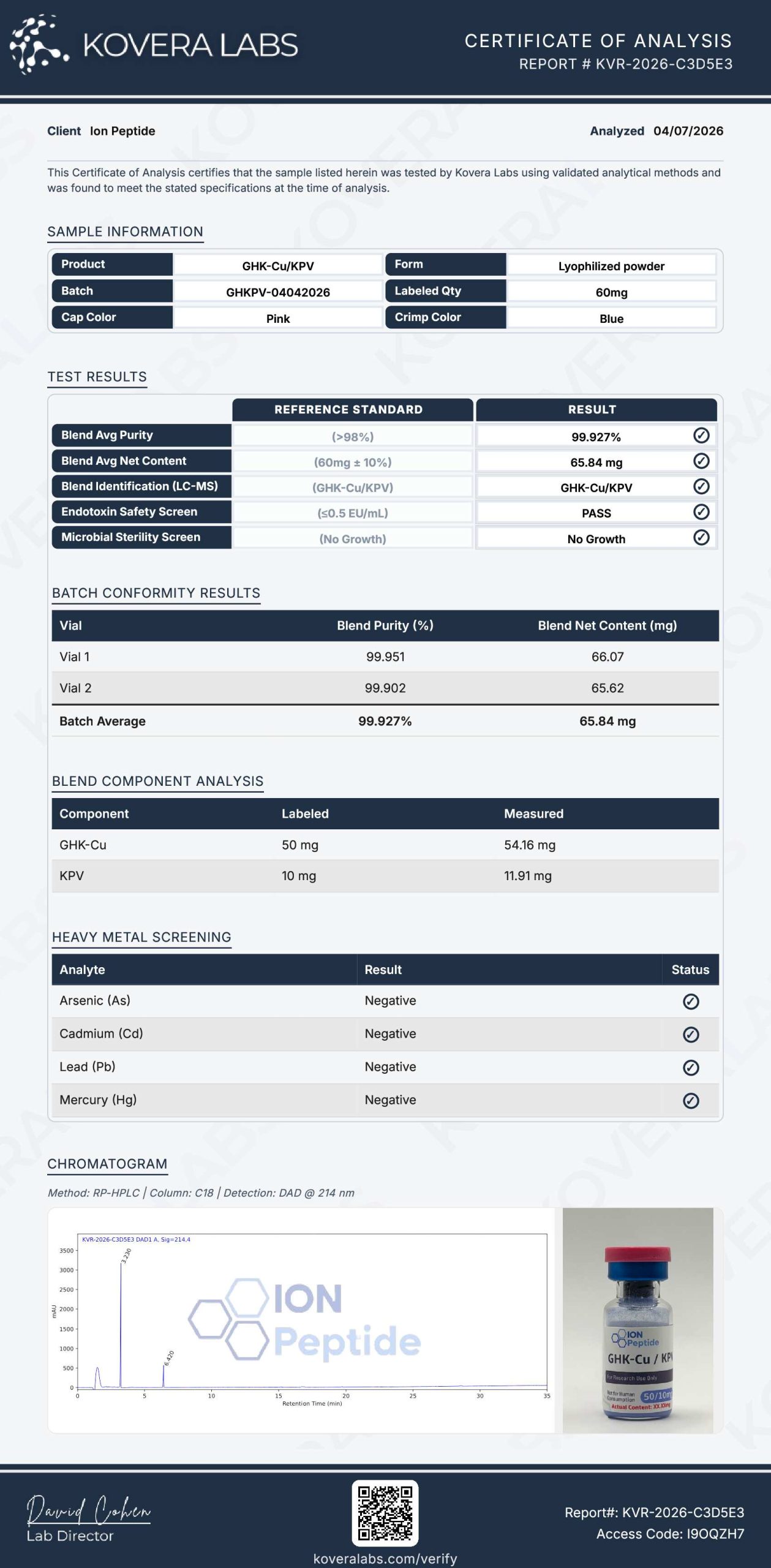
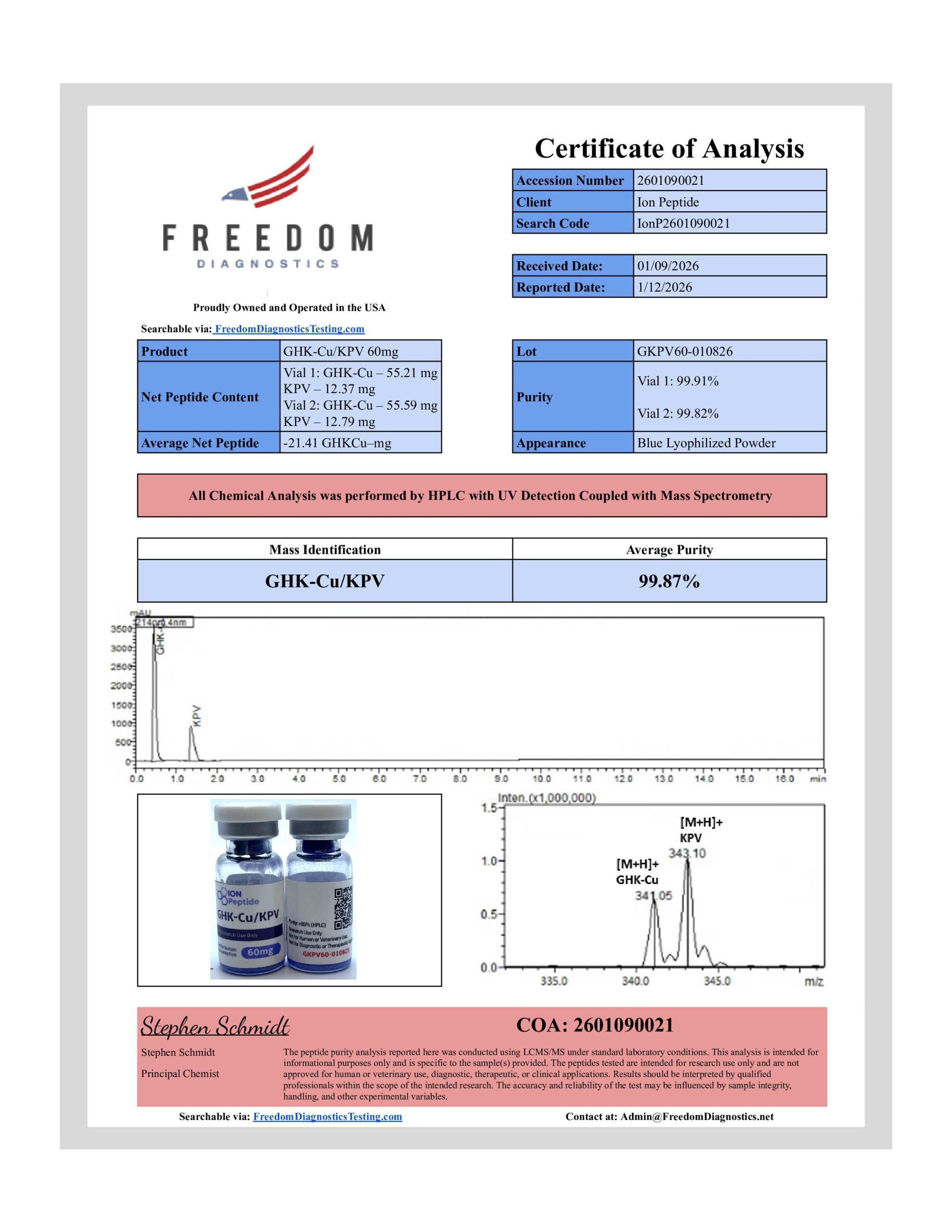
Certificate of Authenticity