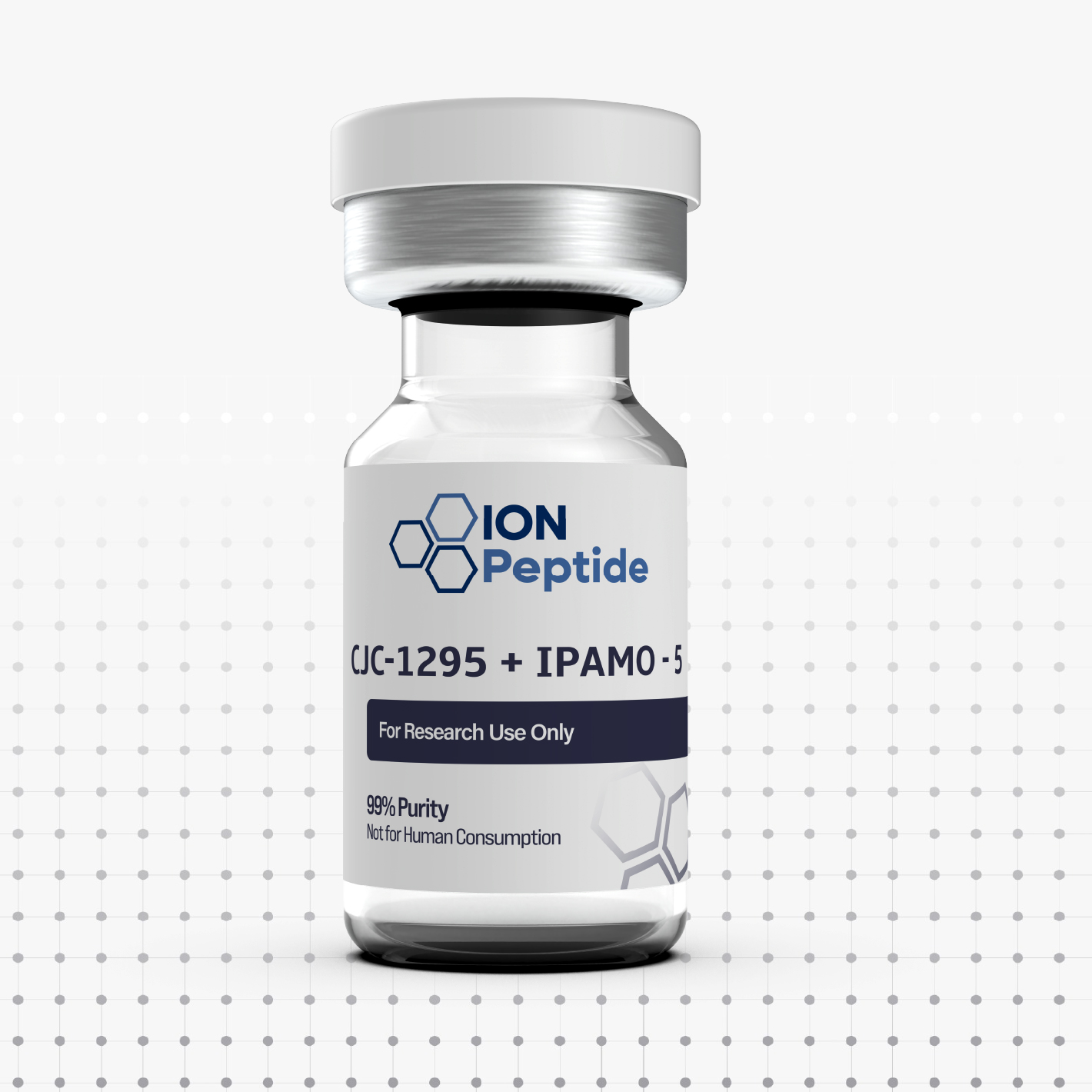
CJC-1295+Ipamo – 5/5mg (No DAC)

$59.00

For research purposes only. Not for human or animal use & not FDA-approved. By purchasing, you confirm you are 21 or older and qualified researcher.

In stock

Quantity Price
4 - 5 $53.10
6 - 9 $49.56
10 + $44.25
Money Back Guarantee Guaranteed Quality Customer Support Fast Shipping

Description

CJC-1295 + Ipamorelin

Research-Grade GH Secretagogue Combination
Tagline: Synergistic GH Release Research


Product Description

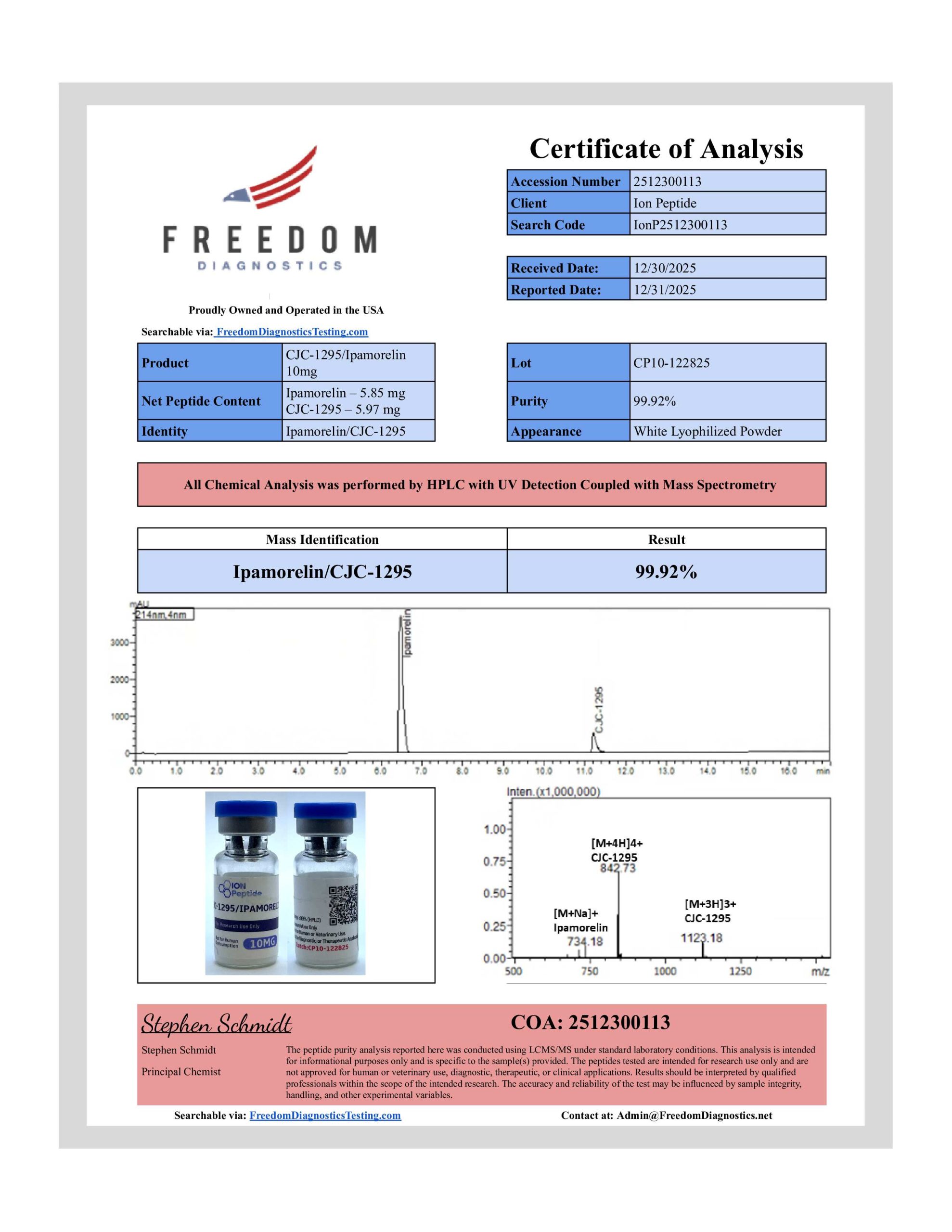
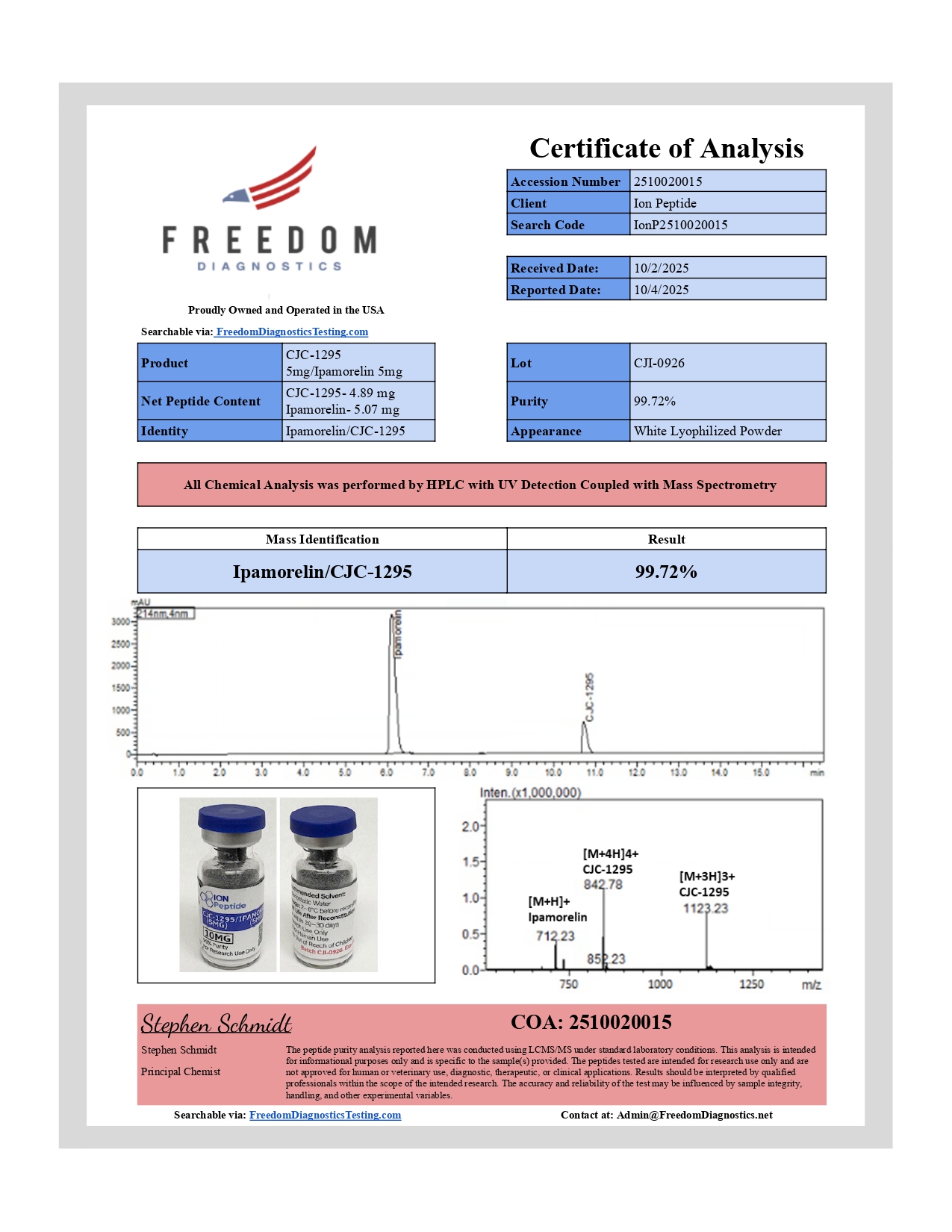
CJC-1295 + Ipamorelin is a research combination pairing CJC-1295 (a GHRH analogue) with Ipamorelin (a selective ghrelin receptor agonist) to produce a synergistic stimulation of growth hormone (GH) secretion.

Researchers use this combination to study pulsatile GH release, IGF-1 production, body composition, recovery, and regenerative physiology in preclinical and in vitro models. This combination is especially valuable for exploring both hypothalamic and pituitary contributions to GH regulation.

For Laboratory and Scientific Research Use Only. Not for Human Consumption.


Why Researchers Choose CJC-1295 + Ipamorelin
  • Dual-Pathway Stimulation: Targets both GHRH and ghrelin receptor pathways for amplified GH release.

  • Pulsatile GH Secretion: Mimics natural GH pulse patterns, ideal for endocrinology research.

  • Synergy with IGF-1 Studies: Increases hepatic IGF-1 production for metabolic research.

  • Reduced Side Effects Profile: Ipamorelin is highly selective, with minimal prolactin/cortisol impact.

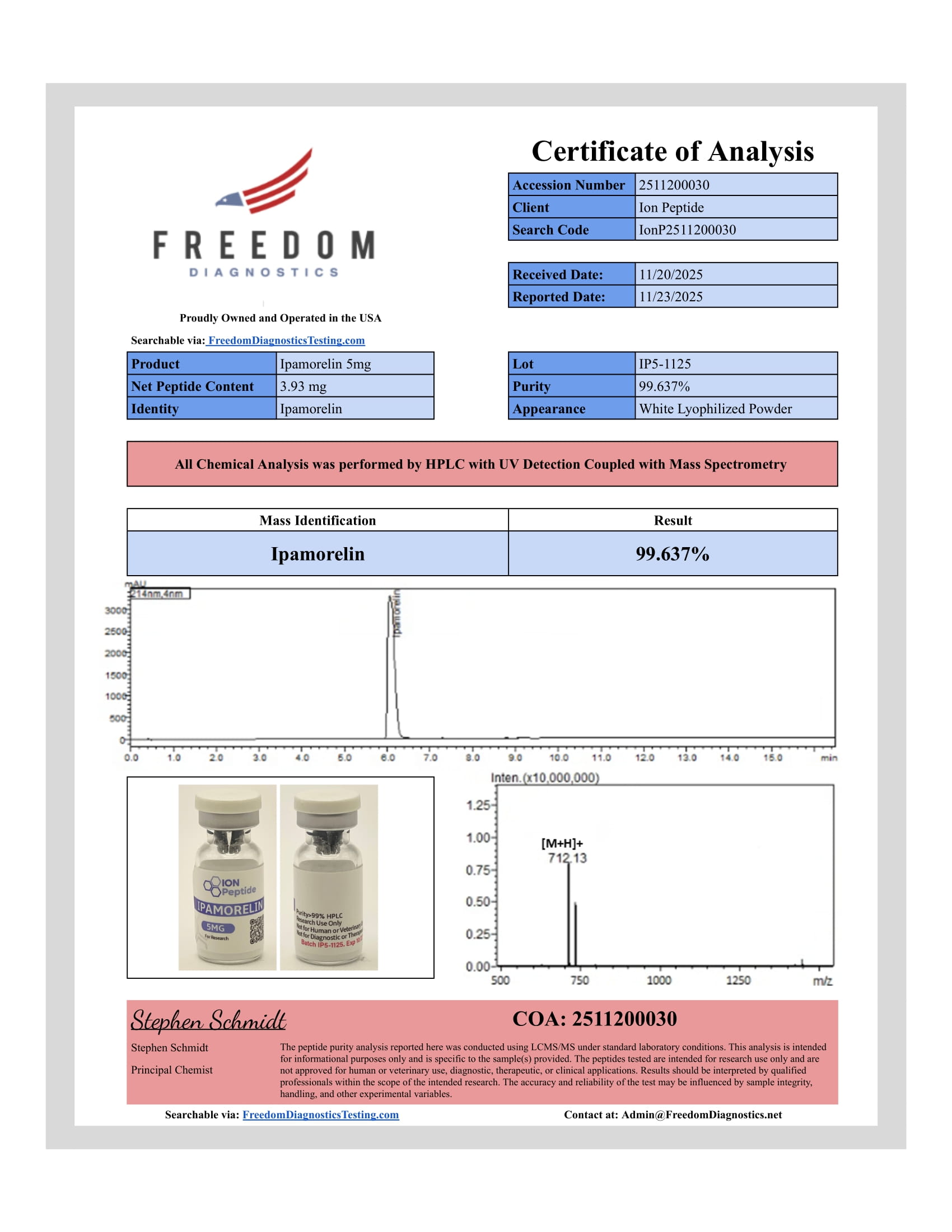
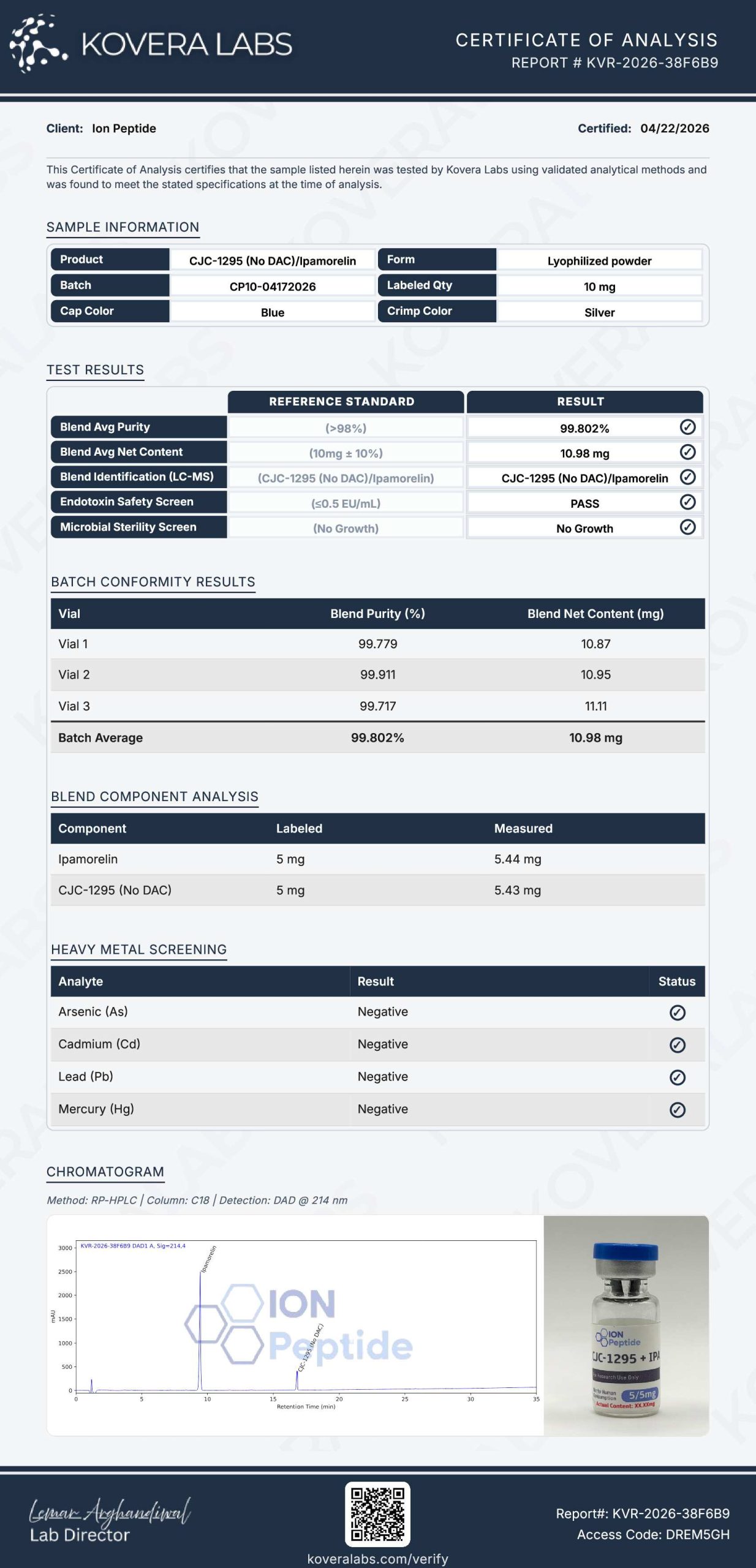
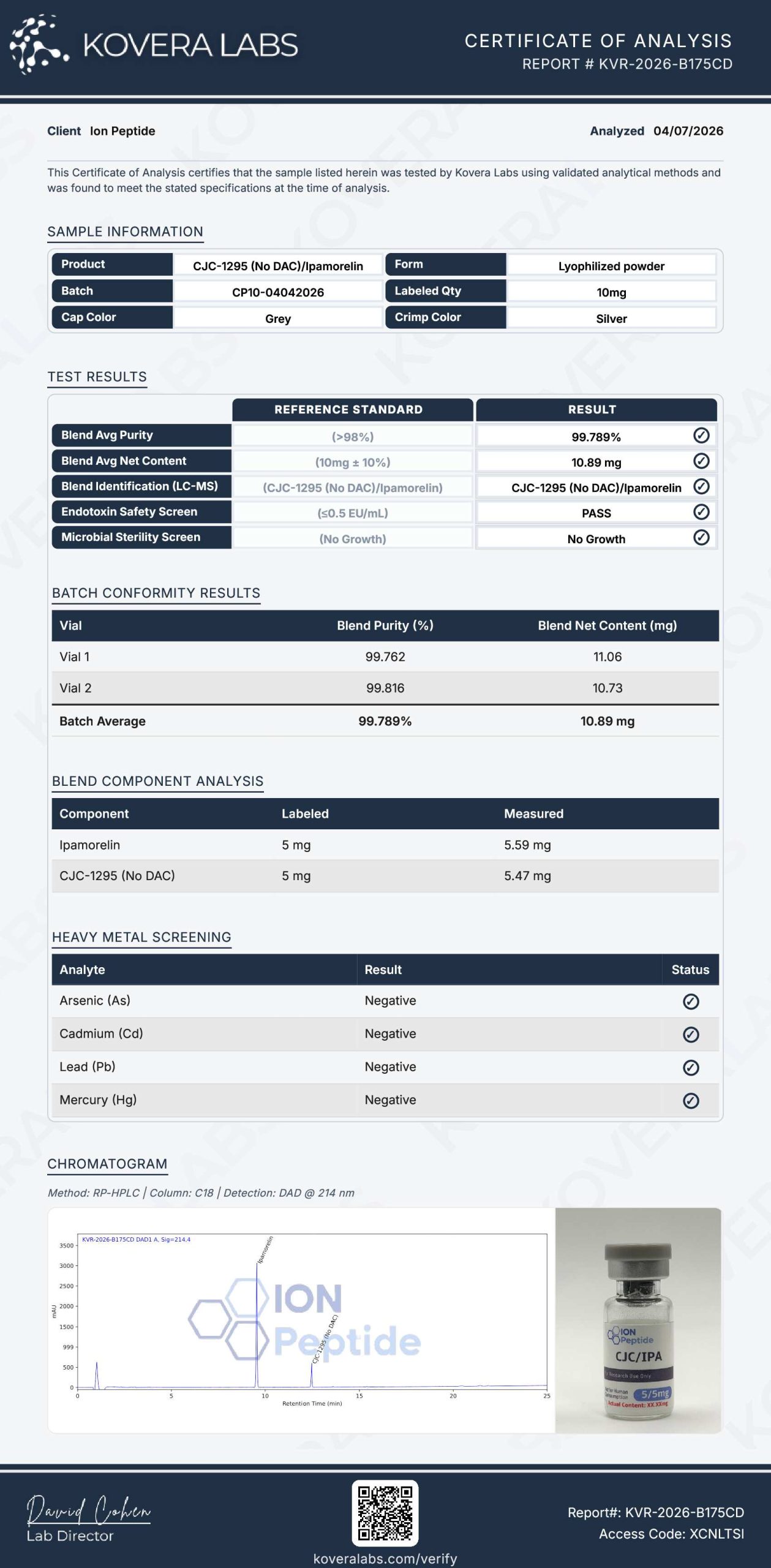
  • Batch Verified: Co-formulated and purity-confirmed for consistent dosing.


Important Note

For laboratory and scientific research only. Not for human consumption, veterinary use, or diagnostic purposes.
Details

Components CJC-1295 (Modified GHRH analogue) + Ipamorelin (Selective GHS-R1a agonist)
Chemical Formula CJC-1295: C₁₅₂H₂₅₂N₄₄O₄₂ | Ipamorelin: C₃₈H₄₉N₉O₅
Molecular Mass CJC-1295: ~3368 Da | Ipamorelin: ~711.9 Da
CAS Number CJC-1295: 863288-34-0 | Ipamorelin: 170851-70-4
Form Two separate lyophilized peptide vials
Shelf Life 24 months (lyophilized)
Intended Use For preclinical and in vitro research only
Storage -20 °C (dry powder), -80 °C (after reconstitution)

Research

Research Applications

Growth Hormone Secretion Studies

CJC-1295 increases GHRH receptor activation, while Ipamorelin stimulates ghrelin receptors — together producing greater GH pulses than either alone [1].

IGF-1 Production & Anabolic Signaling

Leads to increased IGF-1 production, supporting protein synthesis and tissue recovery models [2].

Endocrine System Research

Helps investigate hypothalamic-pituitary regulation of GH, somatostatin suppression, and GH feedback loops [3].

Metabolism & Body Composition Studies

Used in models of fat mass reduction, lean mass increase, and metabolic improvement [4].


References
  1. Bowers CY et al. (2004). Synergy Between GHRH Analogues and GHRPs. J Clin Endocrinol Metab.
    https://karger.com/nen/article/82/3-4/198/225877/Effects-of-Combined-Long-Term-Treatment-with-a

  2. Teichman SL et al. (2006). Pharmacokinetics and Endocrine Effects of CJC-1295. JCEM.
    https://academic.oup.com/jcem/article/91/3/799/2843281

  3. Kojima M et al. (1999). Discovery of Ghrelin and Its Receptor. Nature.
    https://reference.medscape.com/medline/abstract/10604470

  4. Svensson J et al. (2003). Growth Hormone Secretagogues and Body Composition. Endocrine.
    https://www.researchgate.net/profile/Suzanne-Dickson/publication/12012696_Effects_of_Growth_Hormone_and_Its_Secretagogues_on_Bone/links/0912f5090ed62aaffe000000/Effects-of-Growth-Hormone-and-Its-Secretagogues-on-Bone.pdf

Mechanism of Action


Mechanism of Action (How CJC-1295 + Ipamorelin Works)

  • GHRH Receptor Activation: CJC-1295 binds GHRH receptors on pituitary somatotrophs, stimulating GH release [Teichman 2006].

  • Ghrelin Receptor Activation: Ipamorelin binds GHS-R1a, synergistically amplifying GH pulses [Bowers 2004].

  • Somatostatin Inhibition: Combination reduces inhibitory tone, allowing stronger GH bursts [Bowers 2004].

  • Increased IGF-1 Production: Elevates circulating IGF-1, promoting anabolism and tissue growth [Svensson 2003].

  • Pulsatile Secretion: Mimics physiologic GH rhythms, which is critical for proper metabolic and growth signaling [Teichman 2006].


References
  1. Bowers CY et al. (2004). Synergy Between GHRH Analogues and GHRPs. J Clin Endocrinol Metab.
    https://karger.com/nen/article/82/3-4/198/225877/Effects-of-Combined-Long-Term-Treatment-with-a

  2. Teichman SL et al. (2006). Pharmacokinetics and Endocrine Effects of CJC-1295. JCEM.
    https://academic.oup.com/jcem/article/91/3/799/2843281

  3. Kojima M et al. (1999). Discovery of Ghrelin and Its Receptor. Nature.
    https://reference.medscape.com/medline/abstract/10604470

  4. Svensson J et al. (2003). Growth Hormone Secretagogues and Body Composition. Endocrine.
    https://www.researchgate.net/profile/Suzanne-Dickson/publication/12012696_Effects_of_Growth_Hormone_and_Its_Secretagogues_on_Bone/links/0912f5090ed62aaffe000000/Effects-of-Growth-Hormone-and-Its-Secretagogues-on-Bone.pdf

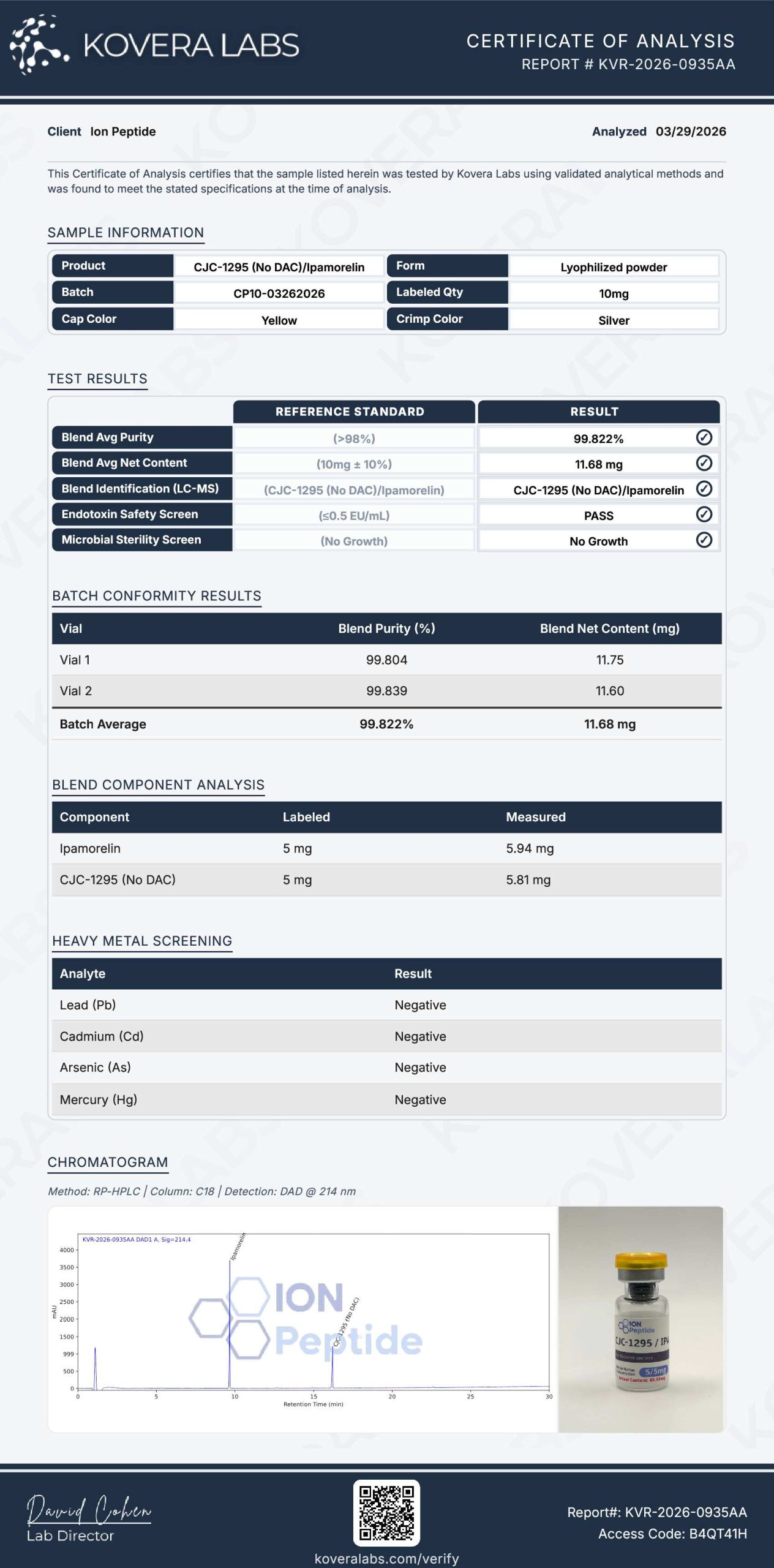
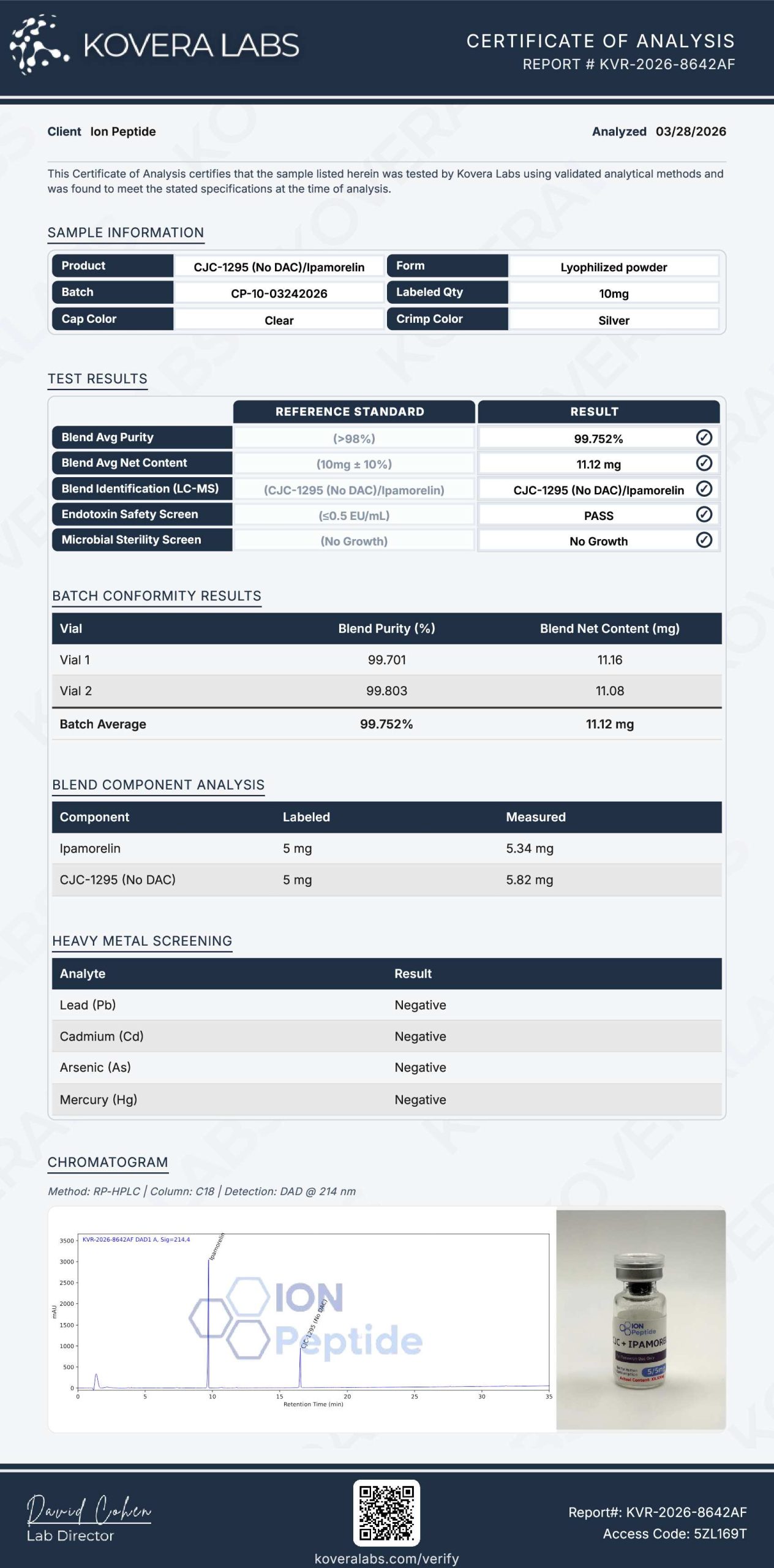
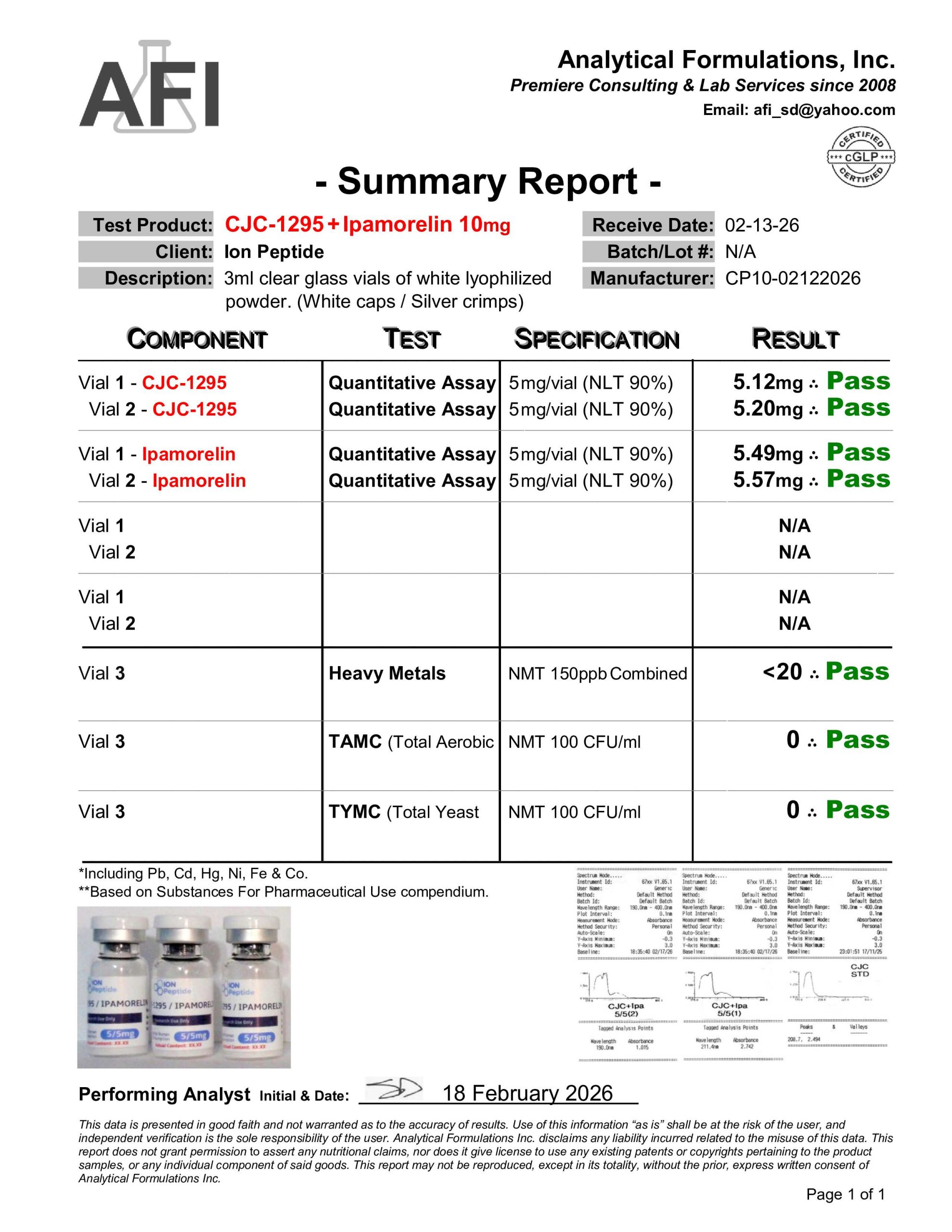
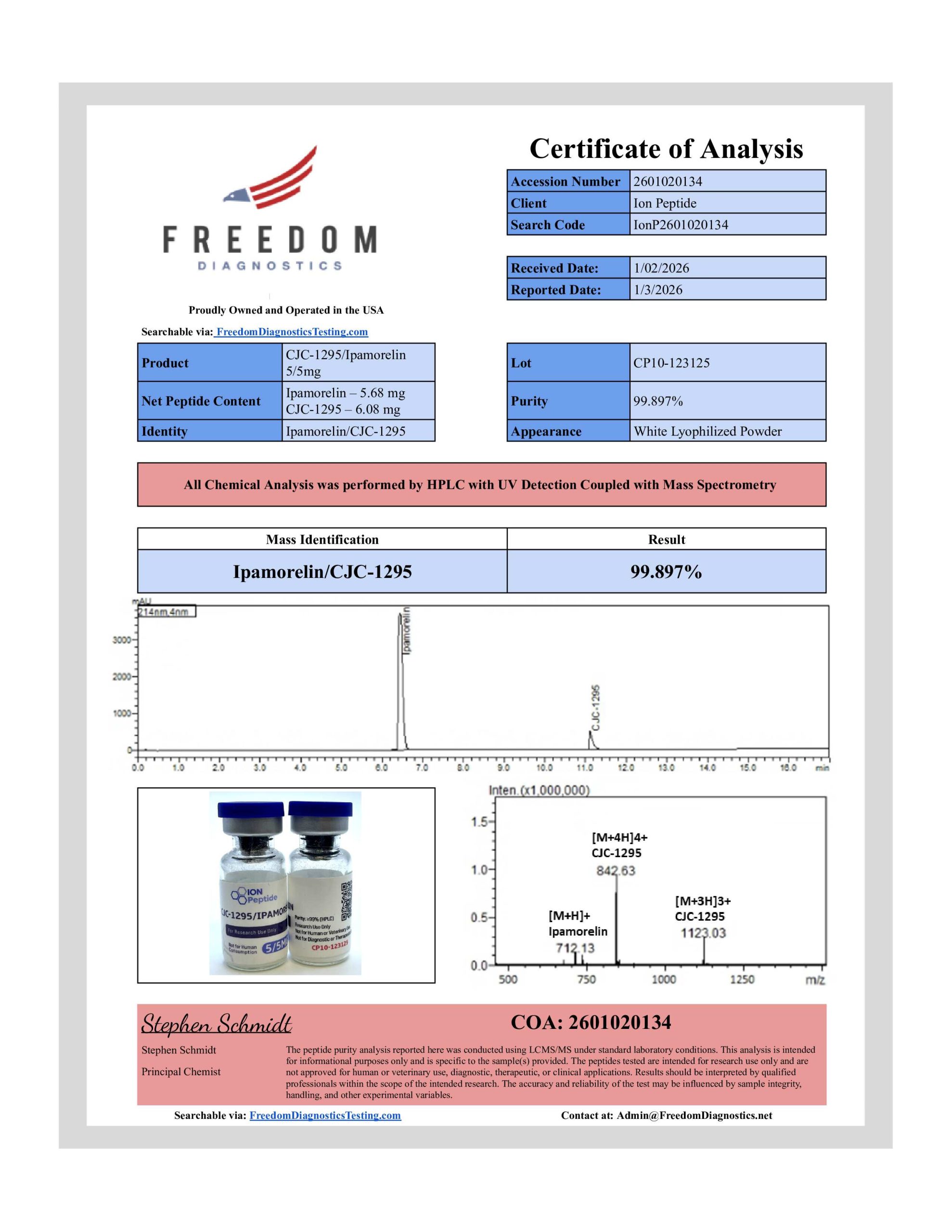
Certificate of Authenticity