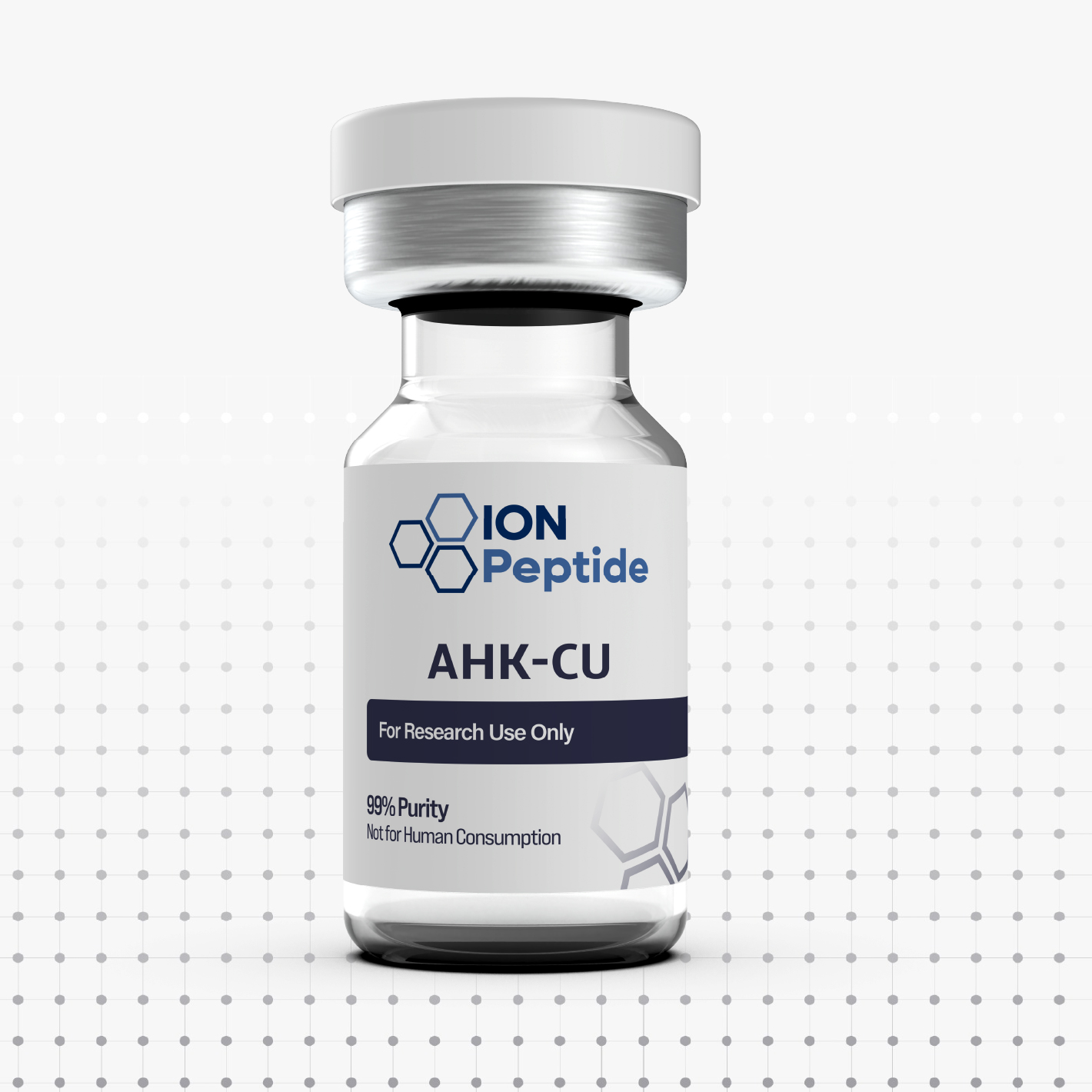
AHK-Cu

Price range: $63.00 through $93.00

For research purposes only. Not for human or animal use & not FDA-approved. By purchasing, you confirm you are 21 or older and qualified researcher.

Quantity Price
4 - 5 $56.70
6 - 9 $52.92
10 + $47.25
Money Back Guarantee Guaranteed Quality Customer Support Fast Shipping

Description

AHK-Cu (50mg)

Research-Grade Copper Tripeptide-3
Tagline: Regeneration & Follicle Research


Product Description

AHK-Cu (Copper Tripeptide-3) is a synthetic copper-binding tripeptide composed of Ala-His-Lys complexed with Cu²⁺. It belongs to the copper peptide family studied for extracellular matrix (ECM) remodeling, fibroblast signaling, angiogenesis, and epithelial repair.

Researchers study AHK-Cu research compound models to explore how copper-peptide signaling influences collagen/elastin dynamics, wound repair cascades, hair follicle microenvironment activity, and oxidative stress regulation. AHK-Cu is structurally related to the better-studied copper peptide GHK-Cu, but is typically investigated for follicular and dermal regeneration pathways in laboratory settings.

For Laboratory and Scientific Research Use Only. Not for Human Consumption.


Why Researchers Choose AHK-Cu
  • Copper-peptide signaling model for ECM and regeneration pathways

  • High stability due to Cu²⁺ chelation and tripeptide structure

  • Useful in dermal & follicular systems for fibroblast/keratinocyte response studies

  • Supports angiogenesis pathway research via VEGF/repair signaling models

  • Easy reconstitution for in vitro or preclinical protocol design

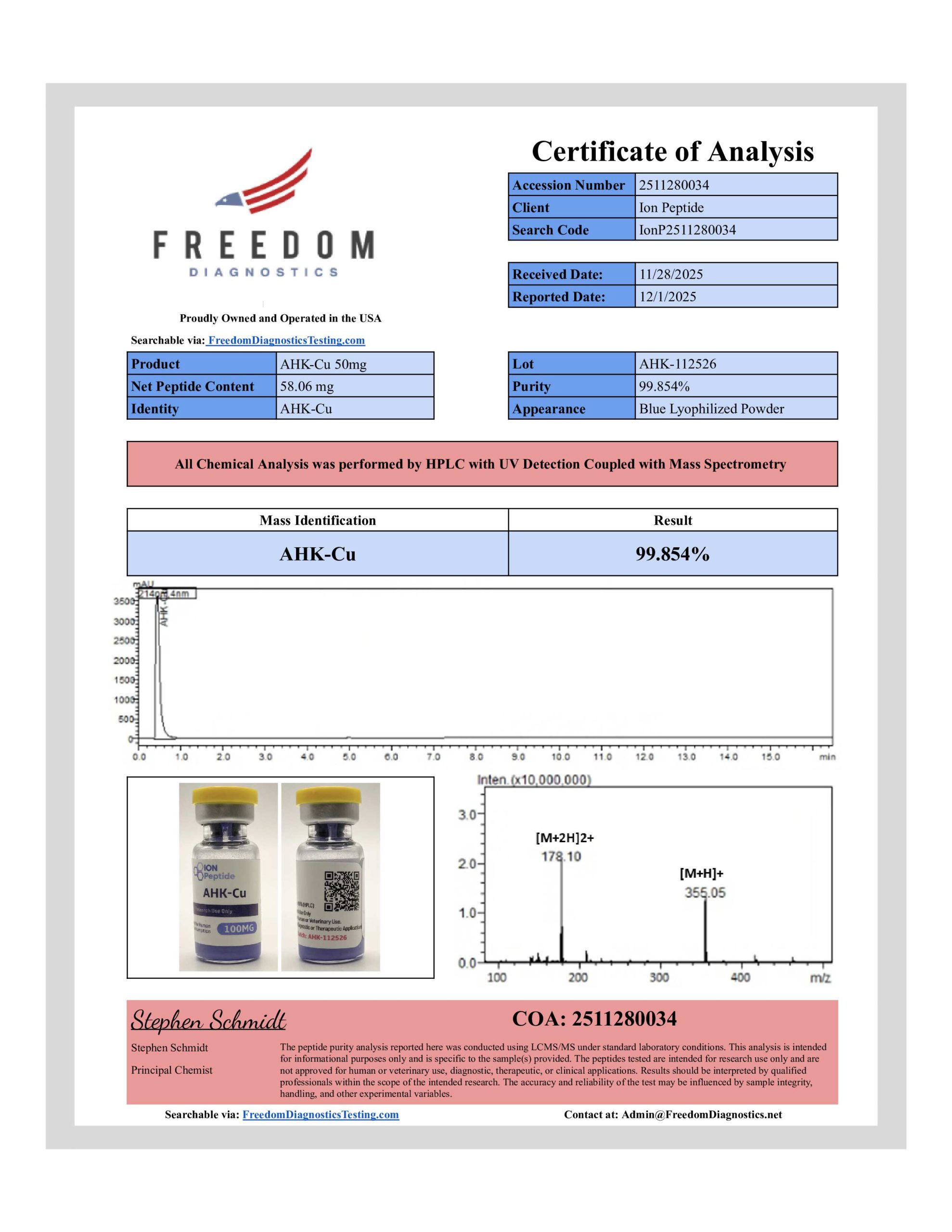
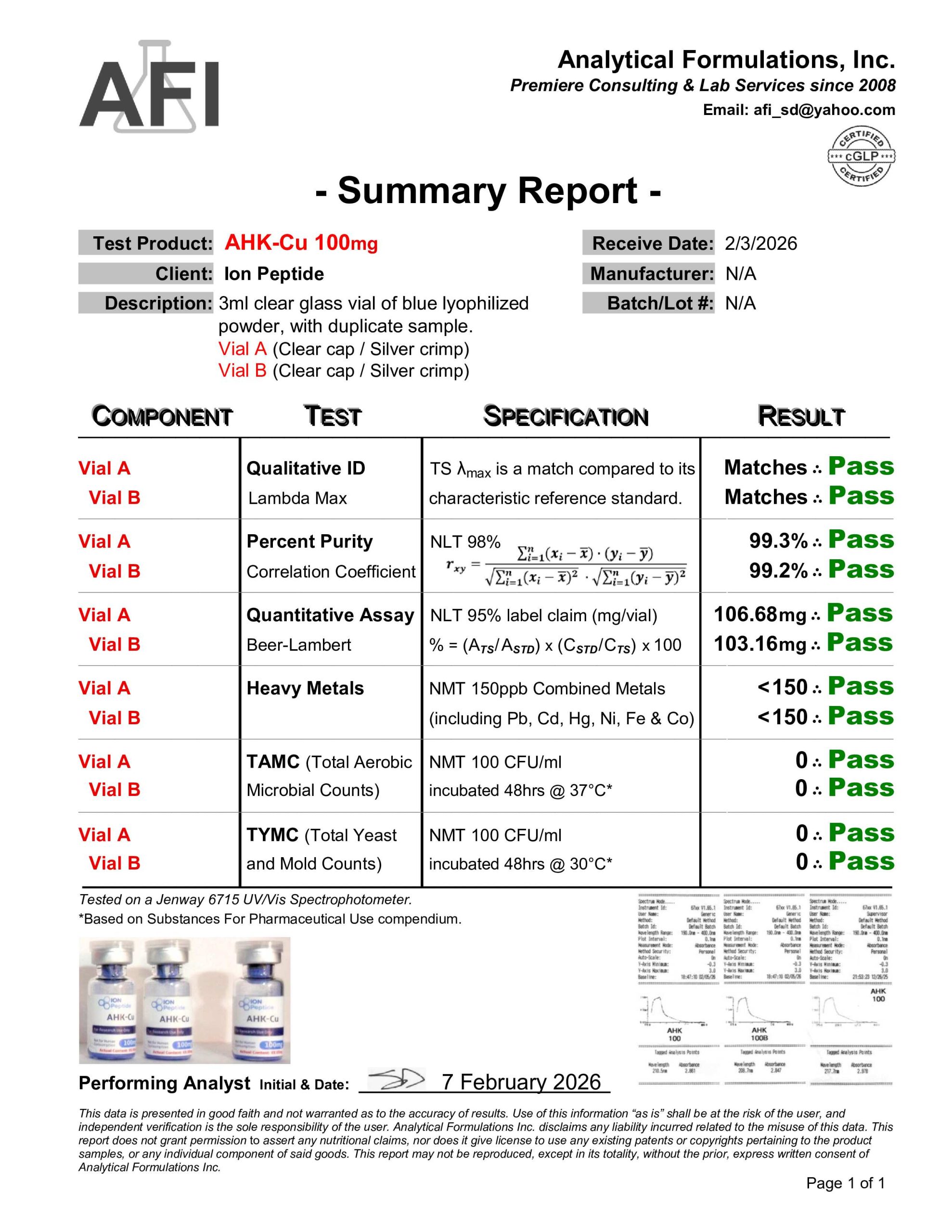
  • ≥98% purity verified by HPLC/MS for consistent lab outcomes


Important Note

For laboratory and scientific research only. Not for human consumption.
Details

Compound Name AHK-Cu (Copper Tripeptide-3)
Sequence Ala-His-Lys • Cu²⁺ complex
Chemical Formula C15H26CuN6O4
Molecular Mass ~401.9 Da (Cu-complex)
CAS Number 126828-32-8
Form Lyophilized powder
Intended Research Use Dermal repair, ECM signaling, angiogenesis, follicle biology

Research

Research Applications

Dermal Repair & Extracellular Matrix Remodeling

Copper-peptide complexes are well documented to regulate fibroblast activity and ECM turnover, increasing collagen, elastin, and glycosaminoglycan synthesis during tissue repair. These pathways are central to dermal regeneration research and are used as mechanistic comparators when studying AHK-Cu in connective tissue models.

Angiogenesis & Vascular Support Models

Copper peptides stimulate pro-repair signaling including vascular growth responses, supporting investigations into microvascular remodeling and wound-environment oxygenation. This makes AHK-Cu relevant to angiogenesis-forward regeneration studies.

Hair Follicle Microenvironment Research

Copper tripeptides are frequently explored in follicular biology because copper is essential for ECM crosslinking and local growth signaling. AHK-Cu is used as a lab tool to evaluate fibroblast–follicle interactions, dermal papilla signaling, and perifollicular vascular dynamics.

Copper peptide systems reduce oxidative injury by increasing antioxidant enzyme activity and suppressing inflammatory mediators in tissue-damage models. Researchers apply these effects to study stress recovery pathways in skin and epithelial tissues.


References
  1. Pickart L, et al. (2018). The Effect of the Human Plasma Molecule GHK-Cu on Stem Cells, Tissue Repair, and Anti-Inflammatory Signaling. OBM Geriatrics.
    https://www.lidsen.com/journals/geriatrics/geriatrics-02-03-009

  2. Peptide Sciences Research Team (2024). Copper Peptides and Fibroblast-Driven Collagen/Elastin Modulation.
    https://www.peptidesciences.com/peptide-research/what-is-ghk-cu-and-how

  3. Peptides and Wound Healing Review (2024). Peptide-driven repair pathways including copper peptide signaling. Journal of Peptide Science.
    https://link.springer.com/article/10.1007/s10989-024-10627-5

Mechanism of Action

Mechanism of Action 
  • Copper-dependent fibroblast activation: Copper-peptide signaling increases fibroblast activity, driving collagen/elastin/ECM component production.

  • ECM turnover regulation: Promotes balanced remodeling by modulating metalloproteinases and protease inhibitors during repair.

  • Angiogenic pathway stimulation: Copper peptides enhance vascular support signaling (e.g., VEGF-linked repair cascades).

  • Antioxidant defense upshift: Elevates endogenous antioxidant enzymes, lowering oxidative damage in healing models.

  • Copper delivery to repair sites: Functions as a bioavailable Cu²⁺ carrier, supporting enzyme systems required for tissue regeneration.


References
  1. Pickart L, et al. (2018). The Effect of the Human Plasma Molecule GHK-Cu on Stem Cells, Tissue Repair, and Anti-Inflammatory Signaling. OBM Geriatrics.
    https://www.lidsen.com/journals/geriatrics/geriatrics-02-03-009

  2. Peptide Sciences Research Team (2024). Copper Peptides and Fibroblast-Driven Collagen/Elastin Modulation.
    https://www.peptidesciences.com/peptide-research/what-is-ghk-cu-and-how

  3. Peptides and Wound Healing Review (2024). Peptide-driven repair pathways including copper peptide signaling. Journal of Peptide Science.
    https://link.springer.com/article/10.1007/s10989-024-10627-5

Certificate of Authenticity