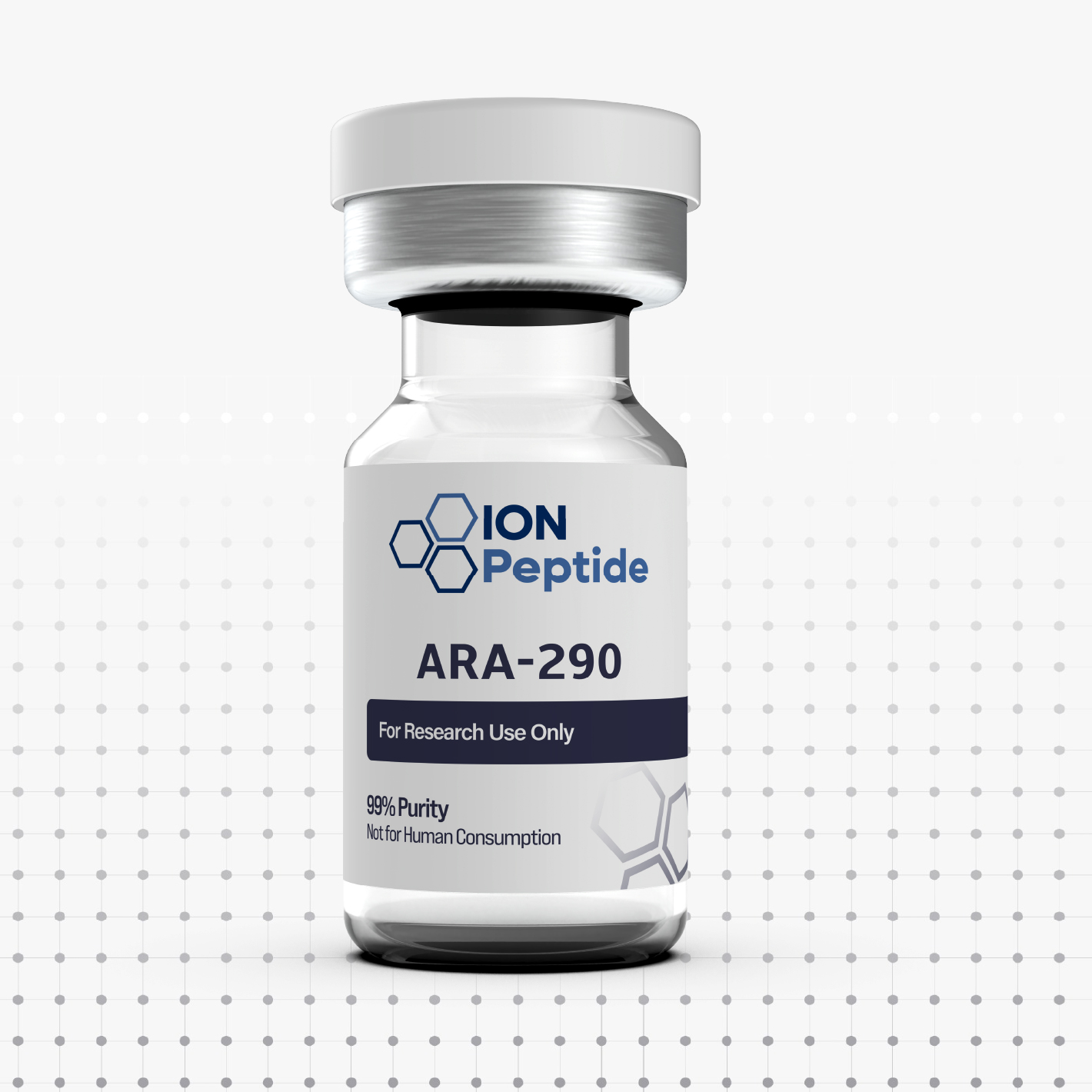
ARA-290

Price range: $59.00 through $179.00

For research purposes only. Not for human or animal use & not FDA-approved. By purchasing, you confirm you are 21 or older and qualified researcher.

Quantity Price
4 - 5 $53.10
6 - 9 $49.56
10 + $44.25
Money Back Guarantee Guaranteed Quality Customer Support Fast Shipping

Description

ARA-290 (Hematopoietic Peptide Analogue)

Tagline: Targeted Tissue Modulation


Product Description

ARA-290 is a synthetic peptide analogue of the innate repair receptor (IRR)–activating region of erythropoietin. This ARA-290 Peptideresearch compound is widely investigated for its potential influence on inflammation, neural protection, and metabolic regulation. Scientists value ARA-290 peptide for its focused interaction with the IRR pathway, enabling studies related to cellular protection and immune modulation.

This compound is intended strictly for laboratory and scientific research. It is not approved for human use, medical treatment, or consumption.


Why Researchers Choose ARA-290 Peptide
  • High-purity peptide suitable for controlled laboratory studies.

  • Demonstrates strong stability under recommended storage conditions.

  • Supports investigations into inflammation, tissue protection, and neural response.

  • Easy to reconstitute for in-vitro and in-vivo research models.

  • Consistent performance across a range of scientific applications.

  • Backed by growing interest in IRR-based biological pathways.


Important Note

For laboratory and scientific research only. Not for human consumption.
Details

Product Name ARA-290
Chemical Formula C51H84N16O21
Molecular Mass ~ 1.4 kDa (approx.)
CAS Number 1208242-50-8
Form Lyophilized powder
Shelf Life Up to 24 months (lyophilized)
Intended Use Laboratory research only
Storage -20°C or below

Research

Research

1. Inflammation & Immune Modulation

ARA-290 is frequently studied for its interaction with the innate repair receptor pathway, which may influence inflammatory signaling and cytokine response [1]. Research models report reduced inflammatory markers and improved cellular resilience under stress conditions [2].

2. Neural Protection & Pain Pathways

Studies explore ARA-290’s potential role in neural tissue protection by modulating nociceptive and glial-cell signaling [3]. Research suggests possible applications in models of neuropathic response, nerve injury, and sensory regulation.

3. Metabolic Regulation & Insulin Sensitivity

Researchers investigate ARA-290 for its effects on metabolic processes through IRR activation. Findings in animal models show changes in insulin response and glucose regulation patterns [4].

4. Tissue Repair & Microvascular Function

ARA-290 is examined for its potential to support microvascular integrity and reduce damage from ischemic conditions [5]. Studies highlight improved endothelial signaling and tissue recovery markers.


References
  1. Brines, M. et al. (2008). Erythropoietin derivatives and tissue protection pathways. Journal of Experimental Medicine.
    https://www.academia.edu/91268639/Erythropoietin_mediated_tissue_protection_reducing_collateral_damage_from_the_primary_injury_response

  2. Henrik Ehrenreich. Targeting the innate repair receptor to treat neuropathy.
    https://www.researchgate.net/publication/308004251_Targeting_the_innate_repair_receptor_to_treat_neuropathy/fulltext/5989b9aba6fdcc75626372a2/Targeting-the-innate-repair-receptor-to-treat-neuropathy.pdf

  3. van Velzen, M. et al. (2015). ARA-290 and neuropathic signaling pathways. Pain Journal.
    https://europepmc.org/articles/PMC3928087

  4. Michael Brines & Anthony Cerami. Flipping the molecular switch for innate protection and repair of tissues: Long-lasting effects of a non-erythropoietic small peptide engineered from erythropoietin.
    https://www.sciencedirect.com/science/article/pii/S0163725815000595

  5. Collino, M. et al. (2013). Microvascular tissue protection via erythropoietin-derived peptides. Cardiovascular Research.
    https://www.sciencedirect.com/science/article/pii/S0163725815000595

Mechanism of Action

Mechanism of Action (How ARA-290 Works)
  • Selectively activates the innate repair receptor (IRR), distinct from erythropoietin’s hematopoietic receptor [1].

  • Modulates downstream pathways linked to inflammation, cytokine signaling, and immune regulation [2].
  • Supports protective responses in neural and vascular tissues under stress conditions [3].

  • Influences metabolic pathways associated with insulin sensitivity and cellular homeostasis [4].

  • Enhances tissue resilience through improved microvascular function and cellular repair signaling [5].


References
  1. Brines, M. et al. (2008). Erythropoietin derivatives and tissue protection pathways. Journal of Experimental Medicine.
    https://www.academia.edu/91268639/Erythropoietin_mediated_tissue_protection_reducing_collateral_damage_from_the_primary_injury_response

  2. Henrik Ehrenreich. Targeting the innate repair receptor to treat neuropathy.
    https://www.researchgate.net/publication/308004251_Targeting_the_innate_repair_receptor_to_treat_neuropathy/fulltext/5989b9aba6fdcc75626372a2/Targeting-the-innate-repair-receptor-to-treat-neuropathy.pdf

  3. van Velzen, M. et al. (2015). ARA-290 and neuropathic signaling pathways. Pain Journal.
    https://europepmc.org/articles/PMC3928087

  4. Michael Brines & Anthony Cerami. Flipping the molecular switch for innate protection and repair of tissues: Long-lasting effects of a non-erythropoietic small peptide engineered from erythropoietin.
    https://www.sciencedirect.com/science/article/pii/S0163725815000595

  5. Collino, M. et al. (2013). Microvascular tissue protection via erythropoietin-derived peptides. Cardiovascular Research.
    https://www.sciencedirect.com/science/article/pii/S0163725815000595

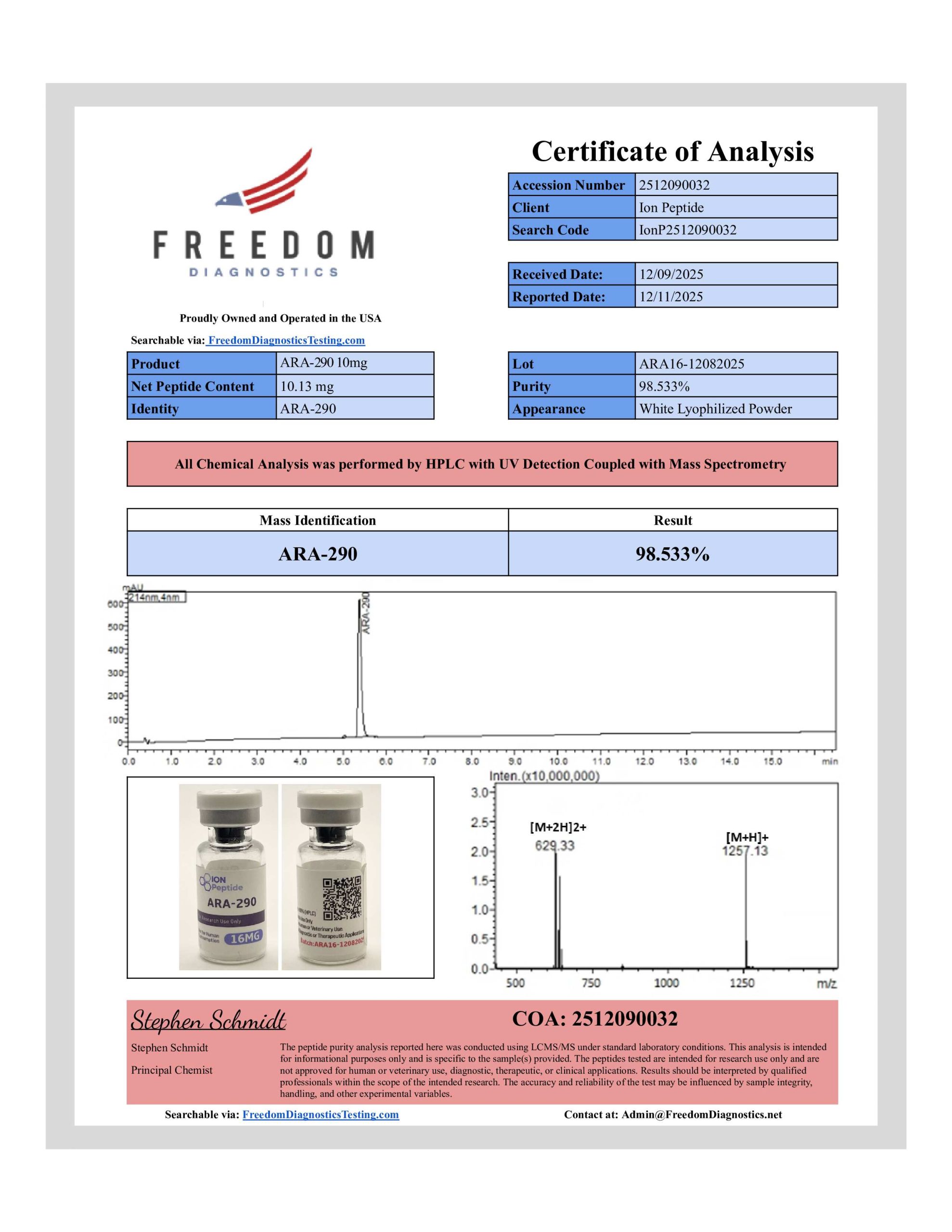
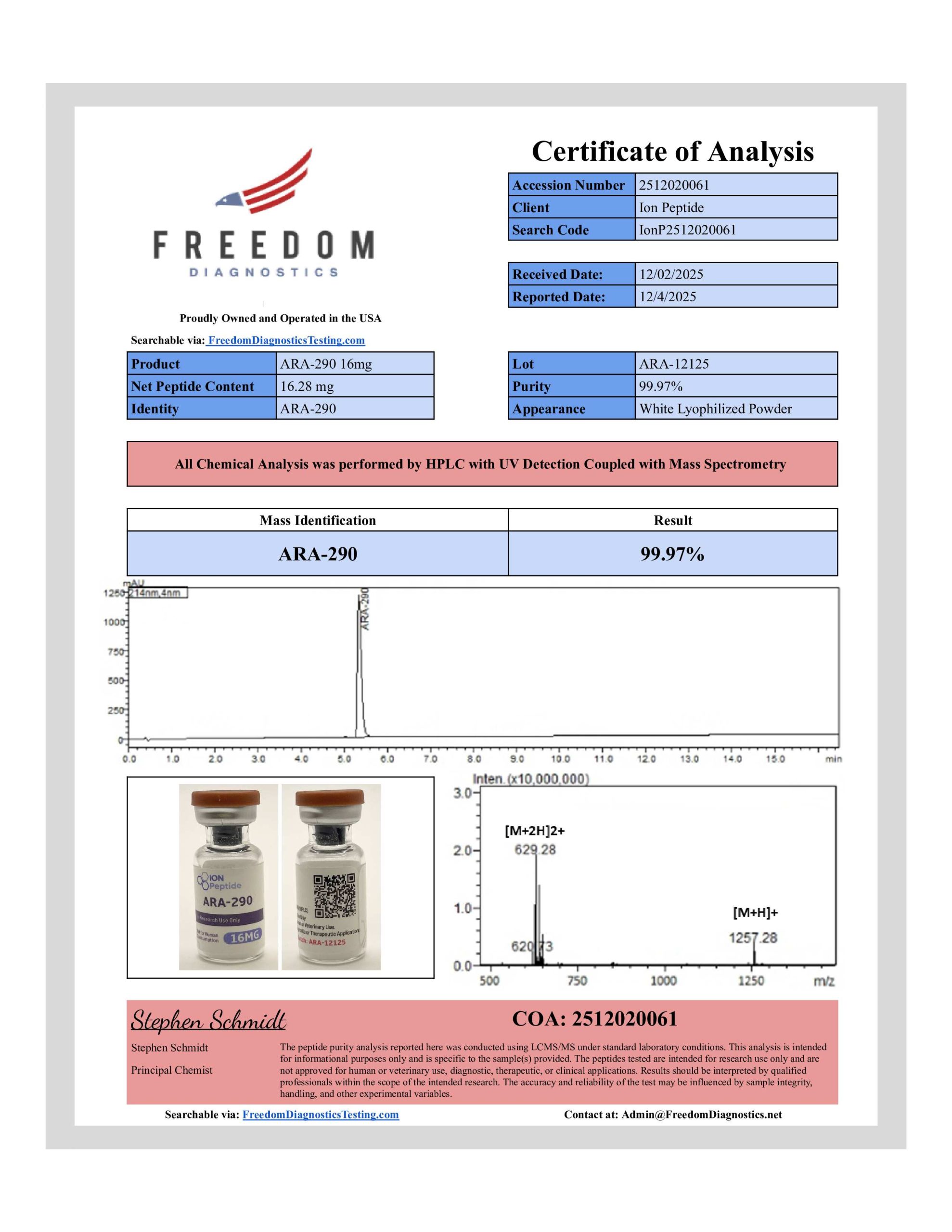
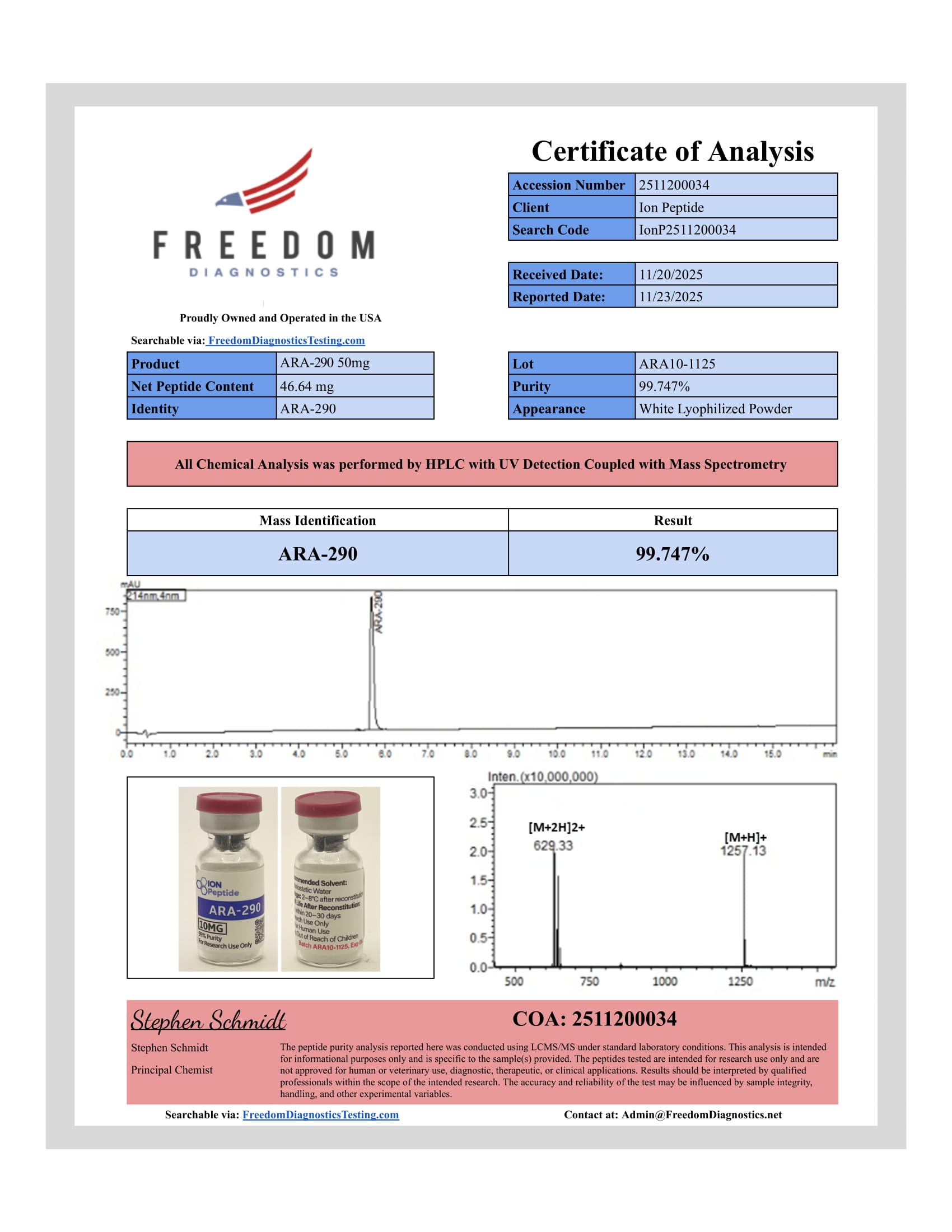
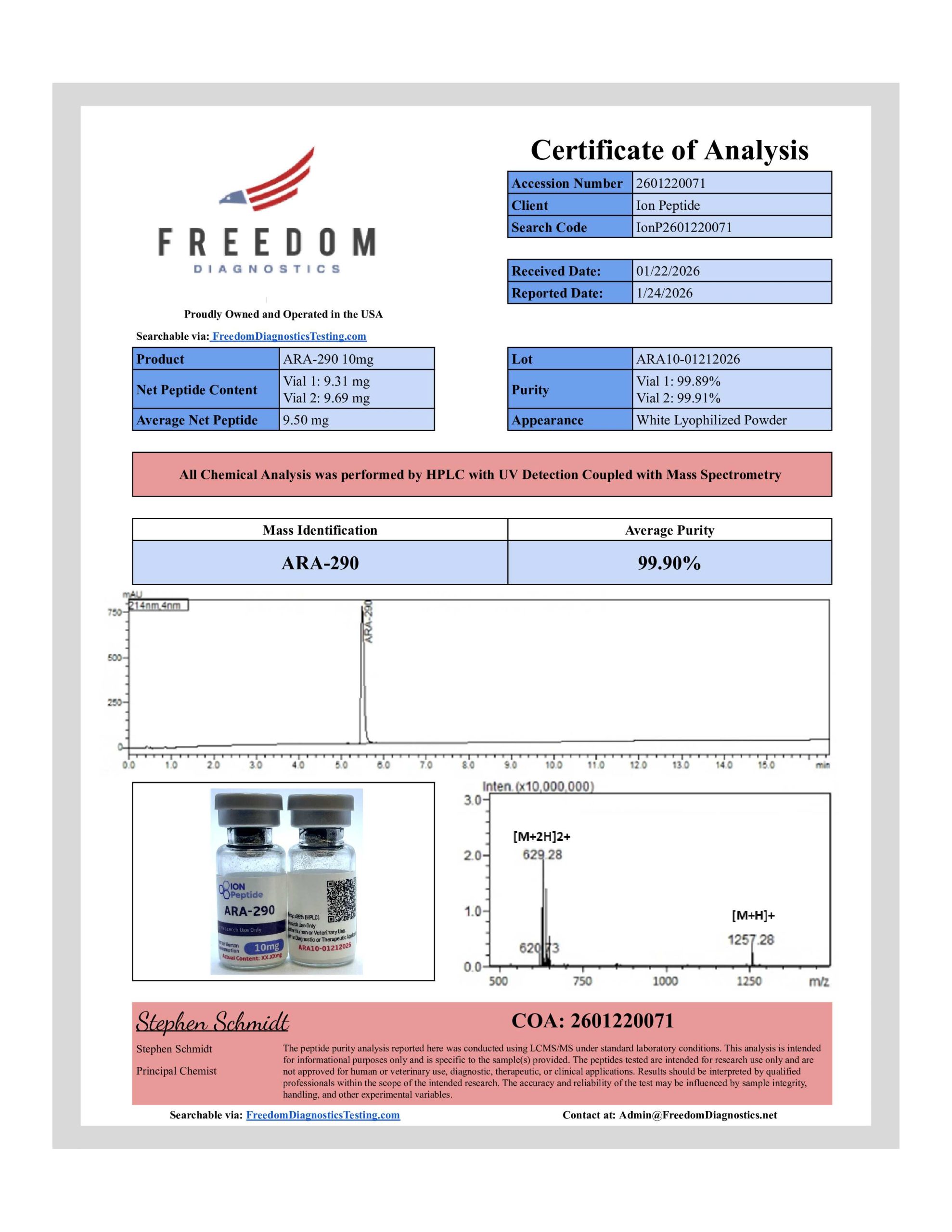
Certificate of Authenticity