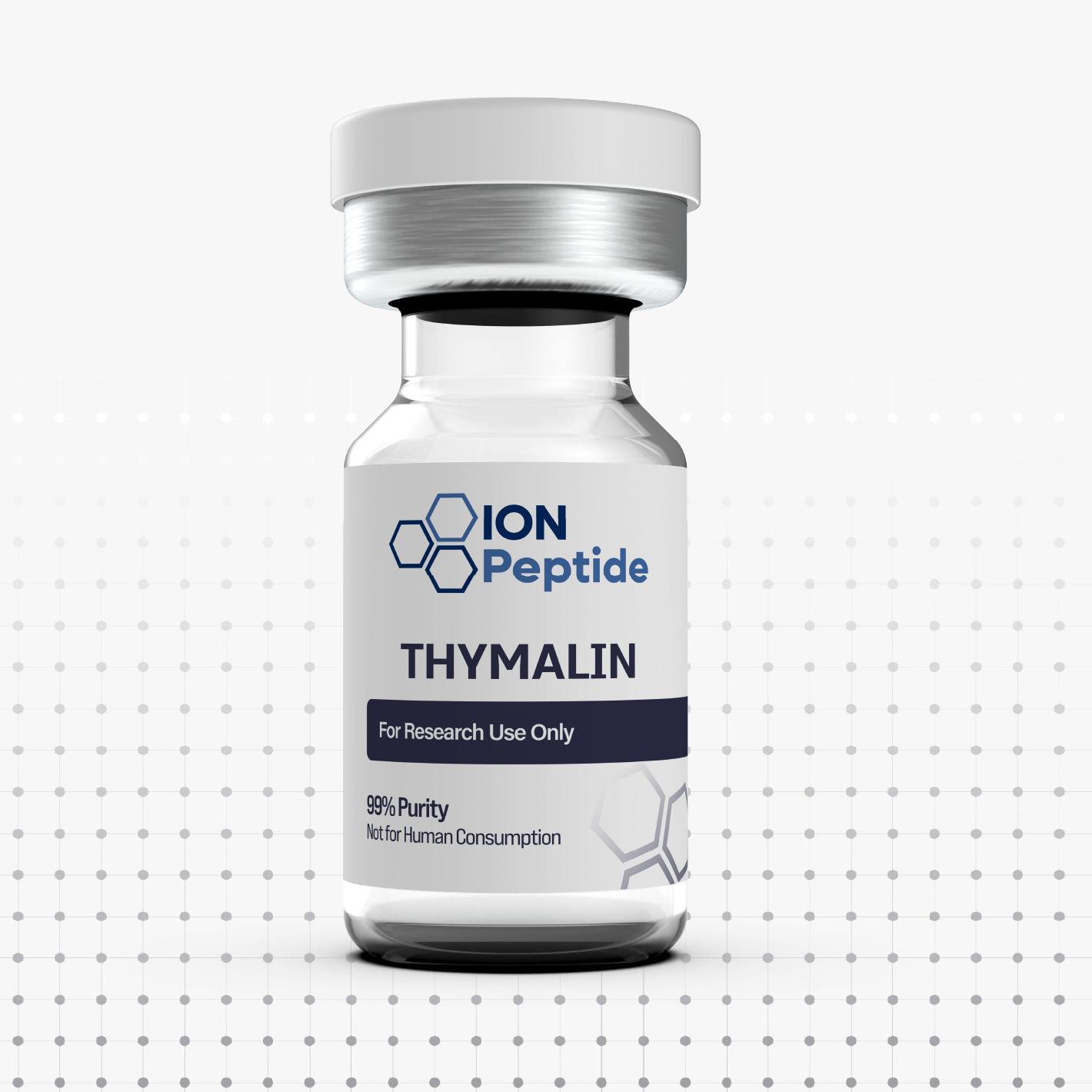
Thymalin – 10mg

$59.00

For research purposes only. Not for human or animal use & not FDA-approved. By purchasing, you confirm you are 21 or older and qualified researcher.

In stock

Quantity Price
4 - 5 $53.10
6 - 9 $49.56
10 + $44.25
Money Back Guarantee Guaranteed Quality Customer Support Fast Shipping

Description

Thymalin

Research-Grade Thymic Peptide Complex
Tagline: Thymic Peptide Gene Regulation Research


Product Description

Thymalin is a low-molecular-weight peptide complex originally derived from thymic tissue extracts, composed of short regulatory peptides studied in laboratory research settings. It belongs to the broader class of tissue-associated peptide complexes investigated for their role in gene expression modulation, cellular signaling, and protein synthesis regulation.

In controlled research environments, thymic peptides are used as model compounds to examine cell differentiation pathways, transcriptional activity, and molecular signaling mechanisms associated with immune-related tissues. Research focuses on biochemical and gene-regulatory properties, not therapeutic application.

For Laboratory and Scientific Research Use Only. Not for Human Consumption.


Why Researchers Choose Thymalin
  • Low-molecular-weight thymic peptide complex

  • Studied in gene expression and transcription research

  • Associated with tissue-specific peptide regulation models

  • Suitable for molecular and cellular signaling studies

  • Lyophilized for stability and controlled reconstitution

  • Documented in peptide bioregulator literature


Important Note

For laboratory and scientific research only. Not for human consumption, diagnostic, or therapeutic use.
Details

Compound Name Thymalin
Compound Class Thymic peptide complex
Peptide Type Low-molecular-weight regulatory peptides
Target Context (Research) Gene expression and cellular regulation studies

Research

Research Applications

Gene Expression & Transcription Studies

Thymalin is used in laboratory models examining short peptide influence on gene transcription and protein synthesis pathways under controlled conditions.

Cellular Differentiation Research

Thymic peptide complexes are studied in experimental systems exploring cell differentiation signaling mechanisms and regulatory peptide interactions.

Tissue-Specific Peptide Regulation Models

As a thymus-associated peptide complex, Thymalin is utilized in comparative studies investigating tissue-specific regulatory peptide activity.

Molecular Signaling Pathway Research

Researchers may use thymic peptides to analyze intracellular signaling behavior and transcription factor interactions in controlled experimental setups.


References
  1. Khavinson VKh, et al. Peptide regulation of gene expression and protein synthesis in aging. Biogerontology.
    https://link.springer.com/article/10.1007/s10522-011-9363-8

  2. Khavinson VKh, Linkova NS. Peptide bioregulators: molecular mechanisms of action. Advances in Gerontology.
    https://link.springer.com/article/10.1134/S207905701202003X

  3. Anisimov VN, Khavinson VKh. Peptide bioregulators and tissue regulation research. Advances in Gerontology.
    https://link.springer.com/article/10.1134/S2079057010010039

  4. Peptide — structure and biological function overview.
    https://en.wikipedia.org/wiki/Peptide

Mechanism of Action

Mechanism of Action
Epigenetic Gene Modulation

Short thymic peptides are studied for potential interaction with chromatin and DNA regulatory regions, influencing transcriptional activity in laboratory models.

Protein Synthesis Regulation

Peptide complexes may influence cellular protein synthesis balance through gene-regulatory mechanisms observed in experimental systems.

Cell Signaling Modulation

Thymic peptides are investigated for their involvement in cell-to-cell communication pathways and intracellular signaling cascades.

Tissue-Associated Regulatory Activity

As part of the peptide bioregulator research class, thymic peptides are examined for tissue-associated gene regulation behavior rather than receptor-specific pharmacology.


References
  1. Khavinson VKh, et al. Peptide regulation of gene expression and protein synthesis in aging. Biogerontology.
    https://link.springer.com/article/10.1007/s10522-011-9363-8

  2. Khavinson VKh, Linkova NS. Peptide bioregulators: molecular mechanisms of action. Advances in Gerontology.
    https://link.springer.com/article/10.1134/S207905701202003X

  3. Anisimov VN, Khavinson VKh. Peptide bioregulators and tissue regulation research. Advances in Gerontology.
    https://link.springer.com/article/10.1134/S2079057010010039

  4. Peptide — structure and biological function overview.
    https://en.wikipedia.org/wiki/Peptide

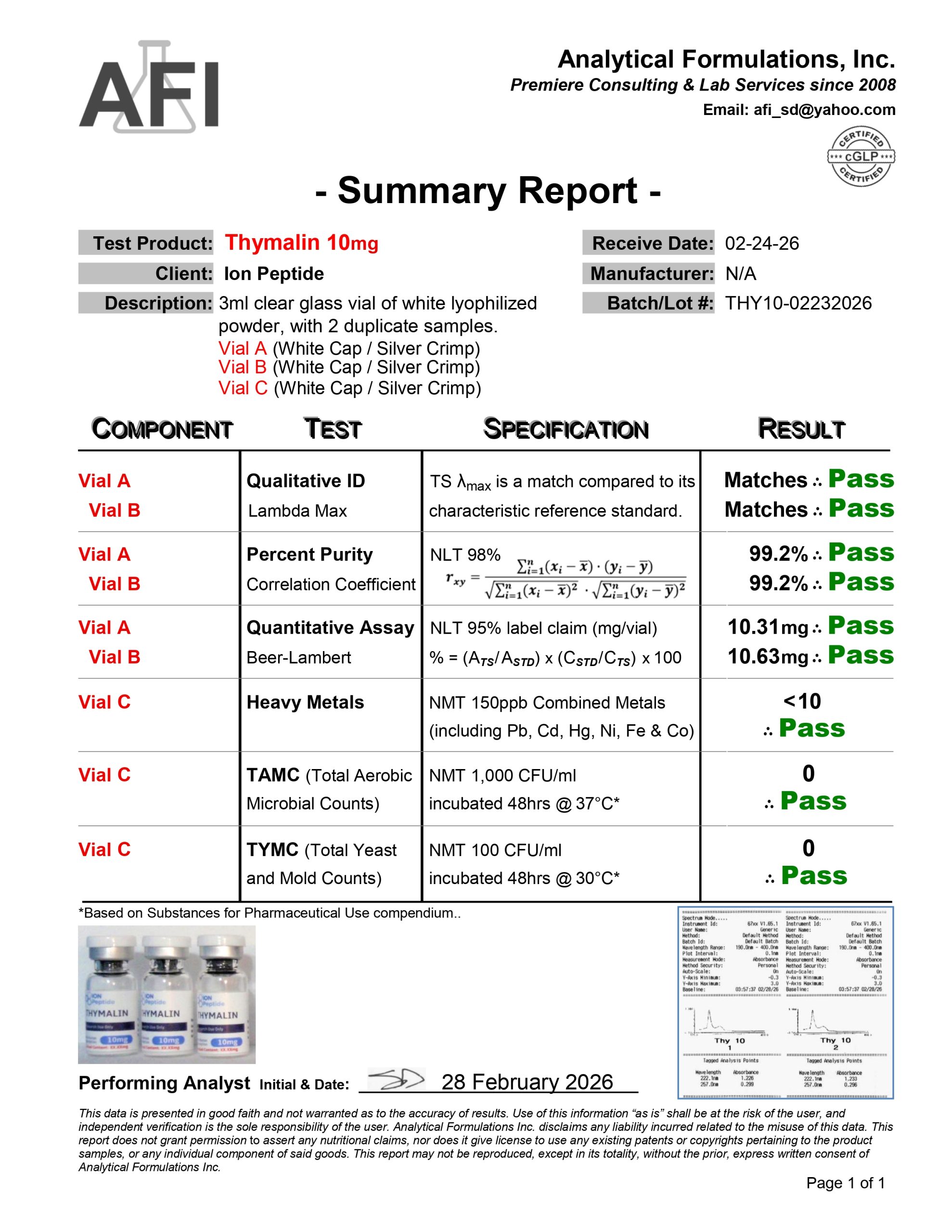
Certificate of Authenticity