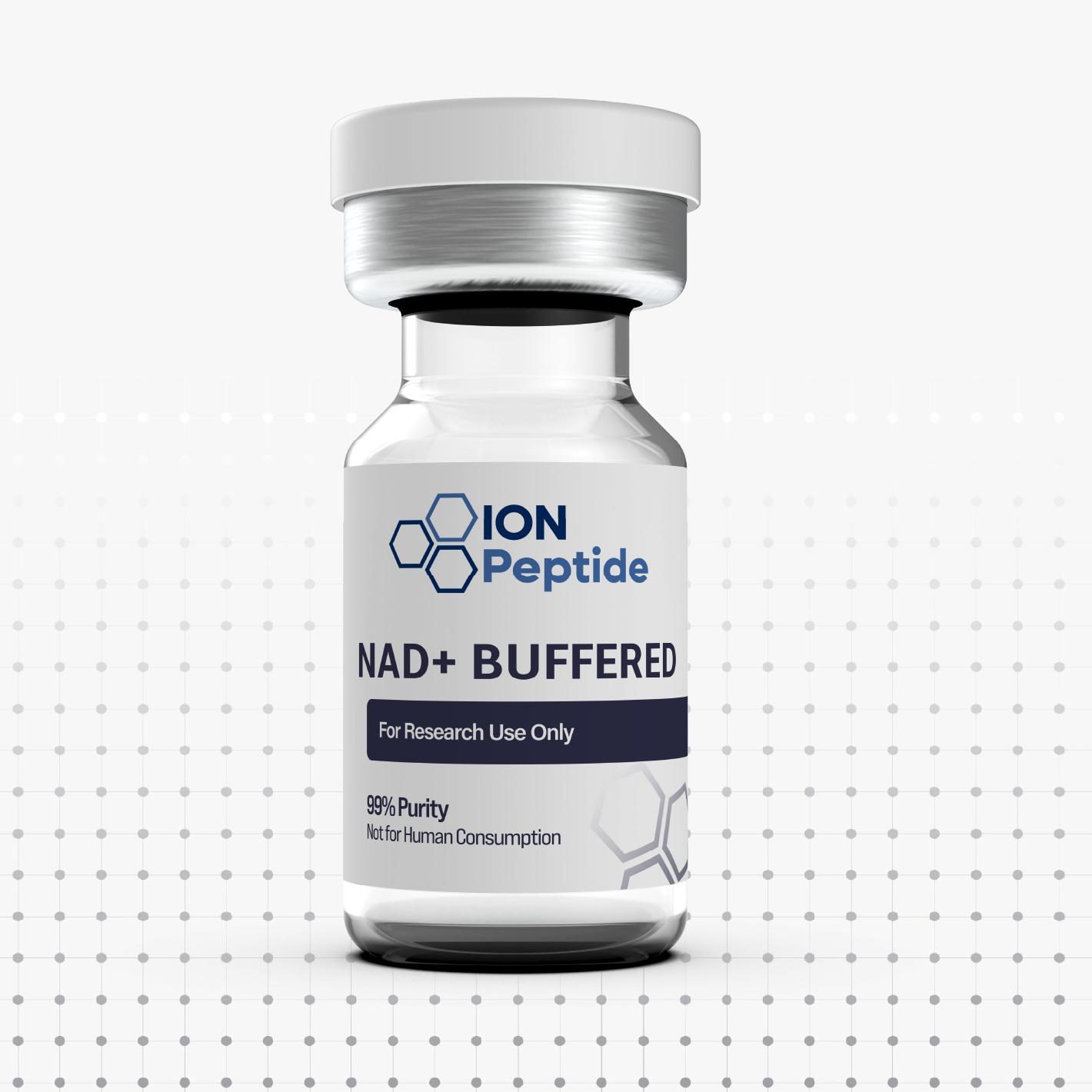
NAD+ Buffered – 500mg

$59.00

For research purposes only. Not for human or animal use & not FDA-approved. By purchasing, you confirm you are 21 or older and qualified researcher.

In stock

Quantity Price
4 - 5 $53.10
6 - 9 $49.56
10 + $44.25
Money Back Guarantee Guaranteed Quality Customer Support Fast Shipping

Description

NAD⁺ Buffered

Research-Grade Nicotinamide Adenine Dinucleotide (Stabilized Formulation)
Tagline: Cellular Energy & Redox Research


Product Description

NAD⁺ Buffered is a stabilized formulation of nicotinamide adenine dinucleotide (NAD⁺) prepared with buffering agents to improve pH stability and compound integrity during laboratory handling. NAD⁺ is a central redox coenzyme essential for mitochondrial respiration, ATP production, DNA repair, and cellular signaling.

In scientific research, NAD⁺ is widely studied for its role in cellular metabolism, mitochondrial efficiency, oxidative stress regulation, sirtuin activation, and age-associated cellular decline. Buffered formulations are commonly used in experimental settings to maintain solution stability and reproducibility, particularly in metabolic and bioenergetic studies.

For Laboratory and Scientific Research Use Only. Not for Human Consumption.


Why Researchers Choose NAD⁺ Buffered
  • Stabilized, buffered formulation for improved handling and consistency

  • Central coenzyme in cellular energy metabolism

  • Widely used in mitochondrial and redox biology research

  • Relevant to DNA repair and stress-response pathway studies

  • Supports investigations into aging and metabolic regulation

  • Research-grade purity for reproducible experimental outcomes


Important Note

For laboratory and scientific research only. Not for human consumption, diagnostic, or therapeutic use.
Details

Compound Name NAD⁺ Buffered (Nicotinamide Adenine Dinucleotide)
Chemical Class Pyridine nucleotide coenzyme
Chemical Formula C21H27N7O14P2
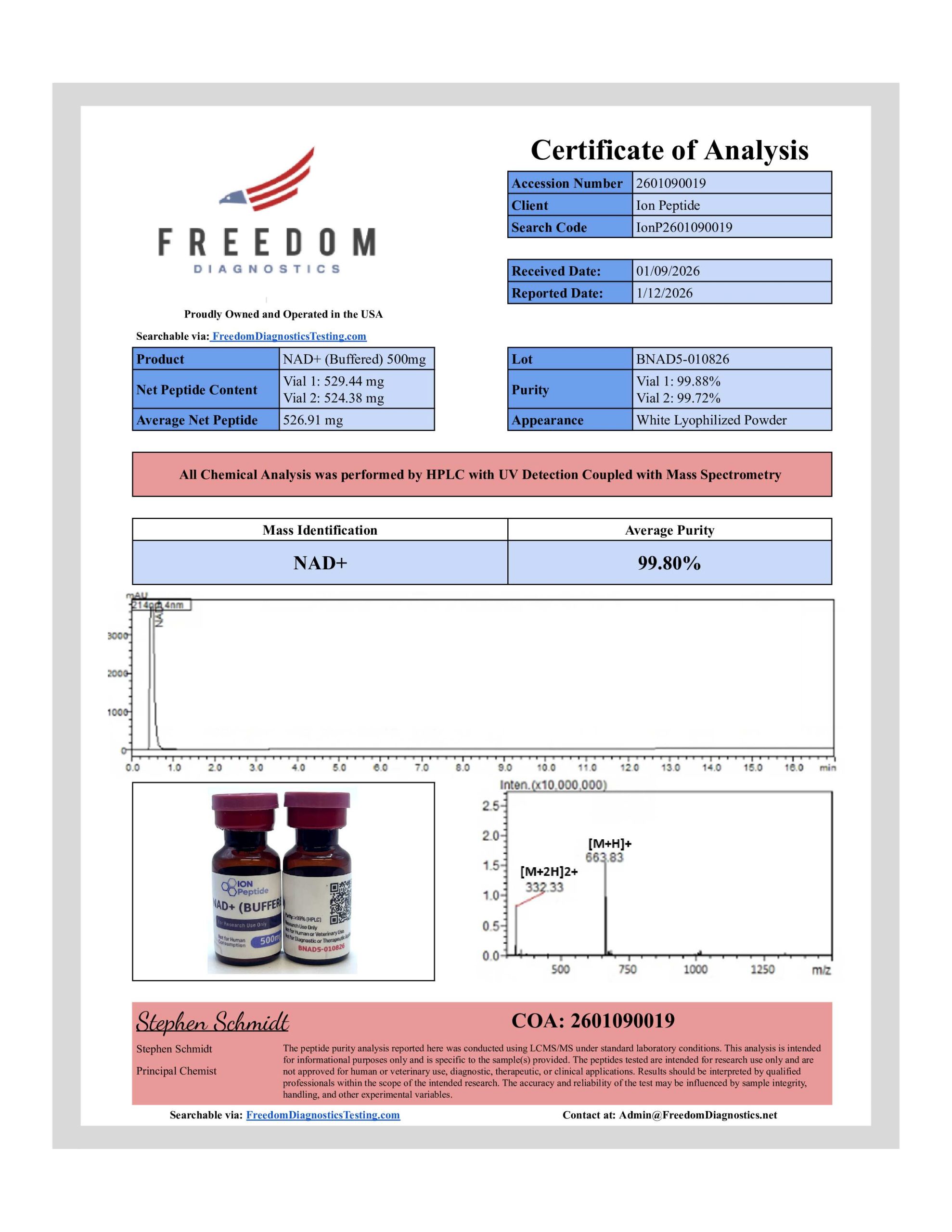
Molecular Mass 663.43 Da
CAS Number 53-84-9
Intended Research Use Cellular metabolism, mitochondrial function, redox biology

Research

Research Applications

Mitochondrial Function & Bioenergetics

NAD⁺ is a required cofactor for oxidative phosphorylation, shuttling electrons through the mitochondrial electron transport chain. Researchers use NAD⁺ to study ATP generation, mitochondrial efficiency, and metabolic stress responses.

Redox Balance & Oxidative Stress

Through its reversible conversion between NAD⁺ and NADH, this coenzyme regulates intracellular redox state. Buffered NAD⁺ supports studies of ROS control, antioxidant defenses, and redox signaling.

DNA Repair & Genomic Stability

NAD⁺ serves as a substrate for PARP enzymes, which play a critical role in DNA damage repair. Research models investigate NAD⁺ availability in genome maintenance and cellular stress tolerance.

Aging & Sirtuin-Dependent Pathways

NAD⁺ is required for sirtuin activation, linking it to pathways involved in cellular longevity, metabolic adaptation, and stress resistance in aging research models.


References
  1. Ying W. (2008). NAD⁺/NADH and NADP⁺/NADPH in cellular functions and cell death. Antioxidants & Redox Signaling.
    https://www.liebertpub.com/doi/10.1089/ars.2007.1672

  2. Verdin E. (2015). NAD⁺ in aging, metabolism, and neurodegeneration. Science.
    https://www.science.org/doi/10.1126/science.aac4854

  3. Cantó C, Menzies KJ, Auwerx J. (2015). NAD⁺ metabolism and the control of energy homeostasis. Cell Metabolism.
    https://www.sciencedirect.com/science/article/pii/S155041311500108X

  4. Belenky P, Bogan KL, Brenner C. (2007). NAD⁺ metabolism in health and disease. Trends in Biochemical Sciences.
    https://www.sciencedirect.com/science/article/pii/S0968000407001857

Mechanism of Action

Mechanism of Action
  • Electron transfer cofactor: Enables redox reactions in glycolysis, TCA cycle, and oxidative phosphorylation

  • Mitochondrial energy support: Facilitates ATP production through NADH generation

  • DNA repair substrate: Fuels PARP-mediated repair signaling

  • Sirtuin activation: Regulates deacetylation pathways linked to metabolism and aging

  • Redox homeostasis: Maintains intracellular NAD⁺/NADH balance


References
  1. Ying W. (2008). NAD⁺/NADH and NADP⁺/NADPH in cellular functions and cell death. Antioxidants & Redox Signaling.
    https://www.liebertpub.com/doi/10.1089/ars.2007.1672

  2. Verdin E. (2015). NAD⁺ in aging, metabolism, and neurodegeneration. Science.
    https://www.science.org/doi/10.1126/science.aac4854

  3. Cantó C, Menzies KJ, Auwerx J. (2015). NAD⁺ metabolism and the control of energy homeostasis. Cell Metabolism.
    https://www.sciencedirect.com/science/article/pii/S155041311500108X

  4. Belenky P, Bogan KL, Brenner C. (2007). NAD⁺ metabolism in health and disease. Trends in Biochemical Sciences.
    https://www.sciencedirect.com/science/article/pii/S0968000407001857

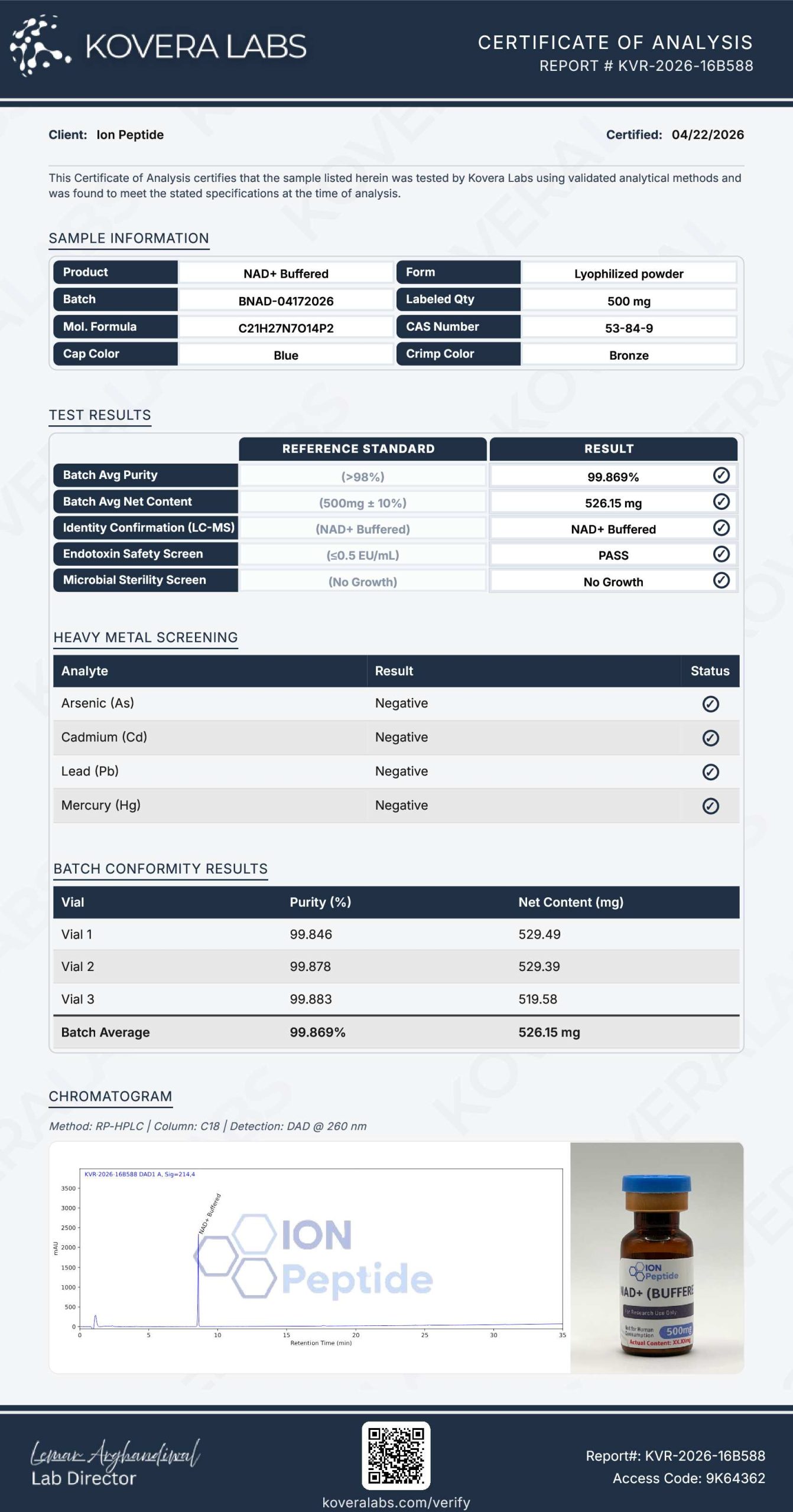
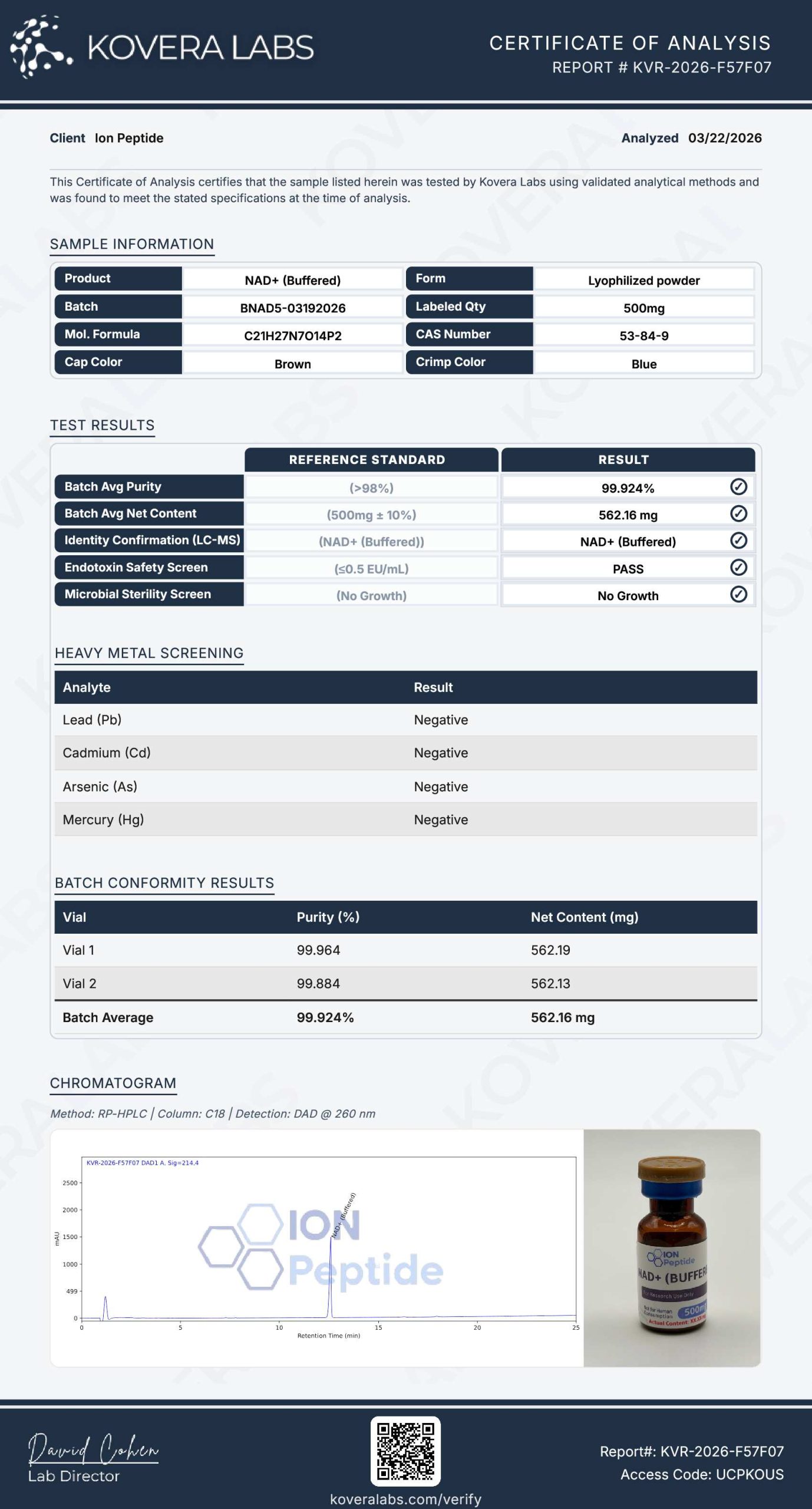
Certificate of Authenticity