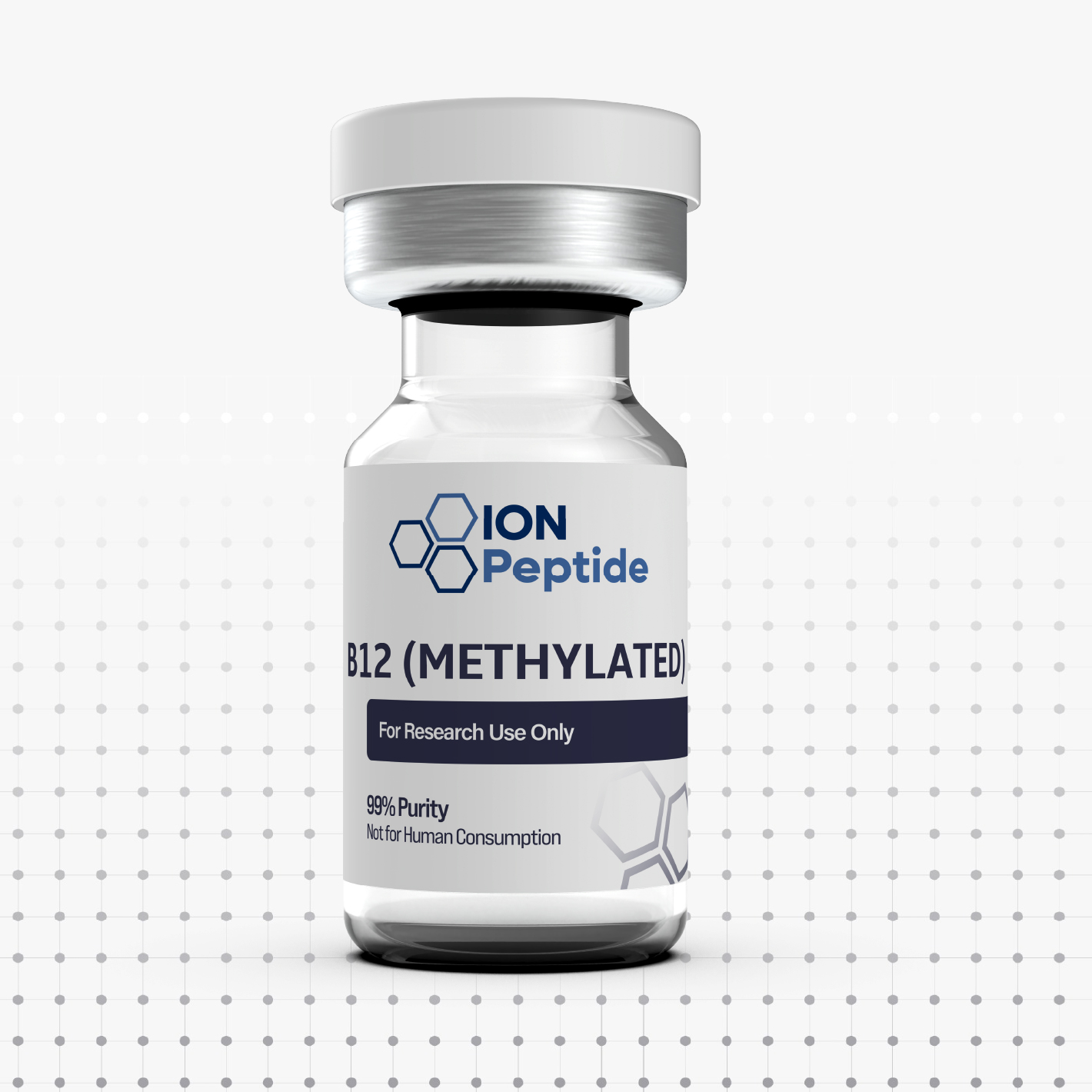
B12 (Methylated) – 10mg

$75.00

For research purposes only. Not for human or animal use & not FDA-approved. By purchasing, you confirm you are 21 or older and qualified researcher.

In stock

Quantity Price
4 - 5 $67.50
6 - 9 $63.00
10 + $56.25
Money Back Guarantee Guaranteed Quality Customer Support Fast Shipping

Description

B12 (Methylated)

Research-Grade Methylcobalamin
Tagline: Methylation & Cellular Energy Research


Product Description

B12 (Methylated) refers to methylcobalamin, the biologically active, coenzyme form of vitamin B12. In laboratory research, methylcobalamin is studied for its essential role in one-carbon metabolism, DNA synthesis, methylation reactions, mitochondrial function, and nervous system cellular biology.

Unlike other cobalamin forms, methylcobalamin directly participates as a cofactor for methionine synthase, making it particularly valuable for research models investigating homocysteine metabolism, S-adenosylmethionine (SAMe) production, epigenetic regulation, and cellular energy pathways.

For Laboratory and Scientific Research Use Only. Not for Human Consumption.


Why Researchers Choose B12 (Methylated)
  • Active coenzyme form of vitamin B12 for direct pathway investigation

  • Central role in methylation studies and one-carbon metabolism

  • Supports mitochondrial and cellular energy research

  • Relevant to neurobiology and myelin-related research models

  • Stable, well-characterized compound with extensive literature support

  • Research-grade purity for reproducible experimental outcomes


Important Note

For laboratory and scientific research only. Not for human consumption, diagnostic, or therapeutic use.
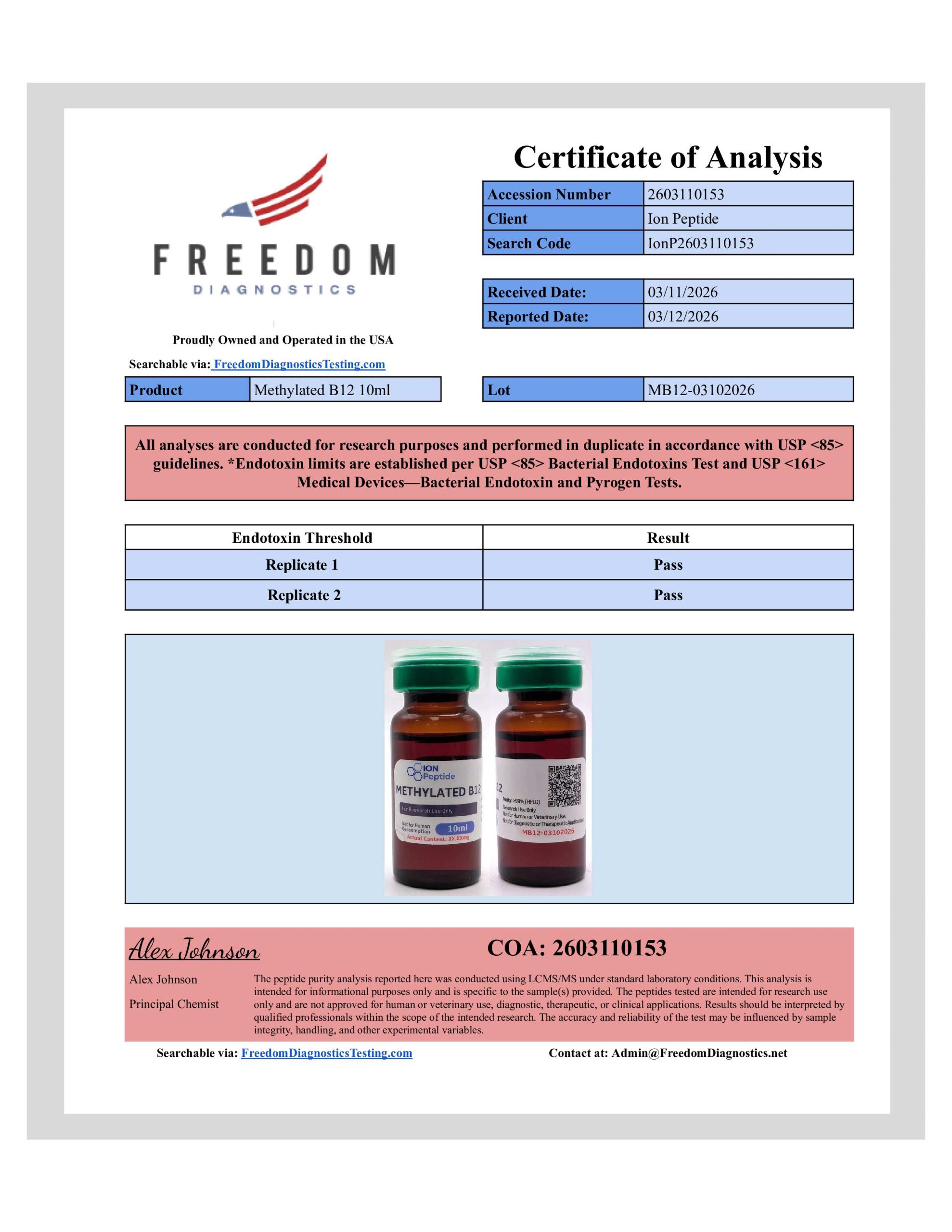
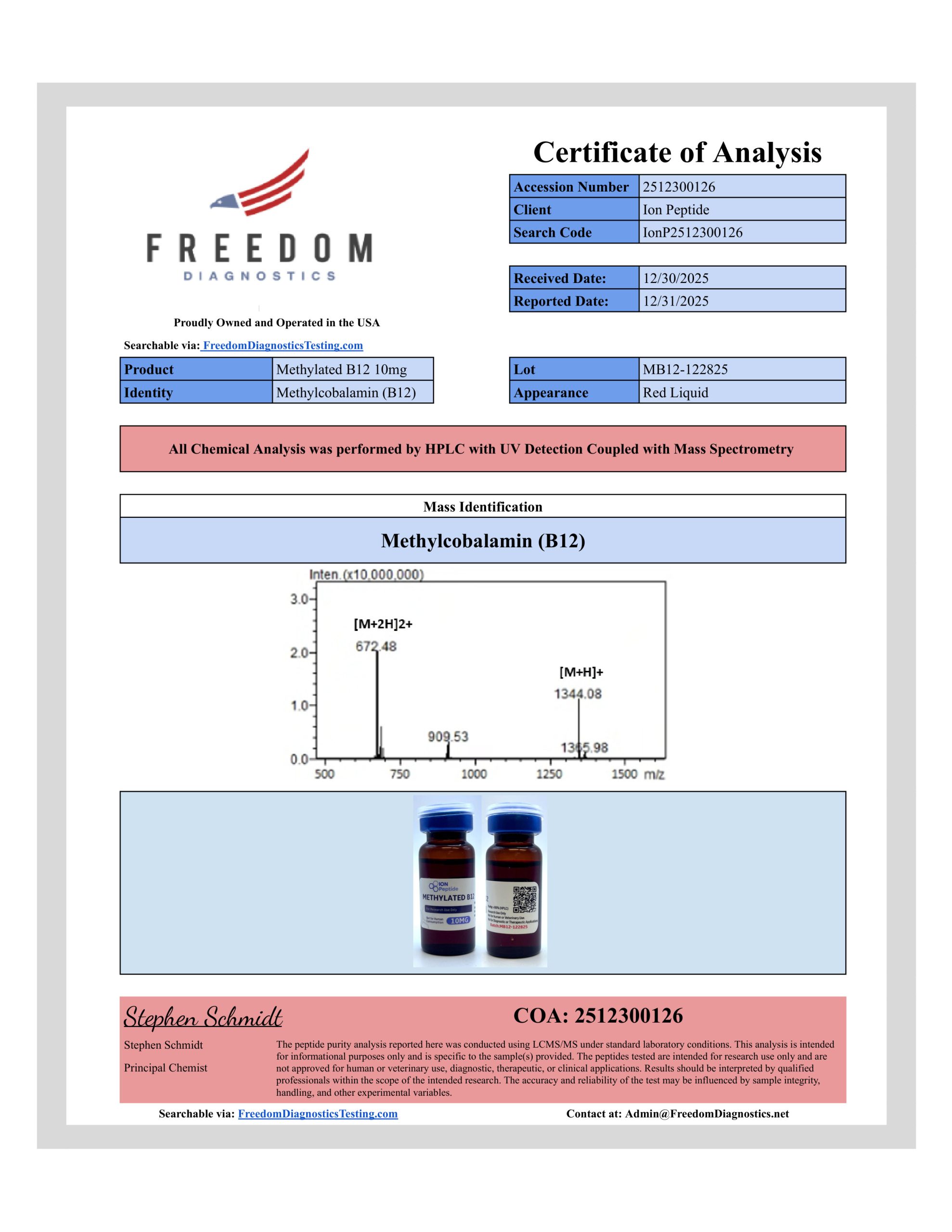
Details

Compound Name Methylcobalamin (Vitamin B12)
Chemical Class Cobalamin (methylated coenzyme form)
Chemical Formula C63H91CoN13O14P
Molecular Mass ~1344.4 Da
CAS Number 13422-55-4
Form Sterile solution or lyophilized powder
Intended Research Use Methylation, DNA synthesis, neurobiology, cellular energy studies

Research

Research Applications

Methylation & One-Carbon Metabolism

Methylcobalamin functions as an essential cofactor for methionine synthase, enabling conversion of homocysteine to methionine and subsequent SAMe production. This makes it central to studies of epigenetic regulation, DNA methylation, and cellular signaling.

DNA Synthesis & Cell Proliferation

Vitamin B12 is required for proper nucleotide synthesis. Research models use methylcobalamin to explore cell cycle progression, DNA replication fidelity, and genomic stability.

Neurobiology & Myelin Research

Methylcobalamin is studied for its role in neuronal maintenance, axonal transport, and myelin synthesis, making it relevant to neurodegeneration and nerve repair models.

Mitochondrial Function & Energy Metabolism

Through its involvement in methylation and amino-acid metabolism, methylcobalamin supports mitochondrial efficiency and ATP generation, allowing investigation into cellular energy balance.


References
  1. O’Leary F, Samman S. (2010). Vitamin B12 in health and disease. Nutrients.
    https://www.mdpi.com/2072-6643/2/3/299

  2. Stabler SP. (2013). Vitamin B12 deficiency. New England Journal of Medicine.
    https://www.nejm.org/doi/full/10.1056/NEJMcp1113996

  3. Scott JM, Weir DG. (1981). The methyl folate trap and the nature of folate–vitamin B12 interrelationships. Lancet.
    https://pubmed.ncbi.nlm.nih.gov/6119835/

  4. Watanabe F. (2007). Vitamin B12 sources and bioavailability. Experimental Biology and Medicine.
    https://journals.sagepub.com/doi/10.3181/0703-MR-67

Mechanism of Action

Mechanism of Action
  • Methionine synthase activation: Transfers methyl groups for methionine and SAMe synthesis

  • Methyl-donor support: Enables DNA, RNA, and protein methylation

  • Homocysteine regulation: Supports conversion pathways in one-carbon metabolism

  • Nucleotide synthesis facilitation: Assists thymidine and DNA replication pathways

  • Neuronal support signaling: Contributes to myelin and axonal maintenance processes


References
  1. O’Leary F, Samman S. (2010). Vitamin B12 in health and disease. Nutrients.
    https://www.mdpi.com/2072-6643/2/3/299

  2. Stabler SP. (2013). Vitamin B12 deficiency. New England Journal of Medicine.
    https://www.nejm.org/doi/full/10.1056/NEJMcp1113996

  3. Scott JM, Weir DG. (1981). The methyl folate trap and the nature of folate–vitamin B12 interrelationships. Lancet.
    https://pubmed.ncbi.nlm.nih.gov/6119835/

  4. Watanabe F. (2007). Vitamin B12 sources and bioavailability. Experimental Biology and Medicine.
    https://journals.sagepub.com/doi/10.3181/0703-MR-67

Certificate of Authenticity