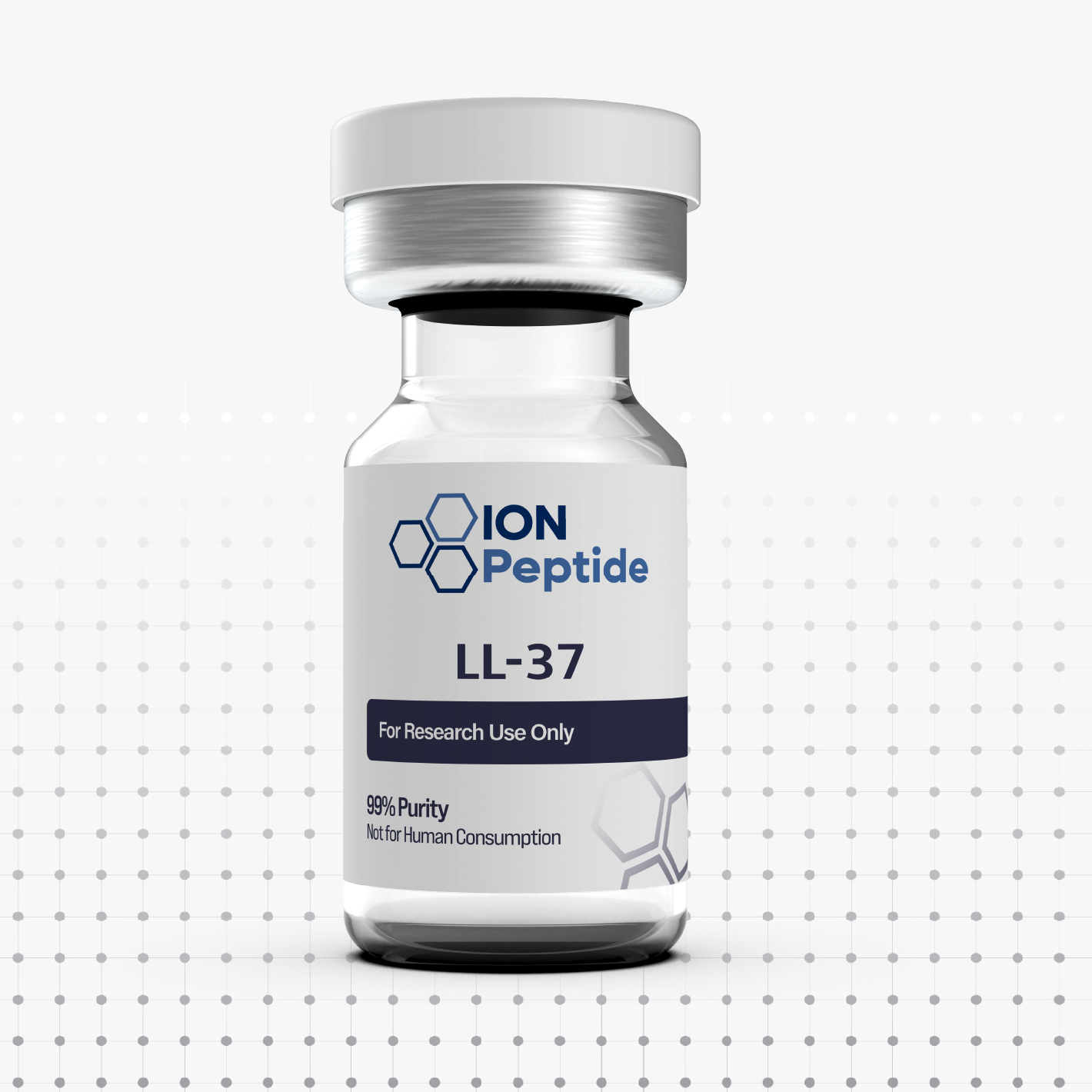
LL-37 – 5mg

$45.00

For research purposes only. Not for human or animal use & not FDA-approved. By purchasing, you confirm you are 21 or older and qualified researcher.

Out of stock

Join the waitlist to be emailed when this product becomes available

Categories: , ,

Description

LL-37 (Human Cathelicidin Antimicrobial Peptide)

Research-Grade Host Defense Peptide
Tagline: Innate Immunity & Wound Healing Research


Product Description

LL-37 is the only known human cathelicidin-derived antimicrobial peptide, consisting of 37 amino acids. It is a key effector molecule of the innate immune system, with potent broad-spectrum antimicrobial activity against bacteria, viruses, and fungi, as well as immunomodulatory properties.

Researchers use LL-37 in preclinical studies to explore host-pathogen interactions, epithelial barrier defense, wound healing, and inflammatory signaling pathways. Its dual role as an antimicrobial agent and immune modulator makes it an essential tool in infectious disease, dermatology, and immunology research.

For Laboratory and Scientific Research Use Only. Not for Human Consumption.


Why Researchers Choose LL-37
  • Broad-Spectrum Antimicrobial: Effective against Gram-positive and Gram-negative bacteria, fungi, and some viruses.

  • Immunomodulatory Activity: Regulates cytokine production and modulates inflammation.

  • Barrier Function Support: Promotes epithelial cell migration and wound closure in models.

  • Endogenous Relevance: Derived from human cathelicidin (hCAP18), providing physiological translational value.

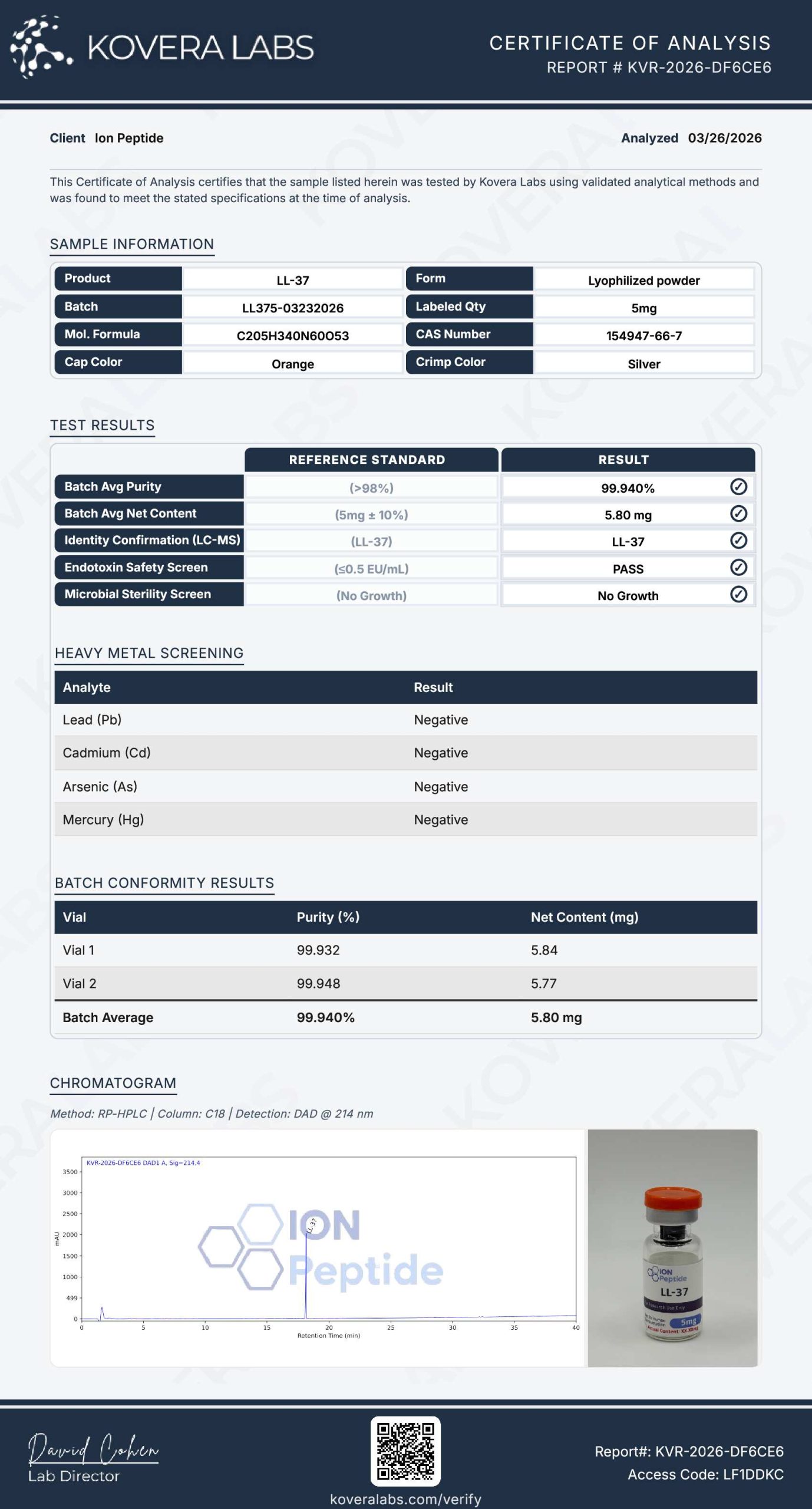
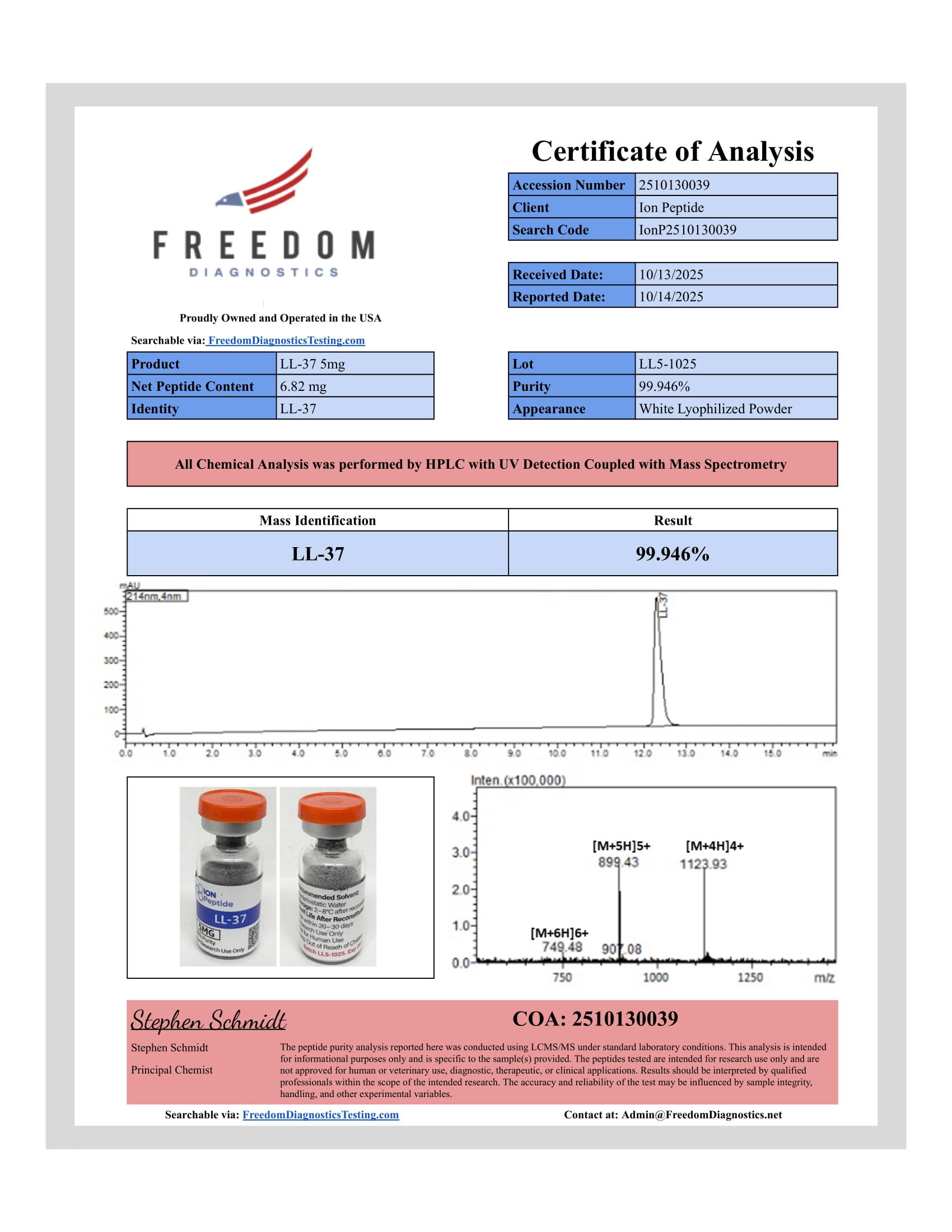
  • Batch Verified: ≥98% purity confirmed by HPLC and mass spectrometry for reproducibility.


Important Note

For laboratory and scientific research only. Not for human consumption, therapeutic, or diagnostic use.
Details

Chemical Formula C₂₀₃H₃₁₆N₅₂O₃₇
Molecular Mass ~4493.3 Da
CAS Number 1405-99-6
Form Lyophilized peptide powder
Shelf Life 24 months (lyophilized)
Intended Use For preclinical and in vitro research only
Storage -20 °C (dry powder), -80 °C (after reconstitution)

Research

Research Applications

Antimicrobial Activity Studies

LL-37 exhibits direct antimicrobial effects by disrupting microbial membranes, making it key in innate immunity research [1].

Immunology & Cytokine Modulation

Regulates expression of pro- and anti-inflammatory cytokines, helping explore immune balance in infection and autoimmunity [2].

Wound Healing & Tissue Regeneration

Promotes keratinocyte migration, angiogenesis, and tissue repair in wound models [3].

Biofilm & Pathogen Studies

Shown to inhibit biofilm formation and enhance bacterial clearance, supporting research on drug-resistant pathogens [4].


References
  1. Dürr UH et al. (2006). The Human Cathelicidin LL-37: Structure, Function and Clinical Perspectives. Biochem Biophys Res Commun.
    https://www.sciencedirect.com/science/article/pii/S0006291X05025061

  2. Mookherjee N et al. (2006). Modulation of the Innate Immune Response by LL-37. Nat Rev Immunol.
    https://pubmed.ncbi.nlm.nih.gov/17063185/

  3. Heilborn JD et al. (2003). Antimicrobial Protein hCAP18/LL-37 Is Involved in Normal Wound Healing. J Invest Dermatol.
    https://www.sciencedirect.com/science/article/pii/S0022202X15305785

  4. Overhage J et al. (2008). Human Host Defense Peptide LL-37 Prevents Biofilm Formation. Infect Immun.
    https://journals.asm.org/doi/full/10.1128/iai.00318-08

Mechanism of Action

Mechanism of Action (How LL-37 Works)
  • Membrane Disruption: Inserts into microbial membranes, forming pores that cause lysis [Dürr 2006].

  • TLR Modulation: Interacts with Toll-like receptors (TLR2, TLR4) to fine-tune innate immune responses [Mookherjee 2006].

  • Chemotactic Activity: Attracts immune cells (neutrophils, monocytes, T cells) to infection sites [Mookherjee 2006].

  • Wound Healing Promotion: Stimulates keratinocyte proliferation and angiogenesis via growth factor pathways [Heilborn 2003].

  • Biofilm Inhibition: Prevents bacterial surface attachment and biofilm development [Overhage 2008].


References
  1. Dürr UH et al. (2006). The Human Cathelicidin LL-37: Structure, Function and Clinical Perspectives. Biochem Biophys Res Commun.
    https://www.sciencedirect.com/science/article/pii/S0006291X05025061

  2. Mookherjee N et al. (2006). Modulation of the Innate Immune Response by LL-37. Nat Rev Immunol.
    https://pubmed.ncbi.nlm.nih.gov/17063185/

  3. Heilborn JD et al. (2003). Antimicrobial Protein hCAP18/LL-37 Is Involved in Normal Wound Healing. J Invest Dermatol.
    https://www.sciencedirect.com/science/article/pii/S0022202X15305785

  4. Overhage J et al. (2008). Human Host Defense Peptide LL-37 Prevents Biofilm Formation. Infect Immun.
    https://journals.asm.org/doi/full/10.1128/iai.00318-08

Certificate of Authenticity