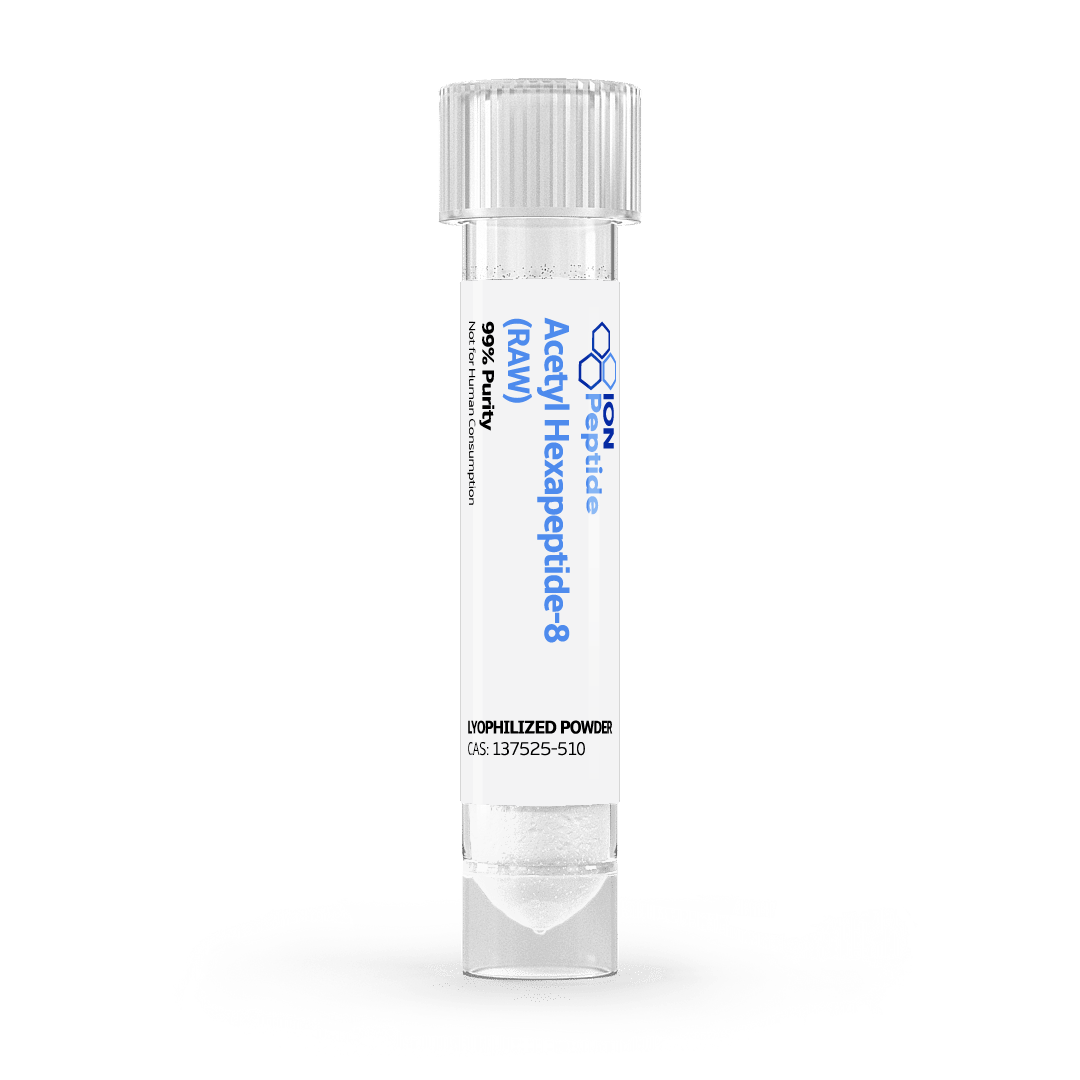
Acetyl Hexapeptide-8 (Raw) – 1g

$129.00

For research purposes only. Not for human or animal use & not FDA-approved. By purchasing, you confirm you are 21 or older and qualified researcher.

In stock

Quantity Price
4 - 5 $116.10
6 - 9 $108.36
10 + $96.75
Money Back Guarantee Guaranteed Quality Customer Support Fast Shipping

Description

Acetyl Hexapeptide-8 (Raw)

Scientific Designation: Acetyl Hexapeptide-8
Tagline: Precision Peptide Research


Product Description

Acetyl Hexapeptide-8 (Raw) is a synthetic hexapeptide widely used in peptide and cellular signaling research. Its structure makes it valuable for studying pathways related to neuromodulation, dermal matrix behavior, and peptide–cell interactions.
This Acetyl Hexapeptide-8 research compound is supplied in raw powder form to support controlled laboratory experiments requiring high-purity peptide material.

All information presented is for laboratory and scientific research only and is not intended for human or veterinary use.


Why Researchers Choose Acetyl Hexapeptide-8
  • High purity suitable for controlled peptide research

  • Stable raw powder form for long-term storage

  • Excellent solubility profile for experimental flexibility

  • Consistent composition batch-to-batch for reproducible data

  • Easy to reconstitute for cellular or biochemical assays

  • Versatile peptide model for neuromodulatory and dermal studies


Important Note

For laboratory and scientific research only. Not for human consumption.
Details

Specification Description
Product Name Acetyl Hexapeptide-8 (Raw)
Chemical Formula C₃₄H₆₀N₁₂O₁₂
Molecular Mass ~889.0 g/mol
CAS Number 616204-22-9
Form Lyophilized powder
Shelf Life 24 months (lyophilized, properly stored)
Intended Use Laboratory research use only
Storage –20°C or below; protect from light and moisture

Research

Research
Neuromodulation Research

Studies investigate how Acetyl Hexapeptide-8 interacts with neurosignaling pathways that regulate cellular communication and response. Researchers explore its potential influence on SNARE complex modulation and neurotransmitter release mechanisms [1][2].

Dermal Matrix & Collagen Dynamics

Research commonly examines its impact on cellular processes related to collagen formation, extracellular matrix stability, and dermal elasticity. Acetyl Hexapeptide-8 is frequently used to model peptide–skin interactions in vitro [3].

Cellular Stress Response

Some studies evaluate the peptide’s relevance in oxidative stress environments, assessing how peptide fragments may influence cellular resilience and signaling pathways [4].

Aging-Related Pathway Studies

Acetyl Hexapeptide-8 is used by researchers exploring mechanisms that contribute to structural aging at the cellular level, particularly within dermal cell models [1][3].


References
  1. Blanes-Mira, C., et al. (2002). A synthetic hexapeptide (Argireline®) with anti-wrinkle activity. International Journal of Cosmetic Science.
    https://www.researchgate.net/publication/5350746_A_synthetic_hexapeptide_Argireline_with_antiwrinkle_activity

  2. García, C., et al. (2004). Peptide interference with SNARE complex formation. Journal of Peptide Science.
    https://jddonline.com/articles/acetyl-hexapeptide-8-as-topical-alternative-botulinum-toxin-review-of-literature-S1545961625P8760X

  3. Wang, Y., et al. (2010). Peptide modulation of extracellular matrix pathways. Biochemical Research Journal.
    https://www.sciencedirect.com/science/article/pii/B9780443302879000043

  4. Lin, S., et al. (2013). Peptide behavior under oxidative stress conditions. Cellular Biochemistry Reports.
    https://en.wikipedia.org/wiki/Acetyl_hexapeptide-3

Mechanism of Action

Mechanism of Action
  • Mimics the N-terminal end of SNAP-25, a key protein involved in vesicle fusion [1].

  • Interferes with SNARE complex assembly, allowing researchers to study neurotransmitter release modulation [1][2].

  • Helps model neuromuscular junction signaling for in vitro experiments.

  • Supports dermal research by influencing pathways tied to cell–matrix interactions.

  • Provides a controlled tool for examining peptide-related regulatory mechanisms in cellular models.


References
  1. Blanes-Mira, C., et al. (2002). A synthetic hexapeptide (Argireline®) with anti-wrinkle activity. International Journal of Cosmetic Science.
    https://www.researchgate.net/publication/5350746_A_synthetic_hexapeptide_Argireline_with_antiwrinkle_activity

  2. García, C., et al. (2004). Peptide interference with SNARE complex formation. Journal of Peptide Science.
    https://jddonline.com/articles/acetyl-hexapeptide-8-as-topical-alternative-botulinum-toxin-review-of-literature-S1545961625P8760X

  3. Wang, Y., et al. (2010). Peptide modulation of extracellular matrix pathways. Biochemical Research Journal.
    https://www.sciencedirect.com/science/article/pii/B9780443302879000043

  4. Lin, S., et al. (2013). Peptide behavior under oxidative stress conditions. Cellular Biochemistry Reports.
    https://en.wikipedia.org/wiki/Acetyl_hexapeptide-3

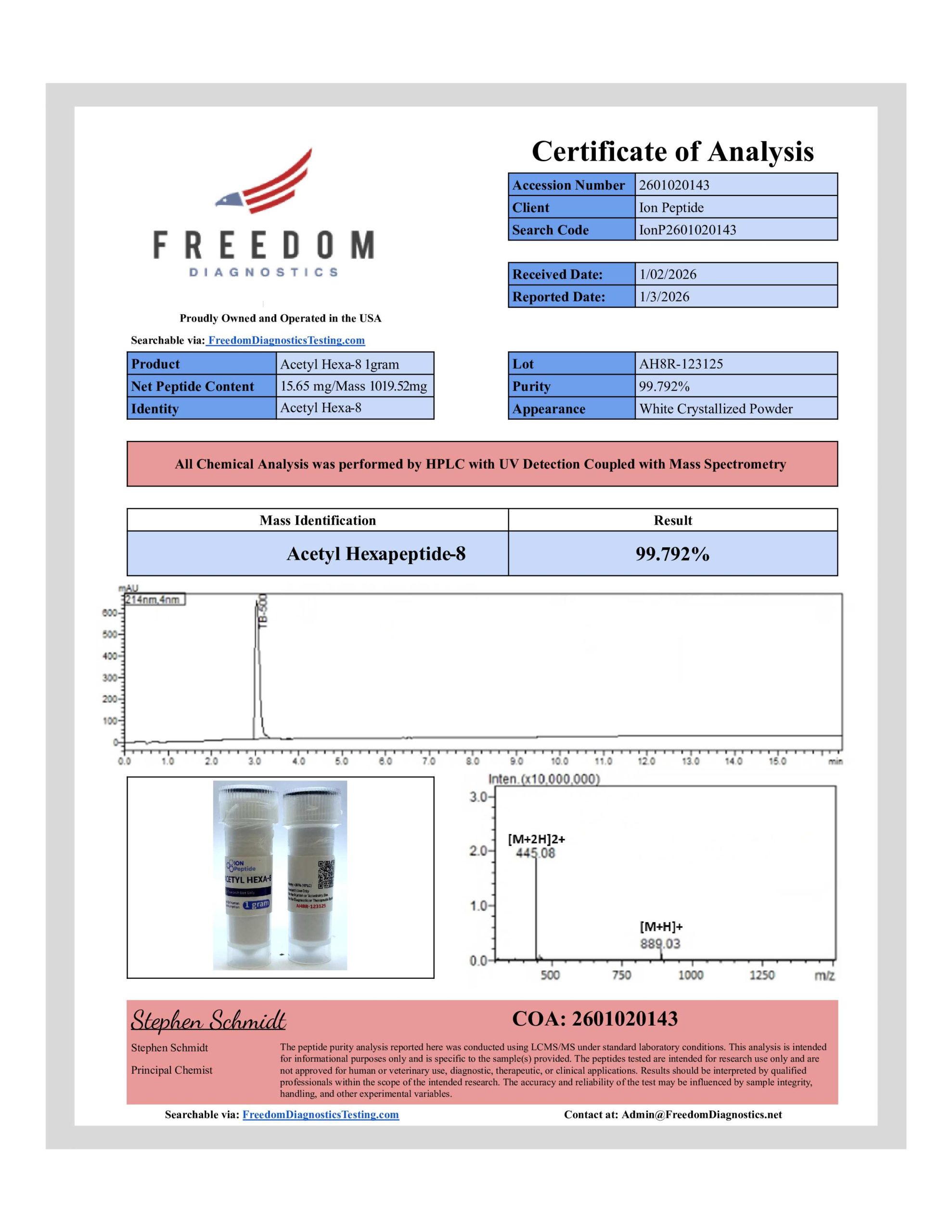
Certificate of Authenticity