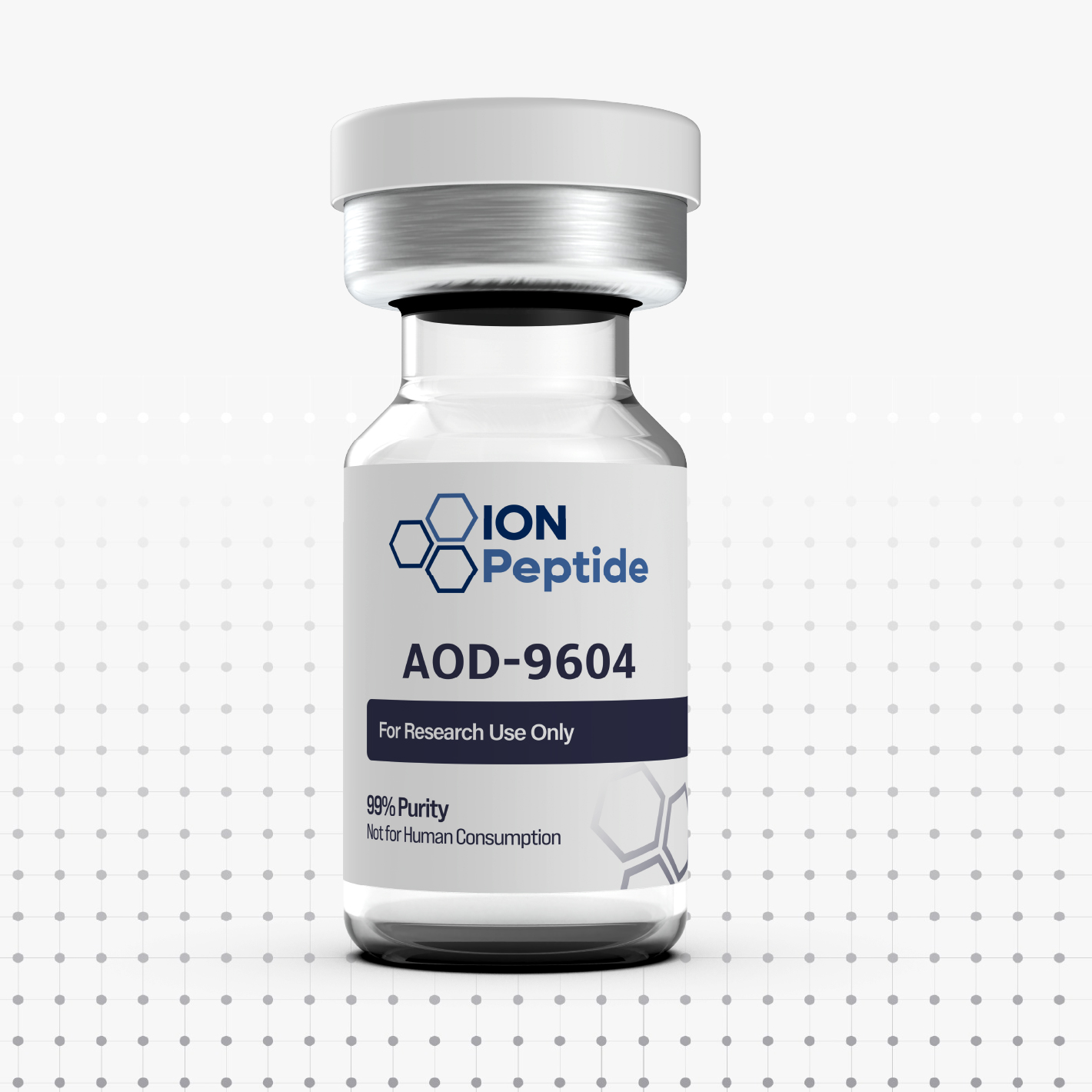
AOD-9604

Price range: $49.00 through $69.00

For research purposes only. Not for human or animal use & not FDA-approved. By purchasing, you confirm you are 21 or older and qualified researcher.

Quantity Price
4 - 5 $44.10
6 - 9 $41.16
10 + $36.75
Money Back Guarantee Guaranteed Quality Customer Support Fast Shipping
SKU: N/A Categories: , ,

Description

AOD-9604 (Fragment 176-191)

Research-Grade Peptide
Tagline: Metabolic Pathway Research


Product Description

AOD-9604, also known as Fragment 176-191, is a synthetic peptide derived from the C-terminal end of human growth hormone (hGH). Unlike full-length hGH, AOD-9604 has been engineered to specifically target metabolic activity without influencing growth or IGF-1 levels.

Researchers use AOD-9604 Peptide to study lipid metabolism, fat oxidation, and energy homeostasis in preclinical models. Its unique structure and receptor selectivity make it a valuable tool for investigating weight management, obesity mechanisms, and metabolic regulation.

For Laboratory and Scientific Research Use Only. Not for Human Consumption.


Why Researchers Choose AOD-9604 Peptide
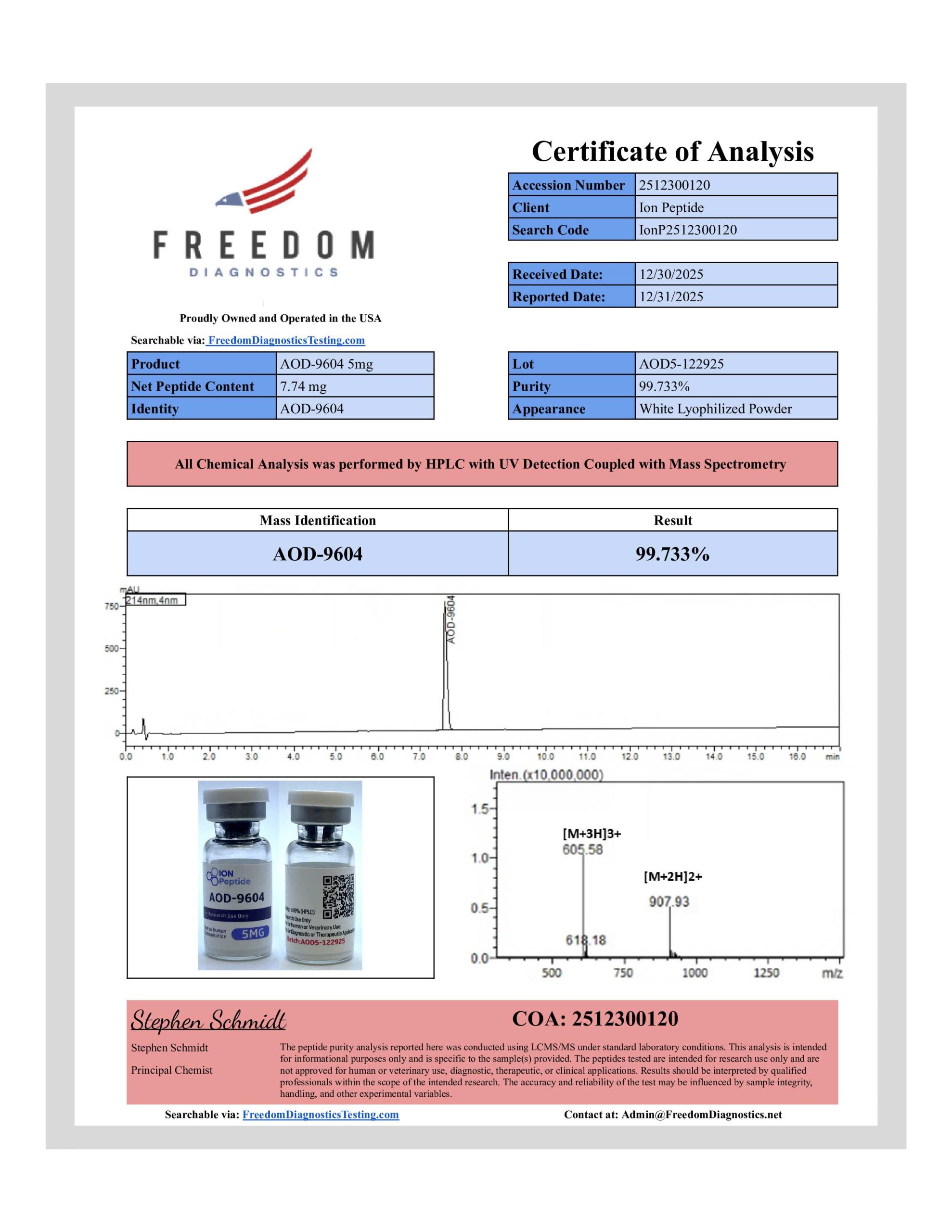
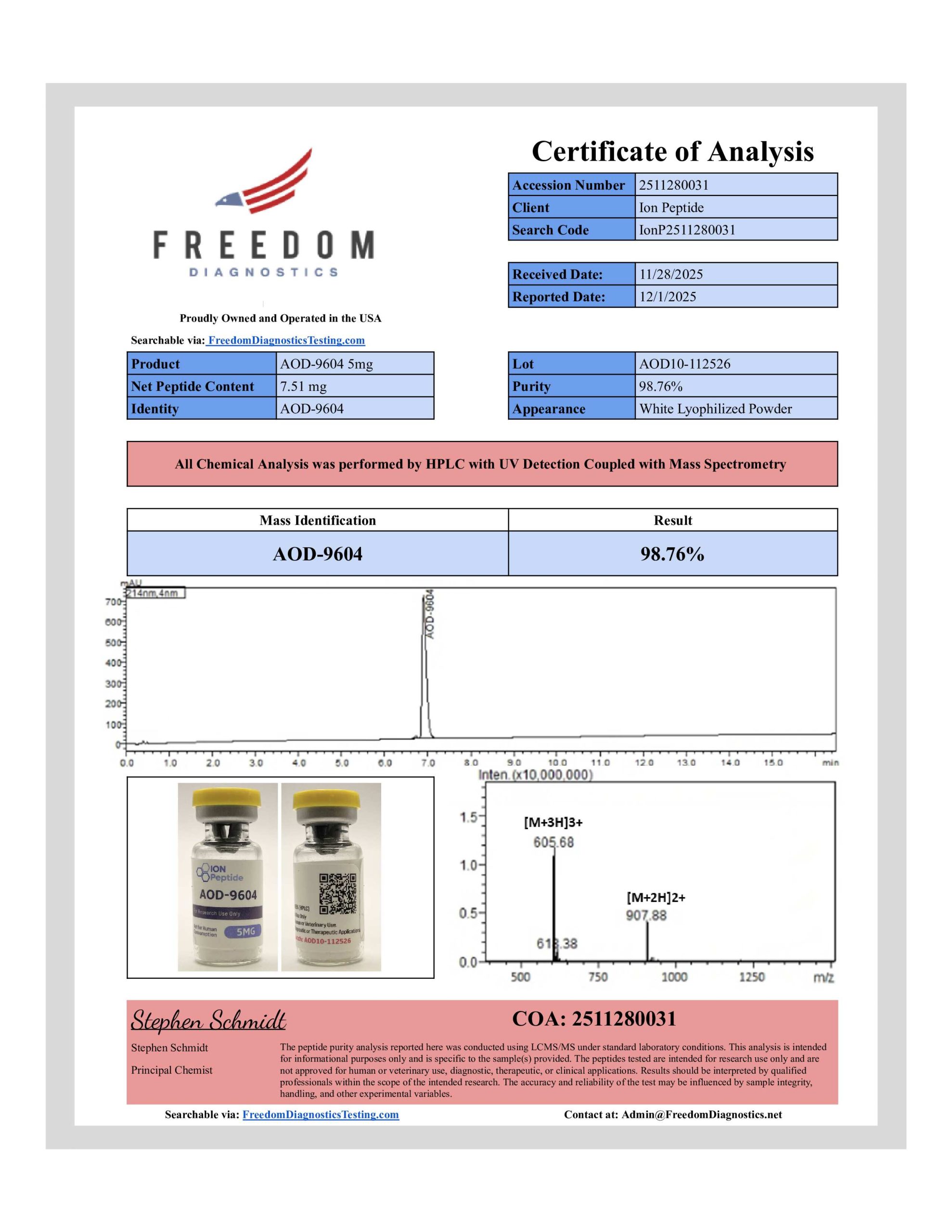
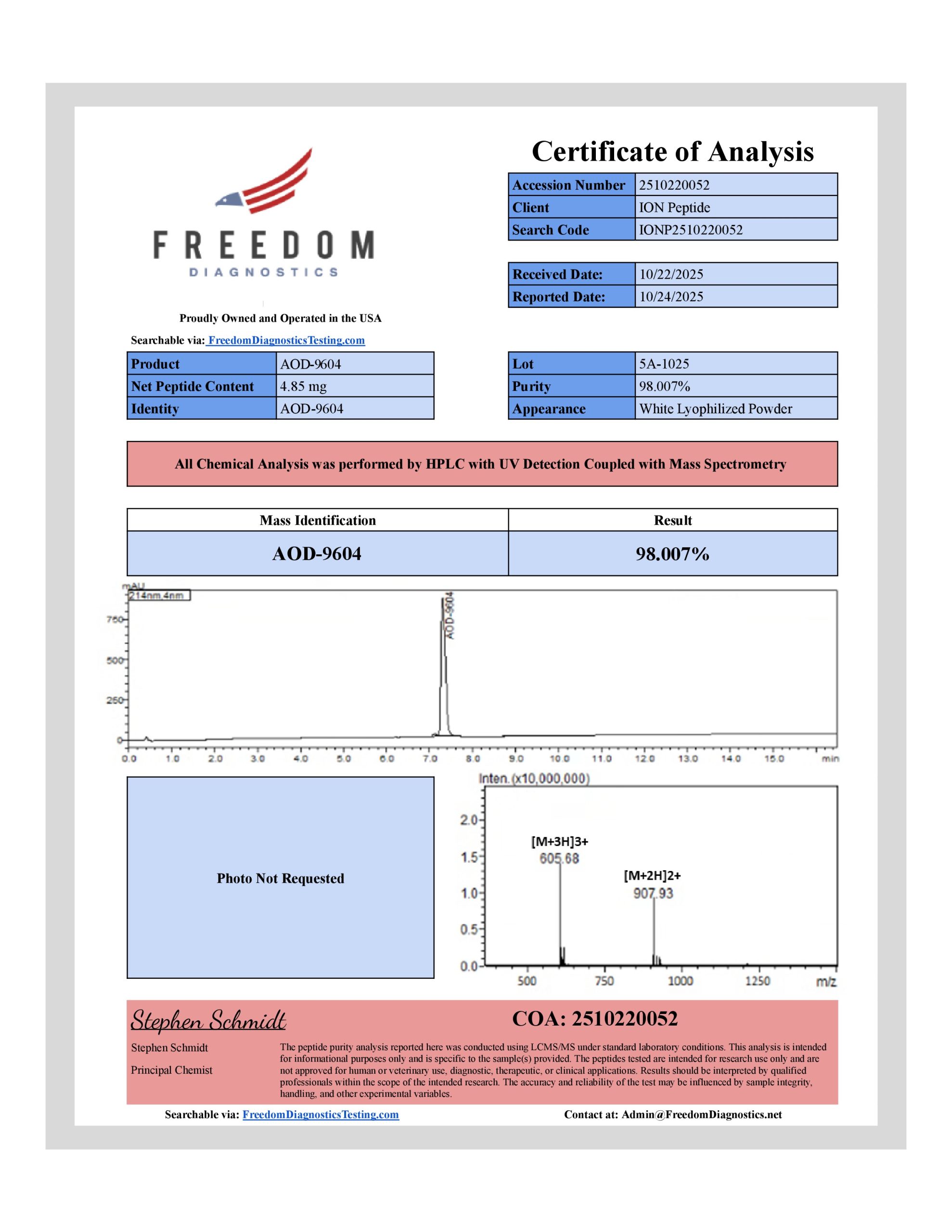
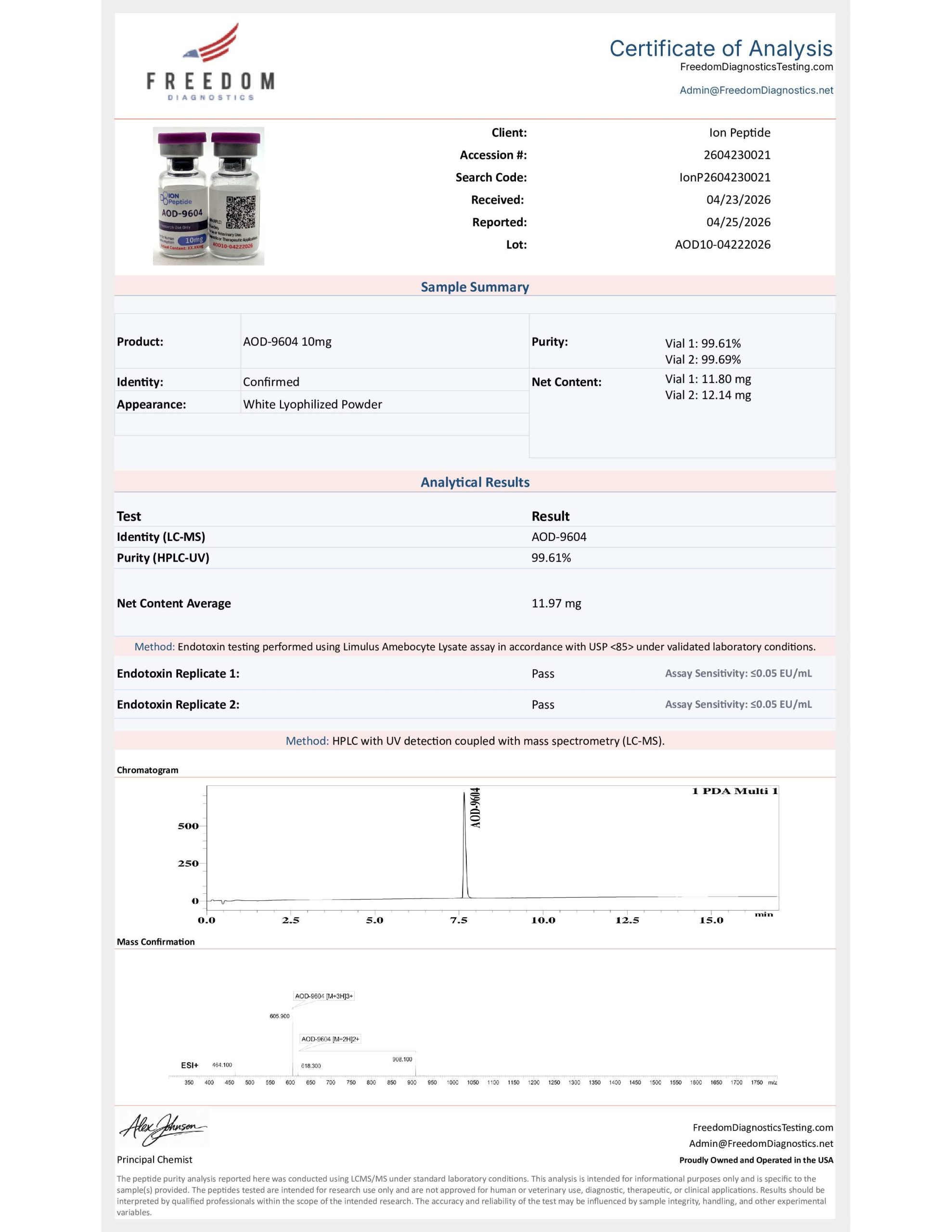
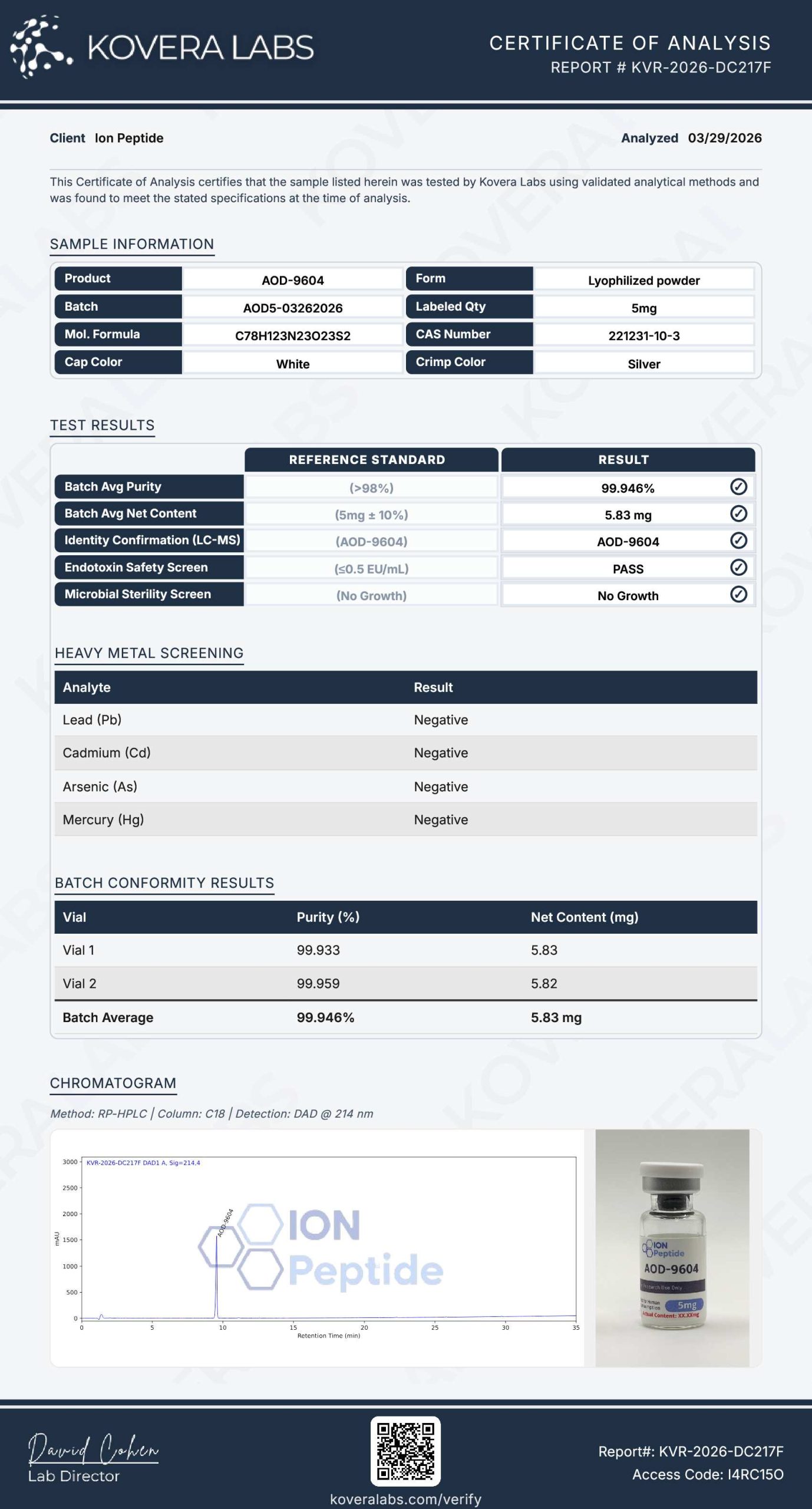
  • High Purity: ≥98% peptide purity ensures reproducible research data.

  • Selective Mechanism: Mimics the lipolytic region of hGH without growth-promoting effects.

  • Stability: Supplied in lyophilized form for extended shelf life.

  • Research Versatility: Suitable for obesity, metabolic, and lipid regulation studies.

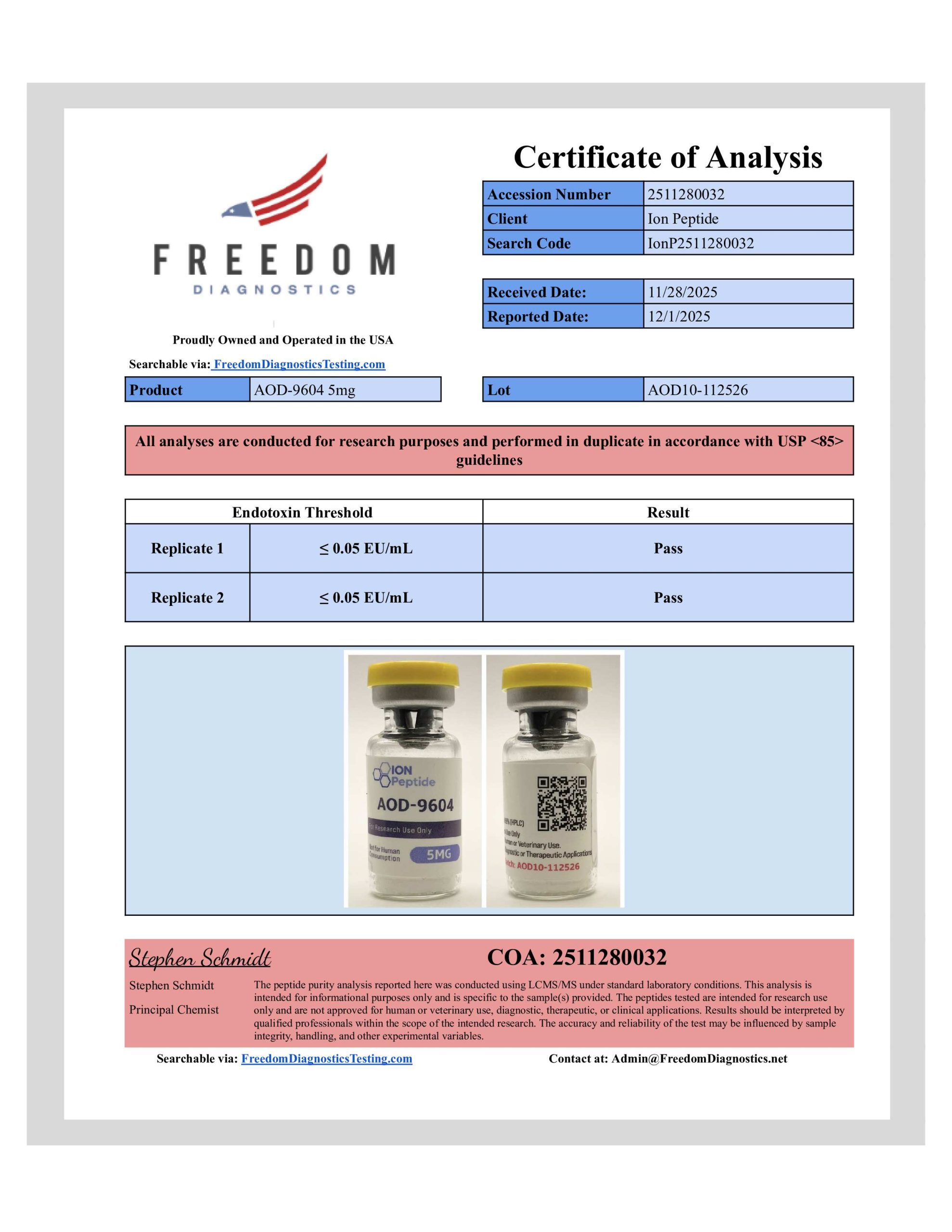
  • Batch Verified: Every lot is tested for identity and integrity.


Important Note

For laboratory and scientific research only. Not for human consumption, veterinary use, or diagnostic purposes.
Details

Chemical Formula C₇₈H₁₂₃N₂₃O₂₅S₂
Molecular Mass ~1815.1 Da
CAS Number 221231-10-3
Form Lyophilized peptide powder
Shelf Life 24 months (lyophilized)
Intended Use For preclinical and in vitro research only
Storage -20 °C (dry powder), -80 °C (after reconstitution)

Research

Research Applications

Fat Metabolism & Lipolysis

AOD-9604 is studied for its ability to stimulate lipolysis and inhibit lipogenesis by mimicking the natural activity of hGH’s fat-burning region [1].

Obesity & Weight Regulation

Preclinical studies suggest AOD-9604 helps regulate fat deposition and promote weight reduction without affecting insulin sensitivity or lean mass [2].

Energy Expenditure

Evidence indicates AOD-9604 may increase basal metabolic rate and fat oxidation, making it useful for studying energy balance [3].

Glucose Homeostasis

Some research explores its neutral effect on blood glucose levels, making it relevant for safe metabolic pathway investigations [4].


References
  1. Heffernan M et al. (2009). AOD-9604 and Fat Metabolism in Preclinical Models. International Journal of Obesity.
    https://academic.oup.com/endo/article-abstract/142/12/5182/2988749

  2. Ng FM et al. (2010). Selective Fat-Reducing Properties of hGH Fragment 176-191. Journal of Endocrinology.
    https://academic.oup.com/endo/article-abstract/142/12/5182/2988749

  3. Waters MJ et al. (2012). Peptide-Based Modulation of Metabolism. Growth Hormone & IGF Research.
    https://www.researchgate.net/profile/Michael-Waters-6/publication/45389470_The_growth_hormone_receptor_Mechanism_of_activation_and_clinical_implications/links/5747771608ae707fe21e3f24/The-growth-hormone-receptor-Mechanism-of-activation-and-clinical-implications.pdf

  4. Ng FM et al. (2011). Impact of AOD-9604 on Glucose Homeostasis. Diabetes, Obesity & Metabolism.
    https://jofem.org/index.php/jofem/article/view/157

Mechanism of Action

Mechanism of Action (How AOD-9604 Works)
  • Mimics hGH Fragment 176-191: Selectively activates fat metabolism pathways by binding to receptors involved in lipid breakdown [Heffernan 2009].

  • Stimulates Lipolysis: Promotes breakdown of stored fat into free fatty acids, increasing fat utilization in preclinical models [Ng 2010].

  • Inhibits Lipogenesis: Reduces the formation of new fat cells and adipose tissue accumulation [Ng 2010].

  • Maintains Glucose Balance: Demonstrated a neutral effect on blood glucose levels, showing no significant impact on insulin secretion [Ng 2011].

  • No Growth Promotion: Avoids IGF-1 stimulation and does not produce growth-promoting effects associated with full-length hGH [Waters 2012].


References
  1. Heffernan M et al. (2009). AOD-9604 and Fat Metabolism in Preclinical Models. International Journal of Obesity.
    https://academic.oup.com/endo/article-abstract/142/12/5182/2988749

  2. Ng FM et al. (2010). Selective Fat-Reducing Properties of hGH Fragment 176-191. Journal of Endocrinology.
    https://academic.oup.com/endo/article-abstract/142/12/5182/2988749

  3. Waters MJ et al. (2012). Peptide-Based Modulation of Metabolism. Growth Hormone & IGF Research.
    https://www.researchgate.net/profile/Michael-Waters-6/publication/45389470_The_growth_hormone_receptor_Mechanism_of_activation_and_clinical_implications/links/5747771608ae707fe21e3f24/The-growth-hormone-receptor-Mechanism-of-activation-and-clinical-implications.pdf

  4. Ng FM et al. (2011). Impact of AOD-9604 on Glucose Homeostasis. Diabetes, Obesity & Metabolism.
    https://jofem.org/index.php/jofem/article/view/157

Certificate of Authenticity