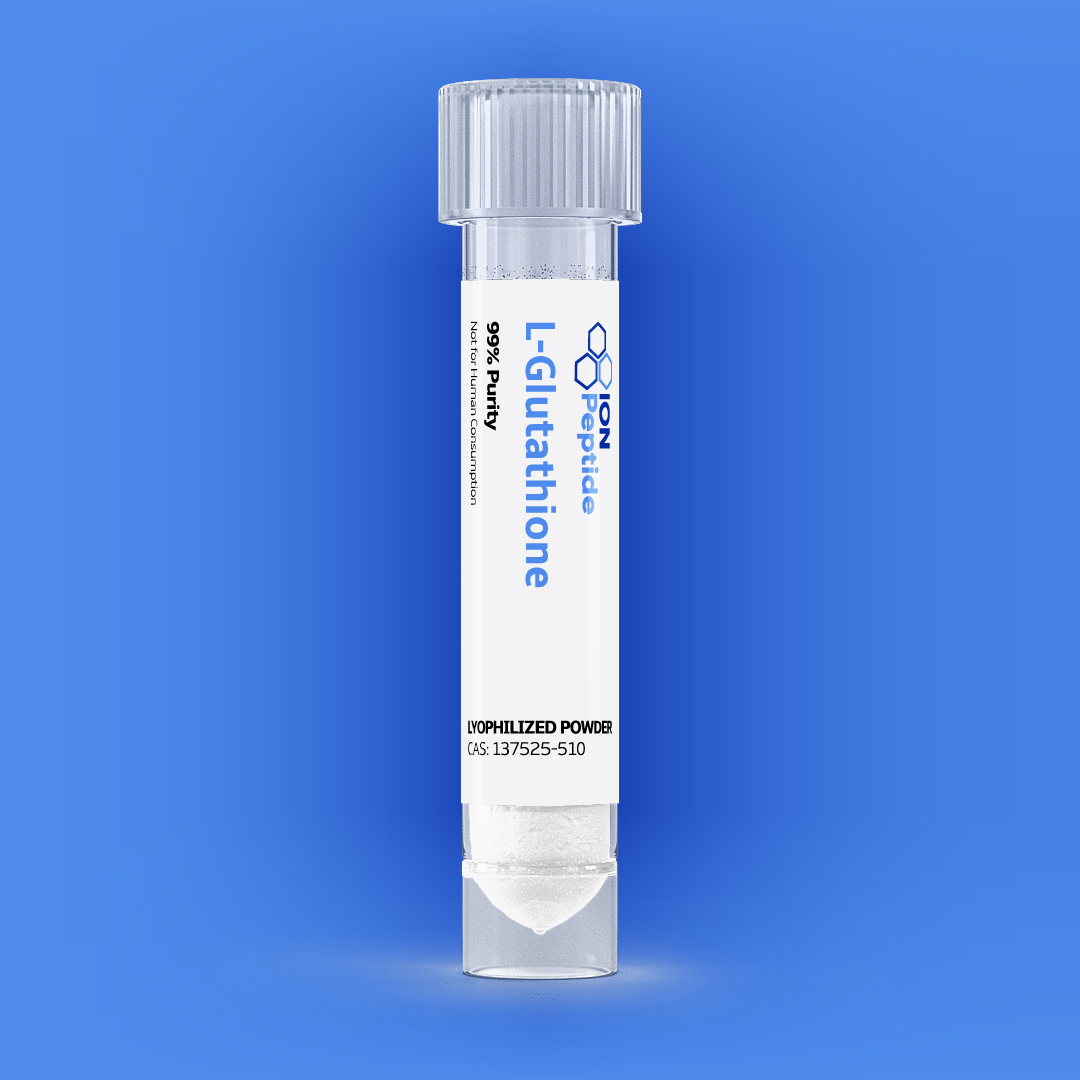
Glutathione (Raw) – 1g

$15.00

For research purposes only. Not for human or animal use & not FDA-approved. By purchasing, you confirm you are 21 or older and qualified researcher.

In stock

Quantity Price
4 - 5 $13.50
6 - 9 $12.60
10 + $11.25
Money Back Guarantee Guaranteed Quality Customer Support Fast Shipping

Description

Glutathione (Raw)

Research-Grade Tripeptide (Reduced L-Glutathione)
Tagline: Redox Chemistry & Cellular System Research


Product Description

Glutathione (Raw) is a research-grade form of L-glutathione, a naturally occurring tripeptide composed of glutamic acid, cysteine, and glycine. It is widely studied in laboratory settings for its role in redox chemistry, thiol interactions, and intracellular biochemical systems.

As a raw compound, this product is supplied without additional formulation components and is intended for use in controlled experimental environments, including biochemical assays, redox system modeling, and analytical testing.

Glutathione is commonly used in research to investigate oxidation–reduction balance, enzyme interactions, and molecular stability under defined conditions.

For Laboratory and Scientific Research Use Only. Not for Human Consumption.


Why Researchers Choose Raw Glutathione
  • Pure tripeptide compound for controlled studies
  • Widely used in redox and thiol chemistry research
  • Suitable for biochemical and enzymatic assays
  • Compatible with aqueous and buffer systems
  • Well-documented in scientific literature
  • Ideal for analytical and formulation testing

Important Note

For laboratory and scientific research only. Not for human consumption, diagnostic, or therapeutic use.
Details

Compound Name L-Glutathione (Reduced)
Compound Class Tripeptide
Molecular Composition Glutamic acid, cysteine, glycine
Form Raw powder
Appearance White to off-white powder

Research

Research Applications

Redox Chemistry & Oxidation–Reduction Studies

Glutathione is widely used in laboratory research to study oxidation–reduction reactions, including its role as a reducing agent in biochemical systems.

Enzymatic & Metabolic Pathway Research

It is utilized in assays investigating enzyme activity, particularly those involving glutathione-dependent enzymes and metabolic pathways.

Thiol Chemistry & Conjugation Studies

Due to its reactive sulfhydryl group, glutathione is used in research exploring thiol-based reactions, conjugation processes, and molecular binding interactions.

Analytical & Stability Testing

As a raw compound, glutathione is suitable for analytical methods, purity testing, and formulation stability evaluation.


References
  1. Glutathione — structure and biochemical role.
    https://en.wikipedia.org/wiki/Glutathione
  2. Glutathione in cellular redox regulation (Annual Review of Biochemistry).
    https://www.annualreviews.org/doi/10.1146/annurev.biochem.67.1.293
  3. Biochemistry of glutathione and its functions.
    https://www.ncbi.nlm.nih.gov/pmc/articles/PMC4684116/
  4. Glutathione: Chemical properties and applications (Sigma-Aldrich).
    https://www.sigmaaldrich.com/US/en/technical-documents/technical-article/biochemistry/glutathione

Mechanism of Action

Mechanism of Action
Redox Buffering System

Glutathione functions as a reducing agent, cycling between reduced (GSH) and oxidized (GSSG) forms to maintain redox balance in experimental systems.

Thiol Group Reactivity

The cysteine residue provides a reactive thiol (-SH) group, enabling participation in electron transfer and conjugation reactions.

Enzymatic Substrate Role

Glutathione acts as a substrate or cofactor in multiple enzymatic processes, supporting studies of enzyme kinetics and biochemical pathways.

Molecular Stability & Protection Models

In research settings, glutathione is used to examine molecular stability and protection against oxidative changes in controlled environments.


References
  1. Glutathione — structure and biochemical role.
    https://en.wikipedia.org/wiki/Glutathione
  2. Glutathione in cellular redox regulation (Annual Review of Biochemistry).
    https://www.annualreviews.org/doi/10.1146/annurev.biochem.67.1.293
  3. Biochemistry of glutathione and its functions.
    https://www.ncbi.nlm.nih.gov/pmc/articles/PMC4684116/
  4. Glutathione: Chemical properties and applications (Sigma-Aldrich).
    https://www.sigmaaldrich.com/US/en/technical-documents/technical-article/biochemistry/glutathione

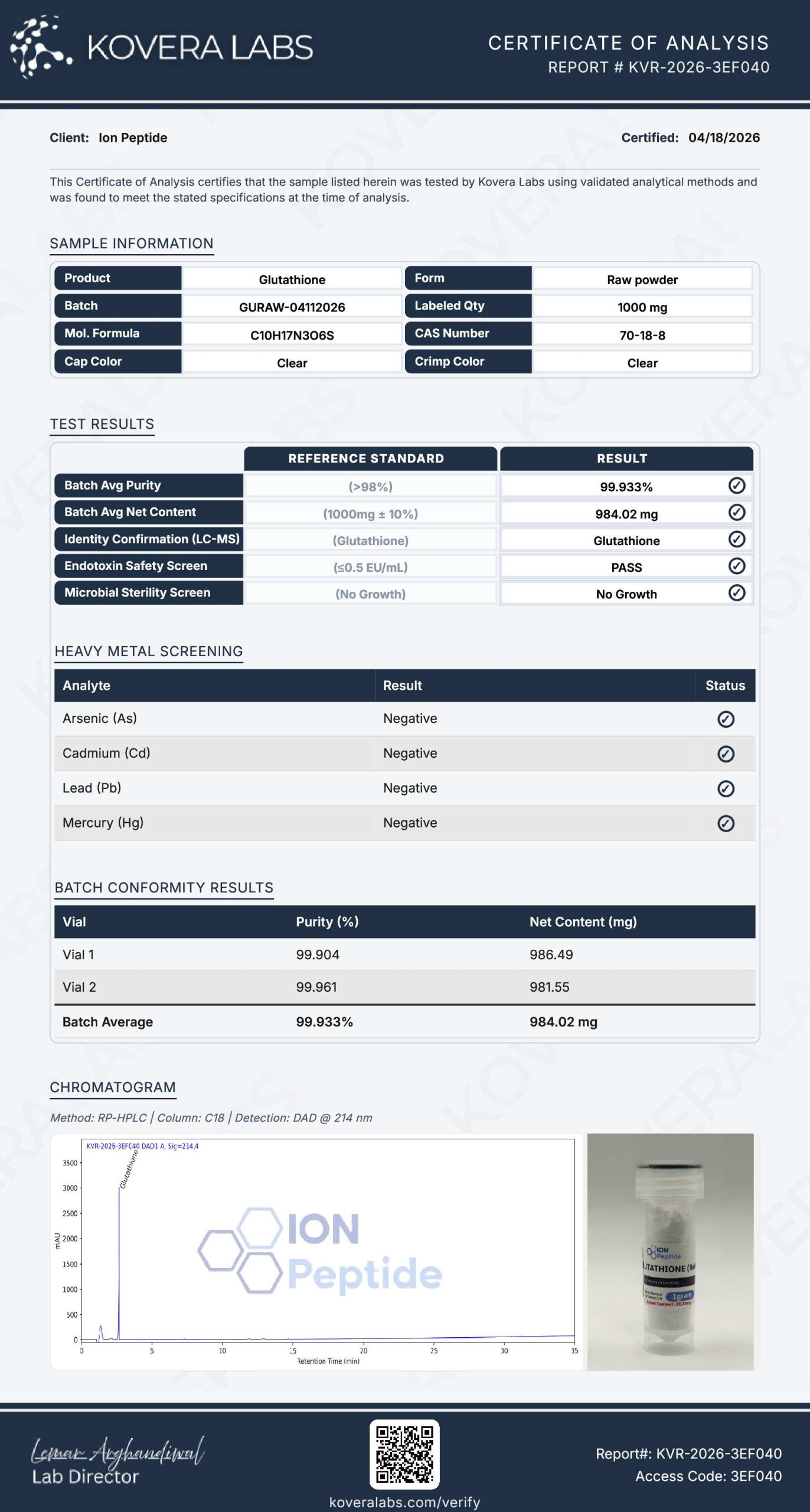
Certificate of Authenticity