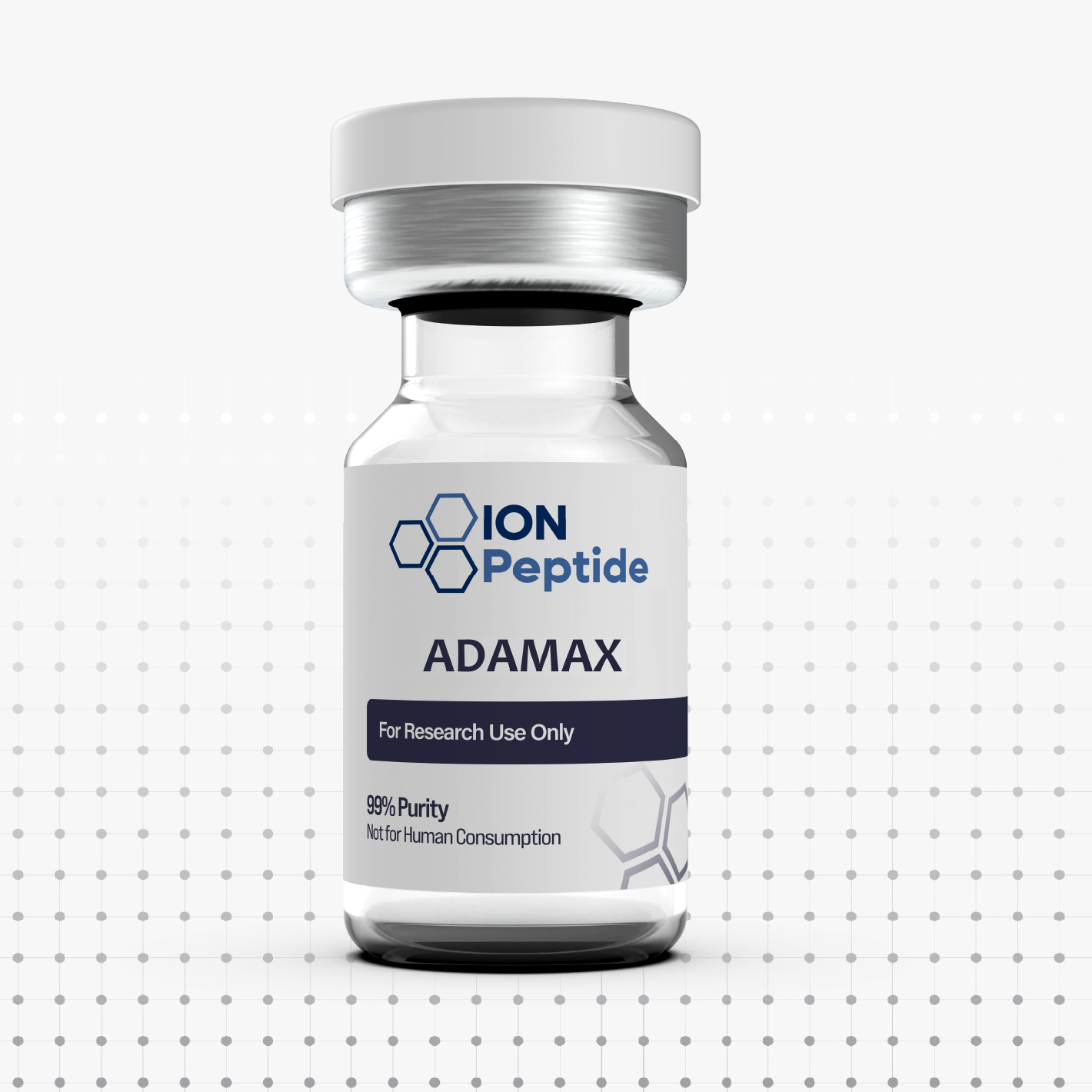
Adamax – 10mg

$69.00

For research purposes only. Not for human or animal use & not FDA-approved. By purchasing, you confirm you are 21 or older and qualified researcher.

Out of stock

Join the waitlist to be emailed when this product becomes available

Category:

Description

Adamax

Research-Grade Peptide Bioregulator (Neural Tissue)
Tagline: Neuronal Gene Regulation Research


Product Description

Adamax is a short synthetic peptide bioregulator modeled after regulatory peptides associated with neural and central nervous system tissue. It belongs to the class of tissue-specific peptide bioregulators (cytomedins) studied for their role in gene expression modulation, protein synthesis regulation, and cellular homeostasis in a tissue-selective manner.

In laboratory research, Adamax is used as a model peptide for studying neuronal gene expression, intracellular signaling behavior, and age-related molecular processes within neural systems. Like other short peptide bioregulators, its activity is examined at the epigenetic and nuclear level, rather than receptor-driven pharmacology.

For Laboratory and Scientific Research Use Only. Not for Human Consumption.


Why Researchers Choose Adamax
  • Neural tissue-associated peptide bioregulator model
  • Used in studies of neuronal gene expression and signaling
  • Supports research on cellular homeostasis and molecular regulation
  • Short peptide structure suitable for nuclear interaction models
  • Part of a documented peptide bioregulator research class
  • Applicable in comparative CNS-related peptide studies

Important Note

For laboratory and scientific research only. Not for human consumption, diagnostic, or therapeutic use.

Details

Compound Name Adamax
Peptide Class Tissue-specific peptide bioregulator (neural)
Peptide Length Short peptide (2–4 amino acids)
Form Lyophilized powder or sterile solution
Appearance White to off-white powder

Research

Research Applications

Neuronal Gene Expression Studies

Adamax is used in laboratory models examining gene expression patterns in neural cells, including transcriptional regulation and protein synthesis pathways.

Central Nervous System Signaling Research

Short peptide bioregulators are studied for their role in cell signaling and communication within neural systems, making Adamax suitable for CNS-related experimental models.

Cellular Homeostasis & Aging Research

Adamax is applied in studies investigating age-related molecular changes and cellular balance within neural tissue models.

Epigenetic & Nuclear Interaction Research

Due to its short peptide structure, Adamax is used in research exploring DNA interaction, chromatin modulation, and epigenetic signaling mechanisms.


References
  1. Khavinson VKh, et al. Peptide regulation of gene expression and protein synthesis in aging. Biogerontology.
    https://link.springer.com/article/10.1007/s10522-011-9363-8
  2. Khavinson VKh, Linkova NS. Peptide bioregulators: molecular mechanisms of action. Advances in Gerontology.
    https://link.springer.com/article/10.1134/S207905701202003X
  3. Ashapkin VV, et al. Peptide regulation of gene expression: A systematic review. Molecules.
    https://www.mdpi.com/1420-3049/26/22/7053
  4. Peptide — structure and biological function overview.
    https://en.wikipedia.org/wiki/Peptide

Mechanism of Action

Mechanism of Action
Epigenetic Gene Modulation

Short peptides are studied for their interaction with DNA and chromatin structures, influencing transcriptional activity in controlled research systems.

Tissue-Selective Activity

Adamax is associated with neural tissue models, supporting research into tissue-specific regulatory peptide behavior.

Protein Synthesis Regulation

Peptide bioregulators may influence protein synthesis pathways, contributing to cellular function studies.

Cellular Signaling Support

Short peptides are investigated for their involvement in intracellular signaling and molecular communication pathways.


References
  1. Khavinson VKh, et al. Peptide regulation of gene expression and protein synthesis in aging. Biogerontology.
    https://link.springer.com/article/10.1007/s10522-011-9363-8
  2. Khavinson VKh, Linkova NS. Peptide bioregulators: molecular mechanisms of action. Advances in Gerontology.
    https://link.springer.com/article/10.1134/S207905701202003X
  3. Ashapkin VV, et al. Peptide regulation of gene expression: A systematic review. Molecules.
    https://www.mdpi.com/1420-3049/26/22/7053
  4. Peptide — structure and biological function overview.
    https://en.wikipedia.org/wiki/Peptide